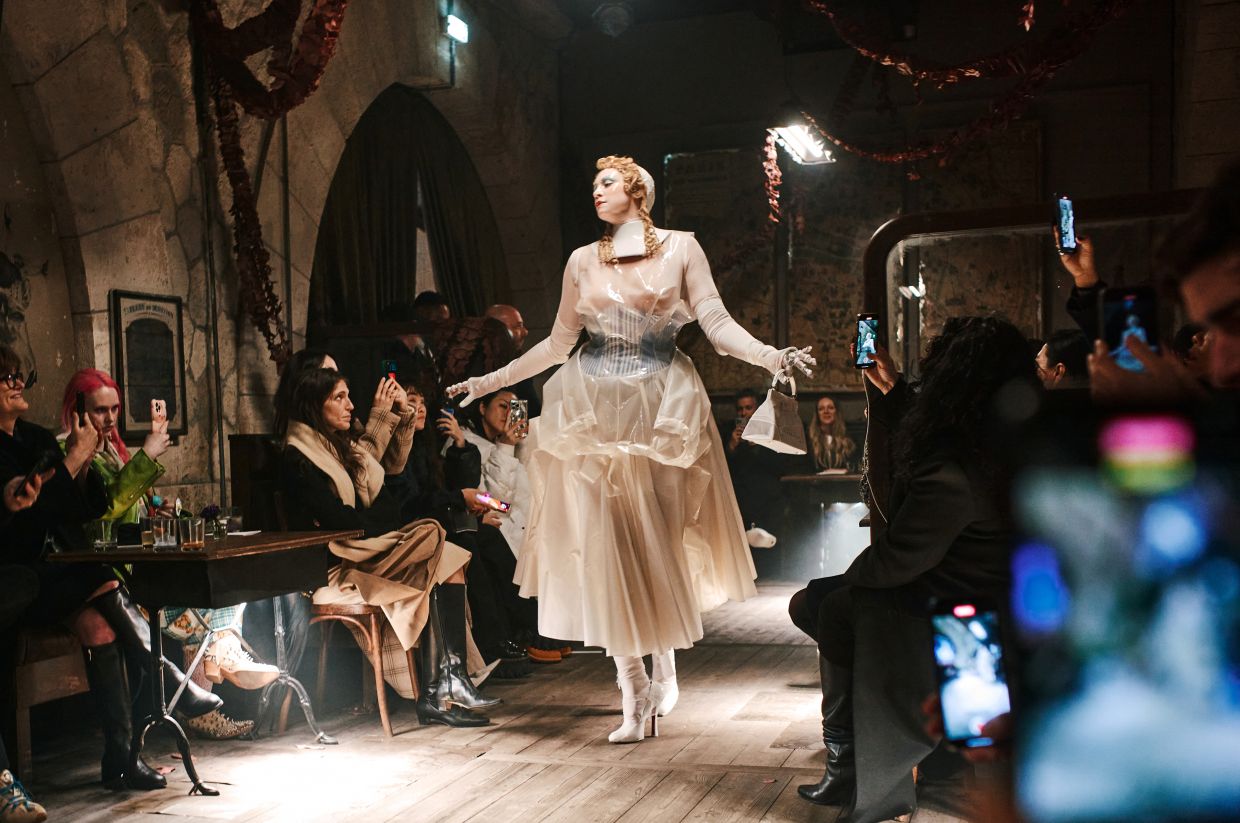
The Metropolitan Museum of Art convened a delicate series of meetings over the past year with influential Jewish leaders to discuss a seemingly straightforward curatorial decision that has become anything but uncomplicated. At the centre of these carefully orchestrated conversations was the museum's plan to mount a retrospective dedicated to John Galliano, one of fashion's most visionary designers—a decision that has ignited fundamental questions about accountability, rehabilitation, and whether institutional prestige can adequately address historical harm. The May gathering brought together figures like Anna Wintour alongside prominent rabbis and civil rights leaders, marking an unusual moment when the fashion establishment felt compelled to seek explicit guidance before proceeding with what would normally be regarded as an unqualified honour.
Galliano's position within fashion history remains virtually unassailable by aesthetic measure. During his tenure as creative director of Dior from 1996 to 2011, he accomplished what few designers manage: he fundamentally repositioned an entire luxury house, transforming the staid French heritage brand into a globally influential phenomenon synonymous with theatrical innovation and technical mastery. His mastery of the bias cut and his ability to construct elaborate narrative worlds through clothing placed him among the most consequential designers of his generation. Yet this undisputed creative legacy now exists in complex tension with a singular moment that irrevocably altered his trajectory and forced fashion to reckon with its own relationship to consequence and forgiveness.
In 2011, a video emerged showing Galliano making deeply antisemitic statements, including declarations of admiration for Hitler, captured during an evening in a Paris bar. The fallout was immediate and severe: Dior terminated his employment, French courts convicted him of hate speech crimes, and the fashion world appeared to have decisively rejected him. What followed, however, was not permanent exile but rather a decade-long process of what might be termed managed rehabilitation. Galliano entered treatment, worked with religious leaders including rabbis and Anti-Defamation League officials, and emerged in 2014 as creative director of Maison Margiela, where he has since produced work that has achieved considerable commercial and critical success. Celebrities routinely wear his designs, and his pieces set auction records—indicating that fashion, as an industry, has substantially moved beyond the moment of condemnation.
Yet the current climate surrounding antisemitism introduces a complexity that museum officials and Jewish leaders alike recognize as fundamentally different from 2014. Antisemitic incidents have accelerated across the United States and internationally in recent years, creating a context in which even historical wrongs feel urgently present. Recent violent attacks in New York City, including incidents targeting Jewish community spaces, have heightened sensitivities and raised legitimate questions about whether celebrating a figure with Galliano's specific history might send problematic signals or trivialize ongoing community concerns. These are not abstract anxieties but rooted in genuine fear and a sense that the permissibility of antisemitic speech itself has shifted dangerously.
The potential exhibition carries additional weight because of the specific platform it would occupy. The Metropolitan Museum's costume exhibitions represent the highest institutional honour available to living designers. Galliano would join an extremely exclusive circle—only Yves Saint Laurent and Rei Kawakubo have previously received solo retrospectives at the museum while living. The exhibition's opening would be anchored to the annual Met Gala, arguably the most globally visible red carpet event in contemporary culture, guaranteeing extensive media coverage and permanent cultural documentation. Museum director Andrew Bolton has indicated serious consideration of this project since 2010, though he hesitated to advance it substantially until 2024, a timing that raises questions about institutional caution regarding Galliano's reputational status.
The conversations between museum leadership and Jewish community representatives reveal genuine wrestling with difficult philosophical terrain. Participants invoked teshuvah, the Jewish concept of repentance and restoration, acknowledging traditional frameworks for evaluating whether an individual's demonstrated commitment to repair and education might warrant reconsidered standing. Rabbi Rick Jacobs of the Union For Reform Judaism emphasized Galliano's apparent sincerity during their discussions, suggesting the designer spoke directly rather than reciting prepared statements. Jonathan Greenblatt of the Anti-Defamation League offered qualified support, framing Galliano's rehabilitation efforts as worthy of acknowledgement. These perspectives suggest that at least some institutional Jewish voices see meaningful distinction between dismissal and conditional support contingent on how the exhibition would be structured and contextualized.
However, the dialogue also illuminated genuine concerns about the possibility of celebration without appropriate confrontation. Rabbi Joshua Davidson proposed that the museum might transform the exhibition into an educational opportunity, deliberately engaging with antisemitism's contemporary reality rather than bracketing history. This suggestion reflects an implicit understanding that simply displaying beautiful garments alongside biographical information would be inadequate—that institutional responsibility requires actively using the platform to address rather than minimize the rupture that defines Galliano's recent decades as much as his undeniable artistry. The tension between honouring aesthetic accomplishment and reckoning with moral failure cannot be resolved through omission.
Bolton has indicated plans to include an "orientation gallery" that would explicitly address what he terms "the rupture" in Galliano's career, positioning historical reality as integral to understanding his work rather than extraneous to it. This represents a curatorial choice to forefront rather than suppress the difficult dimensions of his subject's history. Bolton has also emphasized his commitment to using Galliano's own words, rejecting euphemism in favour of clarity—a stance that acknowledges Jewish community input that specificity matters more than comfortable vagueness. The museum is reportedly considering supplementary online forums that might extend discussion beyond the physical exhibition, suggesting recognition that a retrospective alone cannot adequately process the full scope of these questions.
The Galliano case illuminates broader tensions within contemporary culture about rehabilitation, institutional power, and the relationship between artistic achievement and personal conduct. Fashion as an industry has generally proved willing to welcome Galliano back; luxury consumers and celebrities have embraced his designs, suggesting that within certain privileged circles, the question of his past has been substantially resolved. Yet the museum's engagement with Jewish leadership indicates recognition that institutional platforms carry particular responsibilities that individual consumer choices may not. An exhibition at the Metropolitan Museum constitutes an official cultural pronouncement in ways that celebrity red carpet appearances do not.
The timing of this controversy also reflects changing sensitivity around antisemitism specifically. Previous rehabilitation narratives in popular culture have sometimes proceeded with minimal sustained questioning, as if acknowledgement of wrongdoing and demonstrated contrition automatically restored former standing. The current moment, marked by genuine concern about resurging antisemitic violence and rhetoric, has created space for more sustained interrogation of whether particular forms of harm deserve particular forms of accountability. This does not necessarily preclude exhibition or recognition, but it demands that such recognition occur within a framework that takes community concerns seriously rather than treating them as obstacles to overcome.
What remains unresolved is whether an exhibition can successfully navigate these competing imperatives: honouring undeniable artistic contribution while maintaining meaningful engagement with historical harm, celebrating creative achievement while refusing to minimize injury, and using institutional platform responsibly without foreclosing the possibility of artistic evaluation itself. Galliano's work will ultimately be judged within this complicated context, neither purely as aesthetic object nor as moral referendum, but as both simultaneously. The Met's decision will signal whether major institutions believe such integration is possible, or whether certain ruptures require permanent institutional distance.

