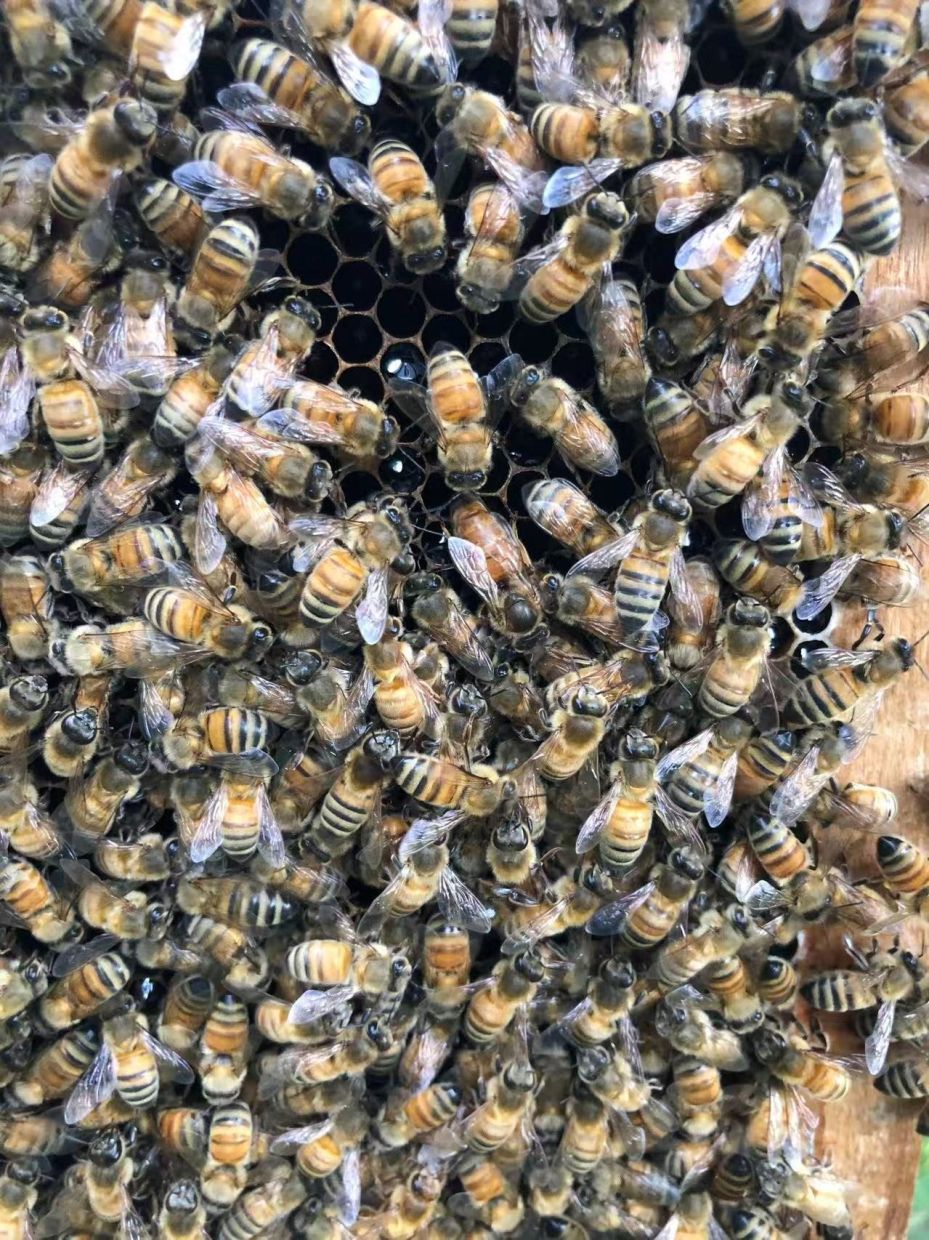
A honeybee colony's most essential member starts life indistinguishable from thousands of her sisters. Yet through a process far more complex than scientists previously understood, a single larva transforms into the colony's sole reproductive individual—the queen. Research published in the journal Nature now reveals that this extraordinary metamorphosis depends not merely on nutrition, but on the architectural and chemical properties of the wax chamber that worker bees construct around the developing larva.
For decades, the scientific community operated under a relatively straightforward assumption: feeding a larva royal jelly, a nutrient-rich secretion produced by worker bees, was the determinative factor that would steer development toward queenship. This explanation, while partially correct, overlooked a critical component of the process. Kai Wang, a researcher at the Institute of Apicultural Research at the Chinese Academy of Agricultural Sciences and a principal investigator on the study, articulated the insight with memorable simplicity: a royal diet loses its transformative power without the proper physical environment. The humble wax chamber that cradles the developing queen proves every bit as important as the food she consumes.
The western honeybee, the subject of this research, constructs its nest from wax secreted by female workers and fashioned into the familiar hexagonal cells. These cells serve multiple functions within the hive economy—some store honey and pollen, while others nurture developing worker and drone larvae. Beyond these standard chambers lies a third architectural form: the queen cell. Resembling miniature peanut shells suspended downward from the honeycomb structure, these cells have long caught the attention of beekeepers as indicators of swarming activity or the hive's intention to replace an aging queen. Traditionally viewed as passive structures—mere containers for a special larva—these chambers reveal themselves through rigorous scientific examination to be engineered incubators of remarkable sophistication.
The wax used to construct queen cells differs materially from that forming worker cells. This royal wax possesses distinct physical properties: it maintains a softer consistency and requires a higher temperature to melt compared to standard honeycomb wax. Perhaps most intriguingly, it emits a different chemical signature—a distinctive molecular perfume that permeates the developing larva's environment. These characteristics appear deliberately calibrated to support royal development. The softer walls afford the growing larva greater room to expand and develop, while the chemical compounds released by the wax may function as hormonal catalysts, signalling to the larva's developing physiology that it is destined for queenship.
The implications of these findings became starkly apparent through controlled experimentation. Larvae provided with royal jelly but placed in standard worker-cell wax showed dramatically inferior queen development and suffered substantially elevated mortality rates. This finding fundamentally challenged the sufficiency of nutritional determinism. Without exposure to the sensory and chemical environment of royal wax—what Wang described as the necessity for larvae to experience the correct "smell and feel"—even the most nourishing diet proves inadequate. The colony's young worker bees, through their architectural labour, were creating conditions essential for royal metamorphosis.
The bees responsible for constructing these queen cells themselves undergo remarkable physiological changes during their labour. Young worker bees engaged in queen-cell construction demonstrate unusually elevated thoracic temperatures, heating their bodies to above 39 degrees Celsius—a self-imposed fever of sorts. This thermal elevation enables them to manipulate the special wax required for queen chambers, essentially transforming their own bodies into living furnaces to produce the precisely engineered environment their future queen requires. Simultaneously, these workers exhibit distinct patterns of gene expression, temporary shifts in their cellular machinery that facilitate wax processing without creating a permanent specialized caste.
What distinguishes these builder bees is their remarkable flexibility. Rather than becoming permanently locked into a specialized role, they remain what Wang characterized as "ordinary, flexible young workers" undertaking a temporary assignment with specific deadlines and expectations. During their shifts constructing queen cells, these bees continue performing routine hive maintenance—sharing food with nestmates, inspecting other cells, and participating in the collective labour that sustains colony life. This multitasking capacity underscores the distributed intelligence and adaptability that characterizes honeybee societies, where individual bees shift between roles as colony needs demand.
For the scientific community, these findings represent a fundamental revision of understanding regarding caste determination in social insects. The concept Wang identified as "deeply rooted dogma"—the belief that royal jelly alone determines queenship—proved incomplete. By isolating and testing the various components of the queen-rearing process, researchers demonstrated that nature's solution to producing a queen bee involved multiple, interdependent systems working in concert. Architecture, chemistry, temperature, and nutrition collectively author the queen's development. This systems-level perspective suggests that other social insects may similarly orchestrate caste determination through environmental engineering rather than relying solely on biochemical factors.
The precise molecular mechanisms remain incompletely understood. Wang identified the next investigative frontier as locating the specific molecular switch—determining which chemical compound or physical property of the wax actually communicates to the developing larva's genetic machinery that she is destined to become queen. This quest to understand the molecular conversation between environment and genetics could unlock fundamental principles governing development and differentiation across numerous species.
Beyond theoretical biology, these discoveries hold practical significance for agricultural sustainability and food security. Modern managed honeybees provide pollination services to more than 80 major agricultural crops globally, yet beekeepers increasingly report substantial colony losses across the United States and internationally. Boris Baer, a professor of pollinator health at the University of California, Riverside and study co-leader, emphasized that queen production represents a central concern in contemporary beekeeping. Healthy queens prove essential for maintaining vigorous, productive colonies. By understanding the natural processes through which colonies produce high-quality queens, beekeepers may eventually develop enhanced breeding strategies and management techniques that support more resilient bee populations.
For Southeast Asian beekeeping communities, where apiculture contributes significantly to agricultural livelihoods and crop pollination, these findings carry particular relevance. Understanding the biological foundations of superior queen development could improve colony productivity and disease resistance in tropical and subtropical environments. The research also illustrates how basic scientific knowledge—pursued through rigorous investigation of natural processes—ultimately translates into practical applications that support human communities and agricultural systems.
Wang's conclusion reflected the holistic perspective that the research illuminates: the honeybee colony functions as a true superorganism, with individual workers collectively orchestrating the transformation of an ordinary larva into their future mother and the biological centre of colony life. The insight extends beyond honeybee biology into a broader understanding of how complex social systems solve developmental problems through cooperative engineering. As Wang eloquently framed it, while nutrition remains important, the perfect home—the royal palace constructed by devoted workers—is what fundamentally transforms destiny.

