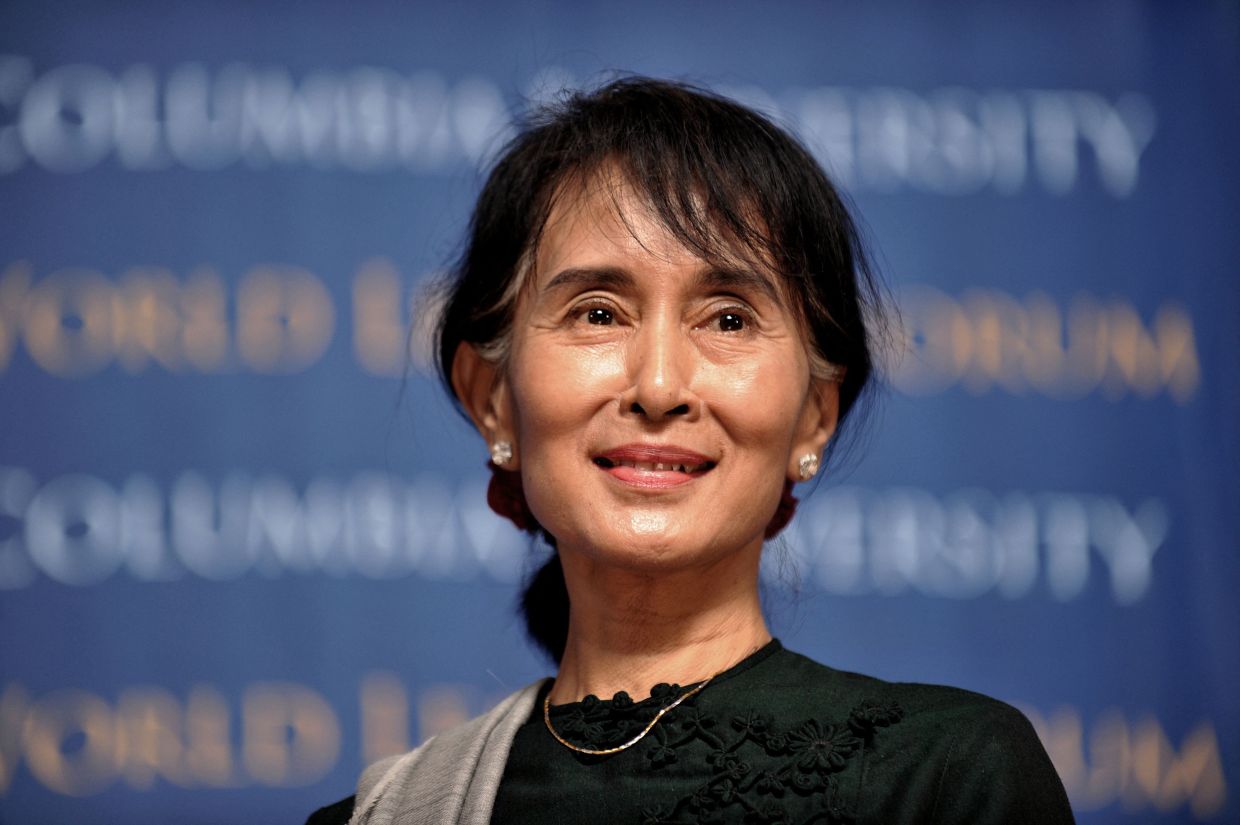
The whereabouts of Myanmar's deposed leader Aung San Suu Kyi have become as elusive as the city itself. Although the military junta confirmed in April that the 81-year-old Nobel laureate had been transferred from prison to house arrest in Naypyidaw, her precise location within the sprawling capital remains a closely guarded secret. Even senior government officials claim ignorance, with one parliamentarian from the pro-military Union Solidarity and Development Party acknowledging he simply did not know where she was being held. The opacity surrounding her detention illustrates how Naypyidaw's very architecture and design serve as an instrument of state control and concealment.
Naypyidaw itself is an unusual creation in modern Asia—a purpose-built capital of roughly one million people sprawling across a landmass nine times larger than New York City. Constructed in the early 2000s under the direction of former military ruler Than Shwe, the city was designed with a strategic imperative that had little to do with conventional urban planning. Instead of serving the practical needs of residents and commerce, Naypyidaw was conceived as a fortress against potential threats to military rule. Its remote central location, deliberately distanced from the vibrant port city of Yangon and the cultural hub of Mandalay, reflected the paranoia of Myanmar's generals regarding popular uprisings and foreign interference. The result is a labyrinth of anonymous government compounds connected by deserted 20-lane highways cutting through jungle and agricultural land.
The city's most striking feature is its obsessive emptiness. Colossal structures dot the landscape seemingly designed for scale rather than functionality—the parliament campus alone occupies 324 hectares of gilded grounds, making it one of the world's largest legislative complexes despite Myanmar's entrenched history of authoritarian governance. Yet the highways remain largely devoid of traffic, while teams of gardeners perpetually maintain vast lawns that extend toward the horizon. Mobile internet jammers disrupt navigation applications, adding another layer of spatial disorientation. As Columbia University adjunct professor Galen Pardee observed, being in Naypyidaw is tantamount to experiencing house arrest at the city level. The designed urban environment achieves the opposite of what conventional city planning aspires to accomplish—it isolates rather than connects, confuses rather than clarifies, and prioritizes state control over human flourishing.
Suu Kyi's detention within this deliberately opaque setting represents the culmination of her tumultuous relationship with Myanmar's military establishment. The daughter of independence hero Aung San, she had spent much of her adult life abroad before returning in 1988 to champion democratic reform. Her early activism resulted in 15 years of house arrest during the 1990s, confined to her family mansion in Yangon where her residence became a symbolic beacon for democracy advocates worldwide. That sacrifice earned her the Nobel Peace Prize in 1991. Following decades of civil resistance, the generals reluctantly permitted a gradual transition to democracy, allowing Suu Kyi to lead the government for a decade. Her National League for Democracy party secured an overwhelming electoral victory in 2020, appearing to validate the democratic trajectory. However, Min Aung Hlaing's military coup in February 2021 shattered that progress and reincarcerated the iconic opposition leader.
The junta's presentation of Suu Kyi's April transfer to house arrest as an act of clemency deserves particular scrutiny. Min Aung Hlaing framed the decision as evidence of his personal transformation from authoritarian ruler to civilian president, ostensibly legitimized by January elections that were heavily restricted and excluded Suu Kyi's party from competition. International observers and human rights organizations have dismissed this narrative as transparent image rehabilitation. The elections themselves were orchestrated to guarantee victory for the pro-military USDP while jailing or preventing the participation of genuine opposition candidates. Suu Kyi's transition from formal imprisonment to house arrest, critics argue, is purely cosmetic—a superficial adjustment that masks the continued deprivation of her liberty. Her son Kim Aris, speaking by telephone from London, emphasized that confining his mother to an undisclosed private residence differs little substantively from her previous imprisonment.
The practical difficulties of locating Suu Kyi within Naypyidaw reveal the depths of the military's secretive apparatus. Police special branch officers from separate jurisdictions acknowledged during background discussions that she had been relocated to areas officially off-limits even to them. Most strikingly, one source claimed that "even generals do not have her information." This compartmentalization of knowledge suggests a deliberate strategy to ensure that her exact location remains inaccessible to all but a minimal circle of handlers. The previous villa where Suu Kyi had resided before taking office has been demolished, eliminating a potential focal point for international concern or scrutiny. Her authorized residence as elected leader—a government property behind security checkpoints requiring official clearance—has been abandoned in favor of this undisclosed alternative location.
Naypyidaw's disorienting character poses genuine challenges even for residents attempting to navigate daily life. A 25-year-old resident, speaking anonymously for security reasons, described the city's monotonous landscape and poorly marked roads as sources of constant confusion, noting that she frequently loses her bearings in her own neighborhood. When asked about Suu Kyi's location, she and others like her could only shrug in uncertainty. "Everything looks the same to us," she explained. "We are still confused by some roads. We do not know where she's kept." This widespread disorientation among residents underscores how the capital's design creates a genuine epistemological crisis—a city so deliberately incomprehensible that geographical knowledge becomes a form of power reserved for the state.
The historical context of Naypyidaw's creation illuminates how Myanmar's successive military regimes have weaponized urban planning as an instrument of governance. When Than Shwe initiated the capital's construction, he was implementing a philosophy that extended from the architectural level to the political realm. By concentrating power in a remote, purpose-built enclave, the military sought to insulate its decision-making from public visibility and accountability. The city's design principles—emptiness, anonymity, surveillance capability, and navigational opacity—mirror the characteristics of an authoritarian state apparatus. Subsequent rulers, including Min Aung Hlaing, have inherited and maintained these structures. They facilitate the kind of secret detention that Suu Kyi currently experiences, where even determining whether someone is imprisoned becomes impossible.
The psychological and political implications of Suu Kyi's hidden confinement extend beyond her individual circumstances. Her disappearance from public view, combined with official ambiguity regarding her location, contributes to broader uncertainty about Myanmar's trajectory and the stability of the post-coup order. International actors, civil society organizations, and concerned governments cannot effectively advocate for her welfare when her exact location remains unknown. This opacity also serves a domestic political function, allowing the junta to manage narratives around her detention. By presenting the transition to house arrest as merciful while maintaining secrecy about conditions and location, the military creates space for competing interpretations—some believing she is reasonably accommodated, others suspecting continued mistreatment, with no definitive evidence available to either camp.
Looking toward the future, Suu Kyi's situation embodies the broader struggle between transparency and opacity in Southeast Asian politics. Myanmar represents an extreme case of how deliberate architectural and administrative design can serve authoritarian purposes, yet similar dynamics emerge elsewhere in the region where developmental ambitions become tools for regime consolidation. The very act of erecting Naypyidaw, relocating the capital to a purpose-built facility, allows for the kind of comprehensive surveillance and control that prevents the emergence of organic civic spaces resistant to state power. For neighboring countries and regional observers, Myanmar's trajectory serves as a cautionary tale about the interaction between physical geography, institutional design, and political freedom. As long as Suu Kyi remains hidden in Naypyidaw's maze of identical compounds and empty highways, her detention symbolizes not just personal injustice but the fundamental incompatibility between authoritarian architecture and democratic aspiration.

