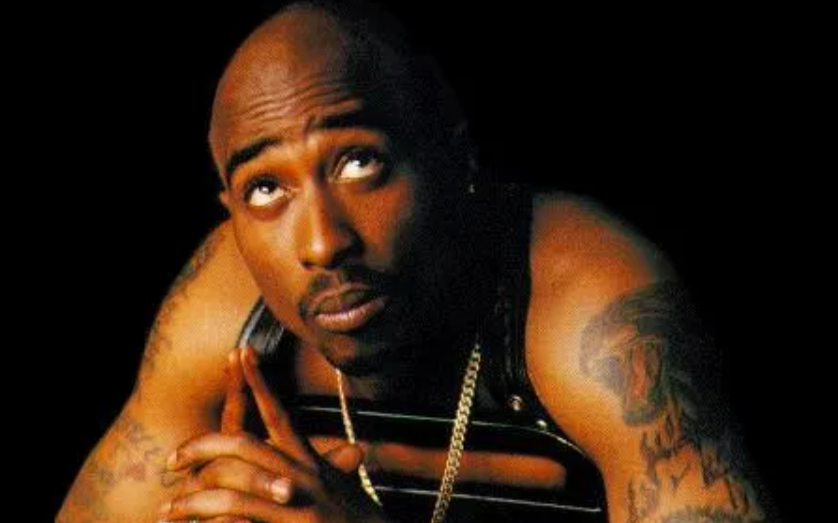
The trial of a former gang leader accused of orchestrating the 1996 murder of rapper Tupac Shakur commenced this week, marking a watershed moment in one of America's most intractable cold cases. Duane "Keffe D" Davis, 63, appeared before the court in a light blue shirt and tie to face charges stemming from the September 7, 1996 drive-by shooting that claimed the life of the 25-year-old California hip-hop legend as he left a Mike Tyson boxing match in Las Vegas. The proceedings, anticipated to last approximately one month, represent a turning point in a case that has captivated music enthusiasts and true crime devotees for three decades, even as the fundamental question of who pulled the trigger remains contested.
The case carries immense significance for understanding a pivotal chapter in hip-hop history. Shakur's death occurred amid an intense bicoastal rivalry that defined the genre during the mid-1990s, pitting Death Row Records—the West Coast powerhouse founded by Marion "Suge" Knight—against Bad Boy Records, the influential East Coast label built by Sean "Diddy" Combs and featuring Christopher "The Notorious B.I.G." Wallace, who would himself be murdered six months later in a strikingly similar attack. This geographical and commercial antagonism created a toxic environment where street violence became intertwined with professional competition, fundamentally altering hip-hop's trajectory and legacy. Understanding Shakur's murder thus requires examining not merely the mechanics of that particular night, but the entire ecosystem of gang affiliations, business rivalries, and violent retribution that characterised the era.
According to prosecutors, the chain of events leading to Shakur's death began with a confrontation at the MGM Grand casino following the boxing match. Knights and Shakur allegedly assaulted Davis's nephew, Orlando "Baby Lane" Anderson, a South Side Compton Crips member, in retaliation for an alleged earlier assault on a Death Row Records employee. This incident became the alleged trigger for the subsequent killing. The prosecution's theory posits that Davis, leading the South Side Compton Crips—rivals to the Mob Piru gang that protected Death Row Records—orchestrated Shakur's murder as revenge for his family member's beating. Later that evening, a white Cadillac containing Davis, Anderson, and other occupants pulled alongside Shakur's vehicle and discharged multiple gunshots, fatally wounding the rapper. Yet the prosecution acknowledges it may never establish definitively who among the Cadillac's occupants actually fired the fatal shots.
The case's dormancy over nearly three decades reflected fundamental investigative challenges. Without eyewitnesses willing to cooperate, physical evidence linking suspects to the crime, or even certainty about the shooter's identity, law enforcement lacked the foundation necessary for prosecution. The investigation remained essentially frozen until 2019, when Davis unexpectedly revived it through his published memoirs. In that book, Davis acknowledged he was present in the Cadillac's front seat and admitted to handing a pistol to individuals sitting behind him, though he strategically refrained from identifying who actually discharged the weapon. His co-author's publication inadvertently provided prosecutors with incriminating admissions that had eluded them through conventional investigation for decades. This development proved catastrophic for Davis's legal position, as his own published words appeared to corroborate key elements of the state's case against him.
Davis's subsequent actions dramatically altered his legal jeopardy. Following his September 2023 arrest, he initiated a complete reversal of his memoir's account, pleading not guilty and claiming he had never even read his own published book. In a March 2025 interview from prison with ABC News, Davis asserted his complete innocence, declaring that he was actually in Los Angeles on the night of Shakur's death and insisting that prosecutors cannot place him in Las Vegas. He attributed the memoir's problematic passages to his co-author's embellishments, suggesting the collaborator conducted independent investigation and inflated Davis's biographical details for commercial appeal. This dramatic pivot presents the jury with a fundamental credibility question: whether Davis's published memoir constitutes genuine confession or commercial fiction, a distinction with potentially life-altering consequences given that a conviction carries a mandatory life sentence without possibility of parole.
Defence counsel has mounted vigorous procedural challenges in advance of trial, seeking to prevent both the memoir and Davis's 2008 police interview—during which he spoke as a witness rather than suspect—from being introduced as evidence. These efforts proved unsuccessful, and the prosecution will present both statements to the jury as key elements of its circumstantial case. The inability of prosecutors to identify the actual shooter represents a significant limitation in their prosecution. The prosecution's theory rests fundamentally upon demonstrating Davis ordered the killing and provided the weapon, rather than proving he personally committed the murder. Everyone else who occupied the Cadillac that evening has since died, eliminating the possibility of corroborating testimony about who discharged the fatal shots or Davis's precise role in coordinating the attack. This evidentiary vacuum creates uncertainty about whether a conviction, if achieved, would constitute genuine justice or instead represent closure driven by circumstantial suspicion and Davis's own earlier admissions.
The trial's commencement carries profound implications for the broader narrative surrounding hip-hop's most tragic period. Shakur's death, along with Wallace's murder the following year, symbolised the genre's violent intersection with street gang culture and the catastrophic consequences of allowing commercial rivalries to escalate into deadly conflict. For three decades, his family has pursued answers and accountability. In May of this year, Shakur's stepbrother Maurice Shakur filed a civil wrongful death lawsuit, asserting in legal documents that multiple individuals involved in the rapper's murder remain unaccountable for their crimes after thirty years of impunity. This parallel civil action suggests that even a criminal conviction may fail to satisfy the complete accountability that Shakur's family seeks.
The trial's ultimate verdict, whatever it may be, will likely prove insufficient to resolve the case's deeper mysteries. While a conviction would provide the criminal justice system's formal acknowledgment that Davis bore responsibility, it would not necessarily illuminate who actually fired the shots that killed Shakur, nor would it necessarily reach other individuals potentially involved in planning or executing the murder. The passage of three decades has created evidentiary challenges that no courtroom verdict can entirely overcome. Nonetheless, the trial represents a meaningful moment for a case that has haunted hip-hop culture and exemplified the genre's violent period, offering the possibility of formal legal resolution if not complete historical clarity about what transpired on that fatal Las Vegas night.

