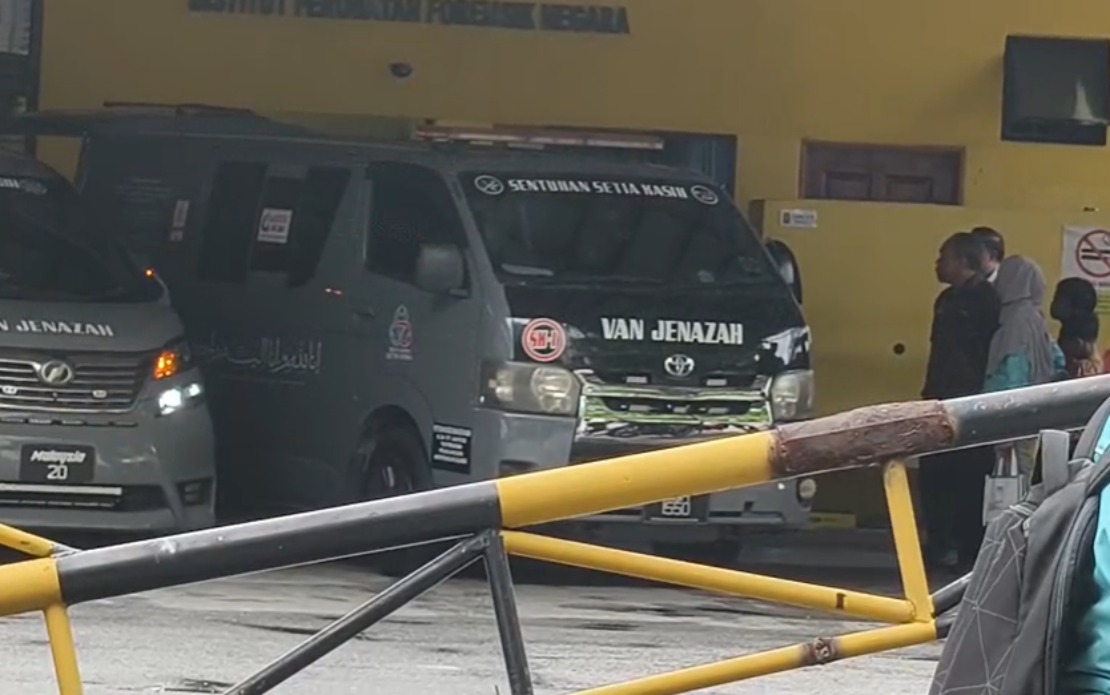
A tragic accident in central Kuala Lumpur has claimed the lives of three members of the same family, drawing attention once again to road safety concerns involving government vehicles operating under emergency conditions. Shaik Mohd Firdaus Shaikh Yahya, aged 53, and his two daughters Siti Nor Sazlin, 25, and Siti Darwisyah Auni, 12, were struck by a Malaysian Immigration Department (JIM) lorry in the early hours of Monday morning on Jalan Sultan Ismail. Following post-mortem examinations completed at the National Institute of Forensic Medicine (IPFN) at Kuala Lumpur Hospital, their remains were released to family members at approximately 5.45 pm for funeral preparations.
The bodies of all three victims have been transported from the hospital's forensic facility in separate hearses and handed over to grieving relatives who must now navigate the difficult process of arranging final rites. According to established funeral protocols for Muslim burials, the remains will first be taken to Jamiul Ehsan Mosque located along Jalan Pahang in Kuala Lumpur, where the customary rituals of bathing, shrouding, and funeral prayers will be conducted. Following these religious ceremonies, the family will undertake the journey to Kampung Air Hitam Labu Muslim Cemetery in Kampar, Perak, where the three will be laid to rest.
The accident itself occurred at approximately 1 am when the JIM Black Maria lorry, which was unoccupied at the time, collided with multiple vehicles at what appears to have been a critical intersection. Intelligence suggests the lorry was en route to Chow Kit to participate in an enforcement operation targeting undocumented migrants. The vehicle was operating with its emergency beacon lights and siren activated, standard procedures for such immigration raids. However, the collision sequence indicates the lorry entered the Maju Junction intersection against a red traffic signal before striking a Proton Saga that was lawfully proceeding through the junction on a green light.
The force of the initial impact between the JIM lorry and the Proton Saga proved catastrophic. The collision caused the significantly heavier lorry to lose directional control, with the vehicle skidding across the roadway in an uncontrolled manner. As it careened through the intersection, the lorry struck four pedestrians who were either crossing or in the vicinity of the junction, before colliding with an Inokom Matrix multi-purpose vehicle. Beyond the three fatalities, at least one other victim sustained serious injuries requiring medical attention, adding to the tragedy of the incident.
The circumstances surrounding the crash have raised important questions about the operation of government vehicles engaged in enforcement activities. The fact that the lorry allegedly violated traffic signals while responding to an operational tasking suggests that the balance between emergency response protocols and public safety requires careful examination. The activation of emergency lighting and sirens, while necessary for urgent enforcement missions, does not absolve drivers of the responsibility to proceed with heightened caution, particularly at major intersections where pedestrian traffic may be substantial.
Law enforcement authorities have classified the incident as a motor vehicle accident and have initiated a formal investigation under Section 41(1) of the Road Transport Act 1987. This particular legal provision addresses incidents involving vehicles operated in connection with government duties, and the investigation will seek to establish whether all necessary precautions were taken during the operation and whether any breaches of traffic regulations contributed to the collision. The findings of this investigation will be scrutinised by both the public and oversight bodies concerned with road safety standards.
For Malaysian readers, this tragedy underscores the ongoing tension between operational efficiency in law enforcement and the imperative to protect public safety. Immigration enforcement operations, particularly those targeting undocumented migrants, are increasingly frequent in urban areas and often conducted during night hours when traffic volumes are lower but visibility challenges increase. The incident serves as a sobering reminder that even vehicles engaged in legitimate government operations must comply with fundamental traffic regulations designed to protect all road users.
The loss of two young women, one in the prime of her working life and another still in her formative years, alongside a middle-aged father, represents a significant human tragedy for the affected family and the broader community. The sudden and violent nature of the deaths will undoubtedly impact not only the immediate family circle but extended relatives and the wider social networks of the deceased. In Perak, where the family's final resting place has been chosen, the incident may prompt reflection on the adequacy of current safety standards for government vehicle operations.
The investigation findings will likely inform policy discussions within the JIM and related government agencies about operational procedures, driver training, and the protocols governing emergency responses. Such incidents often catalyse reviews of safety practices, and stakeholders will be monitoring how the authorities respond to the findings. For Malaysian citizens, particularly those living in or transiting through Kuala Lumpur's central business district, the accident serves as a reminder of the unpredictable nature of road hazards and the importance of vigilance during all hours of operation.

