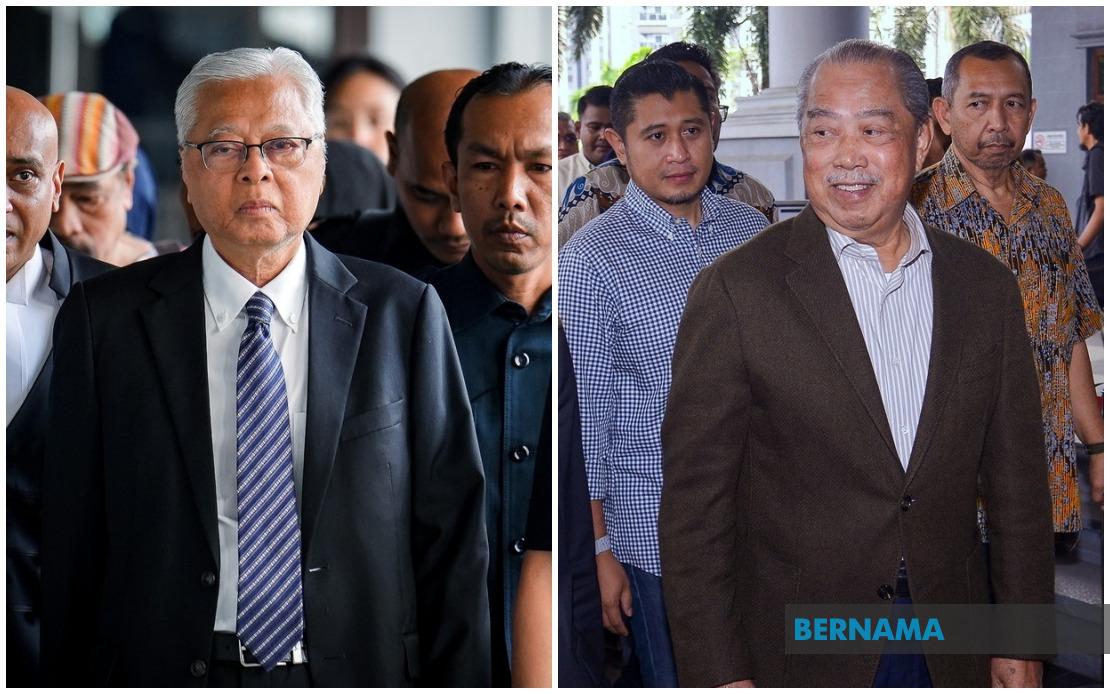
The simultaneous presence of three former prime ministers at the Kuala Lumpur Court Complex on August 27 created an extraordinary convergence that legal observers and journalists described as a watershed moment unlikely to recur. Datuk Seri Najib Tun Razak, Tan Sri Muhyiddin Yassin and Datuk Seri Ismail Sabri Yaakob each faced distinct court proceedings on the same morning, drawing unprecedented media attention and security arrangements to what is typically a routine venue for Malaysia's judicial system.
The rarity of this occurrence cannot be overstated within Malaysia's political context. Senior journalists with decades of experience covering the courts were unanimous in characterising the event as genuinely singular. V. Anbalagan, a veteran reporter at Free Malaysia Today, articulated the historical significance plainly: the juxtaposition of three former heads of government within a single complex at an identical moment represented something entirely unprecedented in Malaysian journalism. His perspective, honed across years of courtroom coverage, suggested that the likelihood of such an alignment occurring again remained vanishingly small, given the specific circumstances required for such synchronisation.
The logistical and security dimensions of managing three separate high-profile proceedings simultaneously revealed the complexity underlying routine court operations. From early morning, the Jalan Duta complex transformed into a bustling epicentre of activity, with television crews, photographers and journalists assembling from approximately 7 am. Their collective presence reflected not merely curiosity but recognition that the proceedings carried profound significance for understanding Malaysia's recent political trajectory and the accountability mechanisms now engulfing its recent leadership.
Security personnel and court officials had meticulously prepared for the convergence, understanding the potential for complications arising from simultaneous presence of the three former leaders. Officers from Sentul district police headquarters, Palace of Justice police and dedicated court security coordinated their efforts to maintain order while facilitating legitimate media access. The preparatory work extended to the previous afternoon, indicating the seriousness with which officials approached the potential for disruption. Between three and six categories of security passes were distributed to different constituencies, distinguishing between ordinary members of the public, journalists accessing open court proceedings and those utilising video-link facilities.
Bernama TV news officer Siti Zanariah Nor Zin reflected on the exceptional nature of witnessing such developments across sixteen years in journalism. Her account underscored how the staggered arrivals of the former prime ministers, combined with their respective legal teams, actually provided unexpected operational advantages. Rather than compounding logistical chaos, the sequential pattern allowed media organisations adequate opportunity to transmit updates to their headquarters and maintain coherent coverage of developing situations. The managed flow of arrivals thereby transformed what could have been a disorganised scramble into a series of distinct, coverable events.
Najib's participation involved a civil suit brought by 1Malaysia Development Berhad and its subsidiary against him and others, with proceedings heard before Judicial Commissioner Mohamad Redzuan Idrus. The case carries implications extending well beyond the individuals named, touching upon broader questions of corporate accountability and the recovery of assets associated with Malaysia's most significant financial scandal. Muhyiddin's appearance involved seven charges related to abuse of power and money laundering allegations stemming from the Jana Wibawa programme, heard before Judge Noor Ruwena Md Nurdin. These charges represent distinct legal territory from Najib's civil proceedings, reflecting investigations into alleged misconduct during Muhyiddin's tenure as Prime Minister.
Ismail Sabri faced charges concerning failure to declare substantial assets, including RM14.7 million in cash, multiple foreign currencies and gold bars, appearing before Judge Suzana Hussin. His departure from the complex at 11.43 am after posting RM300,000 bail with one surety concluded one element of the day's proceedings, though the broader legal processes for all three remain ongoing. The specificity of these charges and their diversity illustrates how Malaysia's judicial system is simultaneously addressing multiple dimensions of political accountability.
The security environment maintained throughout remained notably calm and orderly, according to security officer Nik Zainab Jusoh. A comprehensive briefing conducted the previous day ensured that deployed personnel understood their roles and remained alert to potential complications. The focus of monitoring concentrated on upper floor areas adjacent to courtrooms, while ground floor operations proceeded without incident. This disciplined approach reflected institutional learning about managing high-profile proceedings in contexts where public and media interest runs high.
For Malaysian observers, the convergence carries multilayered significance. At the most immediate level, it underscores the extent to which Malaysia's recent leadership has become entangled in legal proceedings, representing a departure from historical patterns where former prime ministers typically transitioned into private life without judicial involvement. The simultaneity of these proceedings suggests overlapping timelines for legal processes that originated from distinct political episodes and investigations. More broadly, the event crystallises a pivotal moment in Malaysian political accountability, where three individuals who collectively held the nation's highest office now face multiple legal challenges spanning civil liability, corruption allegations and financial disclosure violations.
The international dimension should not be overlooked. While Malaysia has witnessed intense political transitions, rarely have multiple former heads of government appeared simultaneously in judicial proceedings. This convergence invites comparison with other nations' experiences of post-leadership accountability, though the specific combination of civil suits, criminal charges and asset declaration violations represents a distinctly Malaysian configuration. For regional observers, the proceedings and their management demonstrate both the capacity and commitment of Malaysia's judicial institutions to pursue accountability despite the elevated profile of the individuals involved.
From a media perspective, the event validated existing courtroom protocols while exposing their capacity to accommodate unprecedented scenarios. Journalists covering the proceedings operated within established frameworks, yet the simultaneous presence of three former prime ministers stretched these frameworks in novel ways. The success with which media organisations managed coverage—transmitting timely updates, capturing visual records and providing analytical context—reflected professionalism honed through years of covering significant trials, yet applied here to a genuinely singular situation.

