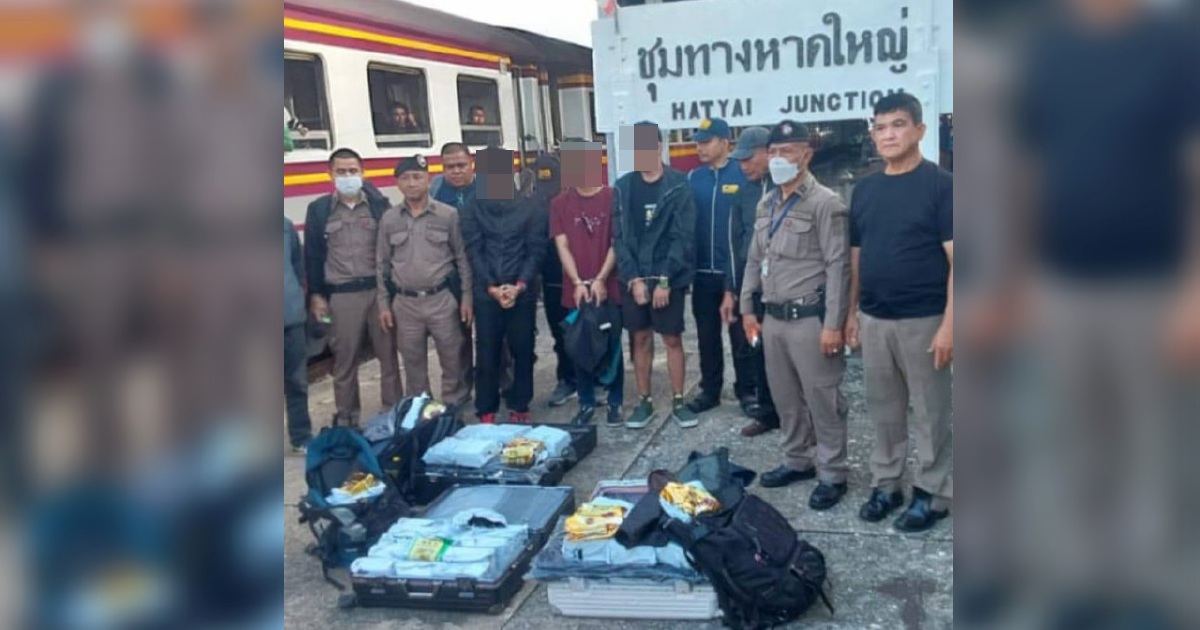
Thai law enforcement has detained three Malaysian nationals following the seizure of a substantial quantity of methamphetamine in Hat Yai, marking another significant drug interception in the region. The contraband, weighing 87 kilogrammes and valued at RM4.3 million, was discovered during a luggage inspection that revealed the trio had been transporting the illicit substance across the border. Investigators working on the case have concluded that the detainees were likely serving as intermediaries in a complex drug distribution chain rather than operating independently.
The arrest underscores the persistent vulnerability of Malaysia's borders to organised drug trafficking networks that exploit couriers for moving narcotics between Southeast Asian nations. Hat Yai, strategically positioned in southern Thailand near Malaysia, has long served as a transit point for illicit drug movements throughout the region. The quantity seized in this operation reflects the scale at which transnational smuggling rings are operating, with individual shipments representing millions of ringgit in street value. Such coordinated border enforcement actions depend increasingly on intelligence sharing and cooperation between Malaysian and Thai authorities.
The categorisation of these individuals as drug mules rather than traffickers suggests they held minimal knowledge of their cargo's ultimate destination or the criminal organisation behind the shipment. This operational structure—using expendable couriers insulated from command structures—has become standard practice among sophisticated drug trafficking syndicates operating across Southeast Asia. By compartmentalising information, criminal networks reduce their exposure to significant law enforcement action even when individual consignments are intercepted. The three Malaysians, if prosecuted under Thai drug laws, face substantially harsher penalties than those typically imposed in Malaysia for equivalent offences.
Thailand's drug enforcement strategy has intensified considerably in recent years, with border checkpoints implementing stricter screening protocols and expanded surveillance at transport hubs. The recovery of 87 kilogrammes demonstrates the effectiveness of these measures, though enforcement agencies acknowledge that interdiction rates represent only a fraction of total trafficking volumes moving through the region. For Malaysian authorities, such seizures serve as reminders of the continued demand for synthetic drugs within domestic markets and the willingness of trafficking organisations to risk the lives of their operatives through border crossings.
The methamphetamine market in Southeast Asia has exploded in the past decade, driven by synthetic production capacity in Myanmar and coordination networks based across the region. Malaysia remains a significant consumer market, with demand sustaining wholesale prices that make trafficking operations economically attractive despite enforcement risks. Local rehabilitation facilities continue reporting record admissions for methamphetamine dependency, indicating the scale of internal consumption patterns that incentivise cross-border smuggling. The price point of RM4.3 million for this shipment reflects the street-level value rather than wholesale cost, suggesting substantial profit margins for trafficking organisations even accounting for operational losses.
The arrest also highlights the economic desperation that makes participation in drug couriering attractive to vulnerable individuals. Smuggling organisations recruit mules through networks that target individuals facing financial hardship, offering payments that often range from RM5,000 to RM30,000 per successful delivery. These sums, while substantial by local standards, represent a fraction of actual consignment values and expose couriers to maximum legal jeopardy. In Thailand, methamphetamine trafficking carries potential sentences of 50 years imprisonment, creating a stark asymmetry between compensation offered and consequences risked.
Cooperation between Malaysian and Thai narcotics units has yielded increasing numbers of arrests in border areas, though coordination challenges persist due to jurisdictional differences and varying prosecution standards. The Malaysian authorities typically work through formal channels with their Thai counterparts, exchanging intelligence about suspected trafficking routes and known operatives. Such collaborative efforts have mapped major smuggling corridors running through Perlis, Kedah, and northern Perak, though the volume of cross-border traffic and limited resources continue to constrain comprehensive interdiction capacity.
From a regional perspective, the seizure reflects ongoing tensions surrounding drug production and distribution networks that extend across Myanmar, Thailand, Laos, and Malaysia. Major production facilities concentrated in Myanmar continue flooding regional markets despite enforcement efforts, while sophisticated distribution networks exploit geographical proximity and porous borders to maintain supply chains. Malaysia's role as both a consumer market and transit point positions it at the nexus of these trafficking flows, requiring sustained commitment to border security and domestic enforcement.
For Malaysian families, arrests of this nature carry profound consequences beyond legal penalties. Individuals detained in foreign jurisdictions face prolonged separation from family members, communication barriers, and unfamiliar legal systems. Support networks for families of detained Malaysians abroad remain inadequate, with consular assistance sometimes limited by resource constraints. The broader social impact of large-scale arrests extends to communities where individuals and their families reside, affecting employment, financial stability, and social standing.
Looking forward, Malaysian authorities emphasise the importance of public awareness regarding trafficking risks and recruitment methods employed by criminal syndicates. Educational campaigns targeting youth and individuals in economically vulnerable positions have expanded, providing information about legal consequences and the exploitation inherent in couriering arrangements. Law enforcement also points to the necessity of enhanced intelligence capabilities and continued investment in detection technology at border checkpoints. The sophisticated nature of modern trafficking operations, which now incorporate counter-surveillance techniques and route variations, demands corresponding advancement in investigative sophistication and resource allocation among regional enforcement agencies.
This particular incident will likely feature prominently in bilateral discussions between Malaysian and Thai governments regarding border security and drug enforcement coordination. Success in such operations depends on sustained political commitment from both nations, adequate resourcing for enforcement agencies, and willingness to implement intelligence-sharing protocols that respect sovereignty while addressing transnational organised crime. The detainees themselves face uncertain legal proceedings, potential lengthy incarceration, and limited prospects for rehabilitation within foreign prison systems that are often overwhelmed by drug-related cases.

