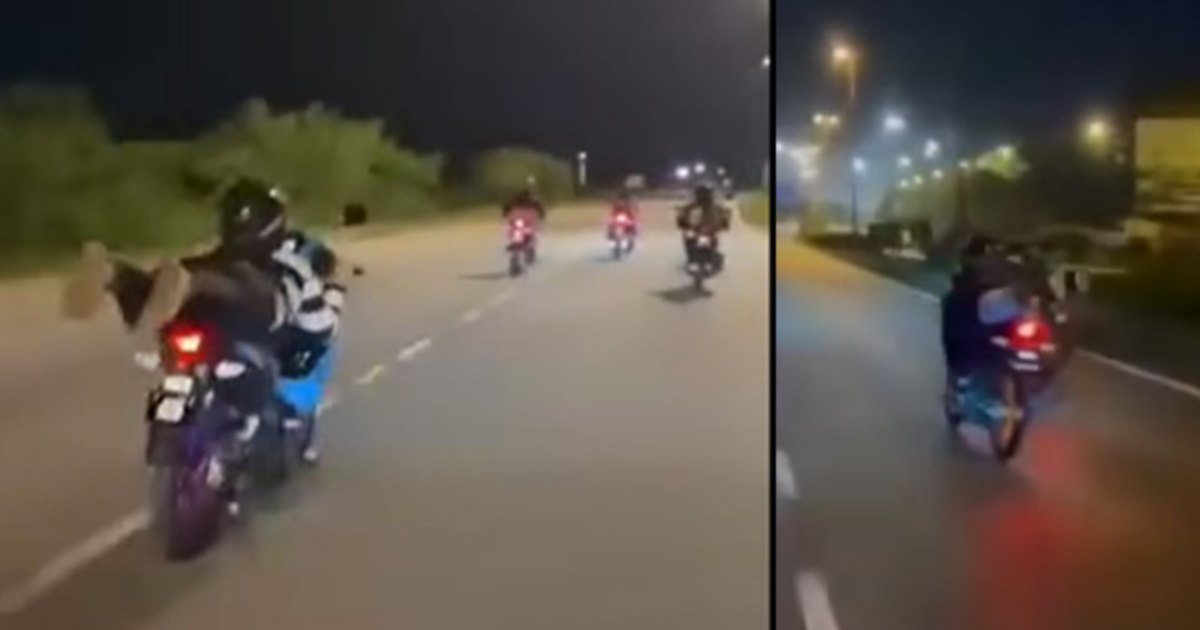
The Kuantan police have detained three teenage girls in connection with a viral motorcycle stunt that drew widespread attention and sparked safety concerns among road users and authorities. The incident involved the group performing Superman-style manoeuvres along the Jalan Kuantan Bypass-Gebeng road the previous week, where riders position themselves horizontally over their motorcycles while in motion—a dangerous practice that has prompted intervention from law enforcement.
The arrest comes amid growing alarm over the proliferation of high-risk behaviour by young people seeking viral moments on social media platforms. These Superman stunts, where riders lean back or extend themselves dramatically while controlling their vehicles, have become increasingly documented online, with participants filming their exploits for platforms like TikTok and Instagram. The trend represents a particularly hazardous intersection of youthful recklessness and the relentless pressure to create content that captures online attention and garners views and shares from their peers.
The Kuantan Bypass-Gebeng road, where the incident occurred, is a major traffic corridor connecting different parts of Pahang. The location's characteristics—likely featuring relatively straight stretches and consistent traffic flow—may have made it appear suitable to the teenagers for capturing dramatic footage. However, performing such stunts on public roadways exposes not only the riders themselves but also other motorists and pedestrians to serious risk of collision, injury, or fatality. The decision to conduct these manoeuvres in such an environment demonstrates a concerning disregard for public safety and traffic regulations.
This incident reflects a troubling pattern evident across Southeast Asia, where youth-related road safety violations frequently emerge from social media-driven activities. The viral nature of such content creates a feedback loop: dangerous acts are filmed, shared, and celebrated online, which then inspires other young people to replicate or surpass the original stunt in pursuit of their own internet notoriety. What begins as a localized incident can rapidly escalate into a region-wide phenomenon if not addressed swiftly and comprehensively by authorities and community stakeholders.
The arrest of these three girls signals that Malaysian authorities are taking such matters seriously and are prepared to pursue legal action against those engaging in reckless behaviour that endangers public safety. The police response underscores the fact that no matter how entertaining or temporarily popular such stunts may appear online, they remain illegal under Malaysia's traffic and safety laws. The action serves as a deterrent to other young people who might be tempted to film similar content for social validation.
Parental responsibility and digital literacy also emerge as critical factors in addressing this issue. Teenagers require meaningful guidance about the real-world consequences of actions undertaken for online entertainment, including potential harm to themselves and others, permanent digital records of their activities, and legal ramifications. Many young people, while digitally savvy, may lack the maturity to fully comprehend the dangers involved or the implications of their choices on their futures.
Educational institutions and youth organizations throughout Pahang and beyond must utilize this incident as a teaching moment to engage students in discussions about road safety, responsible social media use, and the difference between pursuing fame and pursuing genuine, constructive goals. Schools can integrate modules examining how viral trends develop, the psychology of social media engagement, and the real costs of prioritizing online attention over personal and collective safety.
The broader implications for Malaysia's road safety landscape are substantial. With motorcycle usage prevalent across the country and young riders representing a significant portion of road users, incidents like these underscore the necessity for comprehensive safety campaigns that speak directly to teenagers in language and contexts relevant to their lives. Campaigns should acknowledge the genuine appeal of social media while redirecting that energy toward safer, legal alternatives that still offer creative expression and peer recognition.
Looking forward, coordinated responses involving police, road safety agencies, social media platforms, schools, and families will prove essential in curbing such behaviour. Social media companies themselves bear some responsibility for establishing clearer community guidelines against content depicting dangerous stunts and for implementing features that discourage the rapid spread of high-risk activities. Meanwhile, law enforcement must continue monitoring for similar incidents while remaining visible on roadways to reinforce that unsafe conduct will face consequences.

