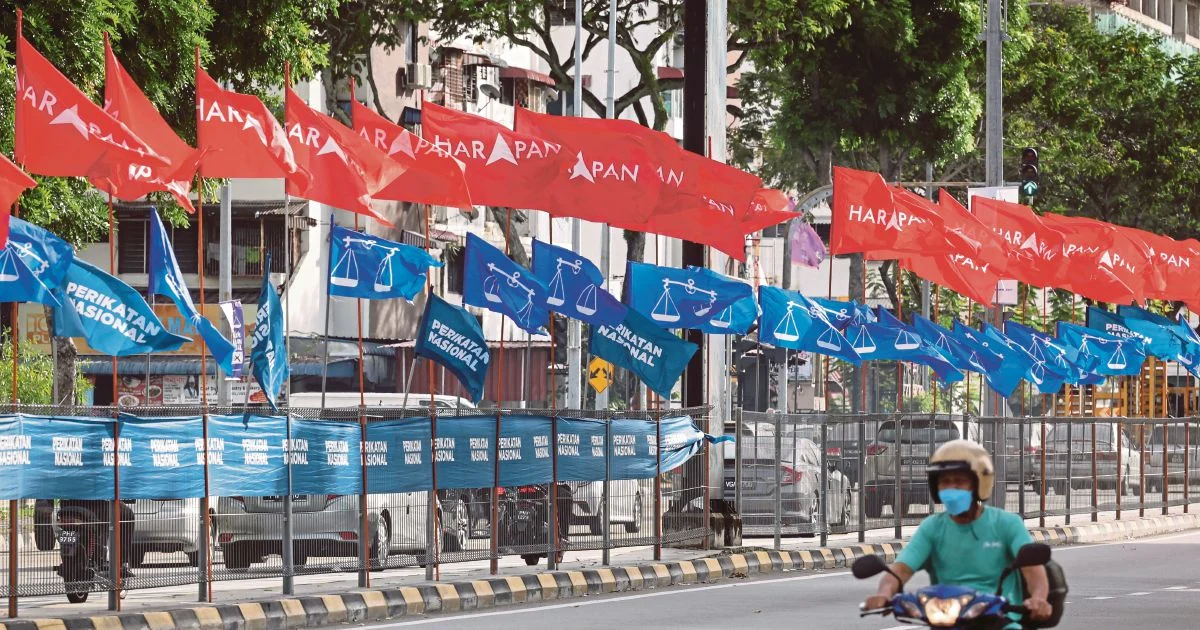
Johor's impending state election is shaping up to be a high-stakes contest that could reshape the political balance in one of Malaysia's most significant economic heartlands. With Barisan Nasional, Pakatan Harapan and Perikatan Nasional all fielding candidates in 33 of the 56 state assembly seats, the coming poll promises a complex electoral landscape where victory margins could prove razor-thin and coalition strategies will be tested on the ground.
The emergence of three-way contests across nearly 60 per cent of constituencies represents a significant shift in Malaysian electoral dynamics, particularly in Johor where traditional two-cornered fights have dominated recent polling cycles. This fragmentation of the opposition vote through multiple candidates competing simultaneously could fundamentally alter which party emerges victorious, as strategic voting becomes increasingly difficult for the electorate and coalition-building in the aftermath of voting grows more intricate.
Barisan Nasional enters the contest as the incumbent and the historical dominant force in Johor state politics. The coalition's deep organizational roots and extensive machinery throughout the state have traditionally delivered strong results, yet the fracturing of the political landscape presents fresh uncertainties. The party must navigate not only traditional rivals but also manage internal dynamics while projecting stability and governance credentials to voters concerned about economic performance and development in their constituencies.
Pakatan Harapan's strategy in Johor reflects broader national political calculations. The coalition's performance in the Johor election will carry implications beyond the state itself, as it contests for relevance against both established rivals and newer political formations. Mobilizing support among urban and semi-urban voters while maintaining appeal in key demographic constituencies will prove crucial to securing a competitive showing across the 33 contested seats.
Perikatan Nasional's participation in such a substantial number of three-way contests indicates the coalition's determination to expand its footprint across Malaysia's geographic and political landscape. The organization's growth since its formation has been notable, and Johor represents an opportunity to demonstrate sustained traction beyond its traditional strongholds. Success in capturing a meaningful share of seats would validate its positioning as a consequential force in Malaysian politics.
The concentration of three-way contests carries profound consequences for voter behavior and electoral outcomes. In constituencies where three candidates compete from major coalitions, winning margins may shrink considerably compared to historical patterns. This dynamic introduces greater uncertainty into seat projections and magnifies the importance of ground organization, campaign messaging, and the ability to mobilize core supporters in individual districts.
Malaysian voters, particularly those in Johor, face a more complex electoral calculus than in recent years. The proliferation of competitive choices means that votes once concentrated within established coalitions could scatter more widely, and constituency-level nuances become amplified in importance. Local issues, individual candidate popularity, and targeted constituency-level campaigns gain heightened significance when multiple credible alternatives exist on the ballot paper.
The geographic concentration of these contests also matters strategically. Some regions of Johor have traditionally tilted toward particular coalitions, yet three-way competition could upend these patterns in unexpected ways. Border constituencies near Selangor and the shape of industrial and urban development across the state influence which areas might prove most competitive and which might retain stronger coalition allegiances.
The timing of the Johor election carries weight within the broader Malaysian political calendar. Results here could influence momentum, morale and strategic calculations for federal-level politics in the coming years. A decisive victory for any coalition would carry signals beyond Johor's borders, while a fractured or surprising outcome would generate intense analysis about shifting voter preferences and the sustainability of current political arrangements.
For Malaysian political observers, the upcoming Johor election represents more than routine state-level polling. The three-way competition across a significant majority of seats demonstrates the maturation and complexity of Malaysia's electoral competition. The results will offer valuable insights into voter sentiment, the effectiveness of different coalition messages, and which political formations are building genuine grassroots support versus relying on institutional advantages.
The contest also occurs against the backdrop of Malaysia's broader political trajectory. Voters navigate questions about governance quality, economic opportunity, development priorities and which coalitions can best serve state and national interests. Johor's decision will reflect how these broader concerns translate into electoral choice when multiple credible alternatives exist simultaneously.
As the election approaches, all three coalitions are intensifying organizational preparations and campaign strategies. The stakes are substantial, the competition is genuine, and the electoral landscape—featuring three-way contests across more than half the seats—suggests that outcomes remain genuinely uncertain and could surprise seasoned political observers.

