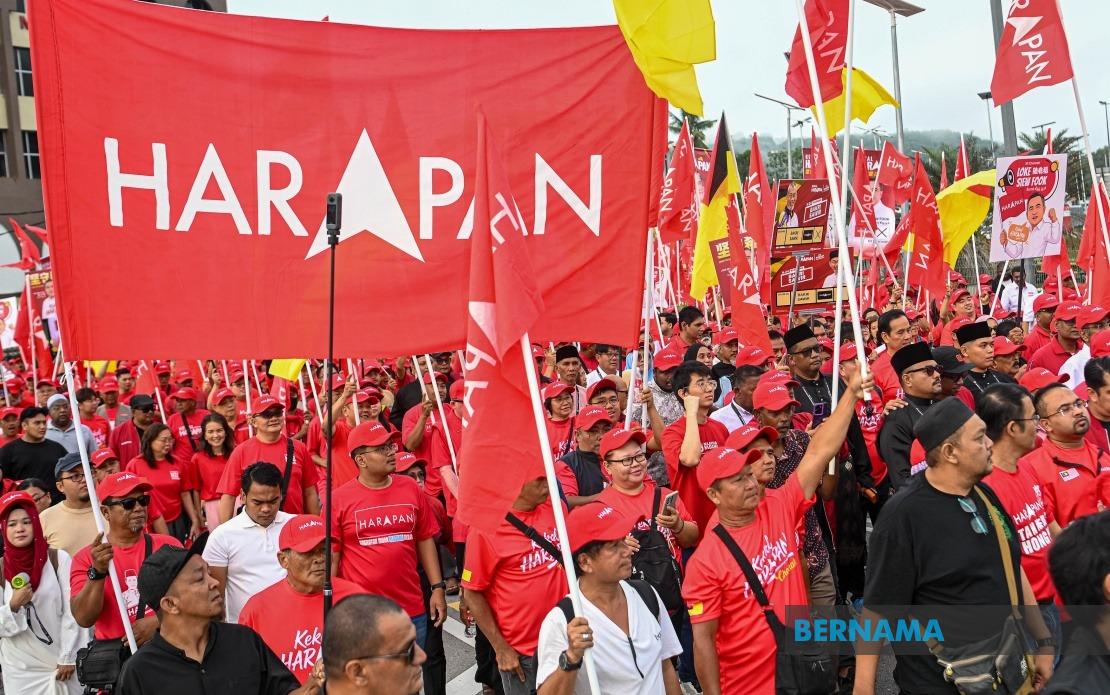
The 16th Negeri Sembilan State Election is shaping up to deliver competitive three-cornered contests in three strategically important state seats, as the nomination process concluded on Thursday with the announcement of candidates for Pertang, Klawang and Sungai Lui. The complexity of these multi-way races reflects the increasingly fragmented political landscape in Negeri Sembilan, where traditional Barisan Nasional strongholds now face challenges from both Pakatan Harapan and the breakaway Bersatu party. The announcement came from Jelebu Parliamentary returning officer Abdul Rahim A Aziz at Dewan Besar Kuala Klawang following the completion of nominations at 10 am on July 18.
In the Pertang constituency, the election will pit three heavyweight candidates against one another. Incumbent Datuk Seri Jalaluddin Alias, representing Barisan Nasional, will defend his seat against Mohd Umry Abdul Khois fielded by Pakatan Harapan and Mohd Faizal Fadli Mohd Idrus from Bersatu. Jalaluddin's previous performance provides insight into the competitive nature of this seat, as he secured victory in the last election with 5,634 votes, defeating Amirudin Hasan of Perikatan Nasional by a margin of 2,844 votes. This substantial winning margin suggests the BN incumbent enters the contest from a position of strength, though the fragmentation of the opposition vote across two separate candidates—rather than a unified opposition front—may work in his favour.
The Sungai Lui seat promises to deliver an intriguing contest marked by a personal dimension, as the three candidates competing for the state seat are former schoolmates. Datuk Mohd Razi Mohd Ali represents Barisan Nasional in this race, while Zainal Fikri Abd Kadir carries Pakatan Harapan's banner and Mazrulhisham Abd Mansor contests under the Bersatu ticket. The shared educational background of these candidates may inject an element of intense personal competition into proceedings, potentially attracting greater scrutiny from voters who remember their school days together. This particular dynamic distinguishes Sungai Lui from other constituencies and could prove significant in determining which candidate successfully mobilises grassroots support.
The Klawang state seat presents a different configuration from the other two constituencies. Here, the incumbent Datuk Bakri Sawir of Pakatan Harapan will face opposition from Muhammad Adib Musa representing Bersatu and Danni Rais of Perikatan Nasional. Unlike Pertang, where the incumbent represents the traditional ruling coalition, Klawang's contest features a Pakatan Harapan incumbent defending against challenges from two competitors outside the opposition alliance. This reversal of typical political alignments reflects the shifting patterns of Malaysian politics in recent years, where the traditional BN-versus-everyone-else dynamic has been replaced by a more complex three-way competition.
The emergence of three-way contests across these three constituencies underscores a broader transformation in Negeri Sembilan's political economy. The decision by Bersatu to field candidates independently rather than align with either major coalition has fractured what might otherwise have been two-candidate races. For Barisan Nasional candidates, this fragmentation of opposition votes offers potential advantages in contests where BN retains its traditional support base. For Pakatan Harapan, the presence of independent Bersatu candidates competing for similar urban and younger voter demographics presents a strategic challenge that may dilute their vote share in key constituencies.
The Bersatu party's positioning as a third force deserves particular attention, as it reflects deeper divisions within Malaysian politics that extend beyond simple coalition politics. Initially aligned with Muhyiddin Yassin's Perikatan Nasional framework, Bersatu's decision to contest separately in Negeri Sembilan suggests the party is attempting to carve out independent political space. This positioning may appeal to voters disillusioned with both major coalitions, though the party faces the structural challenge of name recognition and organisational capacity compared to its larger competitors.
From a regional perspective, the Negeri Sembilan election assumes significance as a bellwether for political trends across the peninsula. The state's central location, diverse economic base spanning agriculture, manufacturing and services, and mixed urban-rural composition make it representative of broader Malaysian political dynamics. The outcomes in these three contested seats will provide early indicators of whether voters are moving toward consolidation around the two major coalitions or whether fragmentation around alternative candidates continues to reshape electoral mathematics.
For Pakatan Harapan, defending the Klawang seat while competing for Pertang and Sungai Lui represents a balancing act between consolidating existing support and expanding into new territories. The coalition's performance in these contests will signal whether the momentum from recent electoral cycles persists or whether voter sentiment has shifted. Similarly, Barisan Nasional's ability to retain Pertang while remaining competitive in the other two seats will demonstrate whether the coalition retains sufficient grassroots organisation and voter loyalty to navigate the more competitive electoral environment.
The electoral commission has designated July 28 for early voting, providing voters with flexibility in casting their ballots during the initial week. The official polling day is set for August 1, giving candidates and parties roughly two weeks to conduct campaign activities and persuade undecided voters. This compressed campaign period may advantage better-resourced and more established political organisations with existing volunteer networks and voter contact infrastructure.
These three-way contests represent the shape of Malaysian elections in the post-2018 era, where traditional hierarchies have been disrupted and voters exercise greater choice across a wider range of political options. The candidates competing in Pertang, Klawang and Sungai Lui will need to make persuasive cases to voters about why their particular vision deserves support when alternatives abound. The outcomes will offer insights into whether this fragmentation reflects a durable shift in political preferences or represents a transitional phase before voters consolidate around preferred choices.

