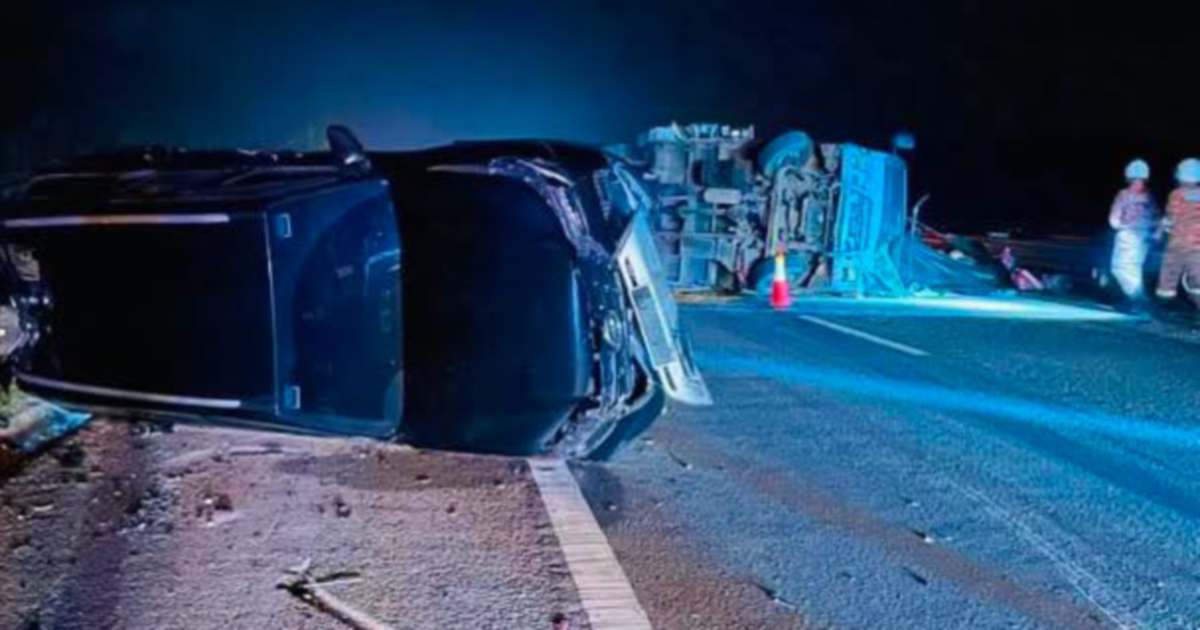
Three journalists attached to Deputy Prime Minister Datuk Seri Dr Ahmad Zahid Hamidi were among seven individuals injured in a multi-vehicle collision that unfolded in the early hours along the East Coast Expressway in Pahang. The incident occurred at the Km144 marker near Maran, involving three vehicles in what authorities described as a serious traffic accident on the main expressway corridor.
The three media officers, who work as part of the Deputy Prime Minister's communications team, fortunately did not sustain life-threatening injuries in the collision. Their involvement highlights the risks faced by personnel travelling alongside senior government officials on Malaysia's highways, particularly during journeys at unsociable hours when traffic conditions can prove unpredictable and road visibility diminishes. The East Coast Expressway, which connects Kuala Lumpur with Terengganu via Pahang, handles substantial traffic volumes daily and has been the site of various traffic incidents in recent years.
The accident brought together seven injured parties across the three vehicles involved in the collision. The circumstances that led to the initial impact between the vehicles remain under investigation by the Royal Malaysia Police, though early reports suggest a chain-reaction scenario typical of multi-vehicle crashes on expressways. Such incidents often occur when one vehicle strikes another, setting off a cascade effect involving additional vehicles in the vicinity.
Maran, the district where the accident took place, sits along a critical stretch of the LPT that experiences considerable through-traffic from commuters, commercial vehicles, and long-distance travellers. The location's proximity to major population centres and commercial hubs means incidents here can have ripple effects on traffic flow for extended periods. Emergency response teams were mobilised swiftly to manage the scene, provide medical assistance to the injured, and clear the expressway to restore normal traffic operations.
The involvement of media personnel with the Deputy Prime Minister's office underscores the constant movement of government officials and their entourages across Malaysian roads. Protocol and security arrangements surrounding such journeys are extensive, yet traffic incidents remain an inherent risk of road travel regardless of passenger status or vehicle specifications. The incident serves as a reminder of the importance of road safety practices, particularly during overnight or early-morning travel when fatigue and reduced visibility compound accident risks.
Road safety on Malaysia's expressway network continues to draw attention from traffic authorities and the government. The East Coast Expressway, as a major arterial route, employs various safety measures including electronic signage, regular patrols, and speed enforcement initiatives. However, human factors—such as driver attentiveness, speed control, and vehicle maintenance—remain critical determinants of accident prevention on high-speed corridors.
The three media officers' escaping serious injury in what appears to have been a significant collision was fortunate, particularly given the potential consequences of three-vehicle crashes at expressway speeds. Their safety, along with that of other injured parties, became the immediate priority following the collision, with paramedics attending to assess injuries and determine the need for hospital treatment.
Police investigations into the accident will likely examine vehicle speeds, road conditions, driver actions, and any contributing environmental factors. Such investigations are standard procedure following expressway incidents and help authorities identify patterns and implement targeted road safety measures. The findings may inform recommendations regarding traffic management on that stretch of the LPT.
For commuters and travellers using the East Coast Expressway, incidents such as this reinforce the necessity for defensive driving practices, maintaining appropriate speeds, ensuring adequate rest during long journeys, and remaining alert to changing road conditions. The early-morning timing of the accident—when many drivers may be fatigued or drowsy—aligns with known risk factors for expressway collisions during off-peak hours.
The accident occurred against a broader backdrop of traffic safety concerns on Malaysian highways. Annual figures consistently highlight road accidents as a significant public health challenge, with expressway incidents accounting for a substantial portion of serious and fatal accidents. Initiatives promoting awareness, vehicle safety standards, and driver behaviour modification continue to form part of the government's approach to reducing road casualties.
The treatment and recovery of the seven injured individuals, including the three media officers, will now occupy medical attention. Their condition would typically be monitored closely following such incidents to identify any delayed or emerging injuries. The Maran accident serves as a sobering reminder that regardless of occupation or status, all road users remain vulnerable to traffic incidents on Malaysian expressways.

