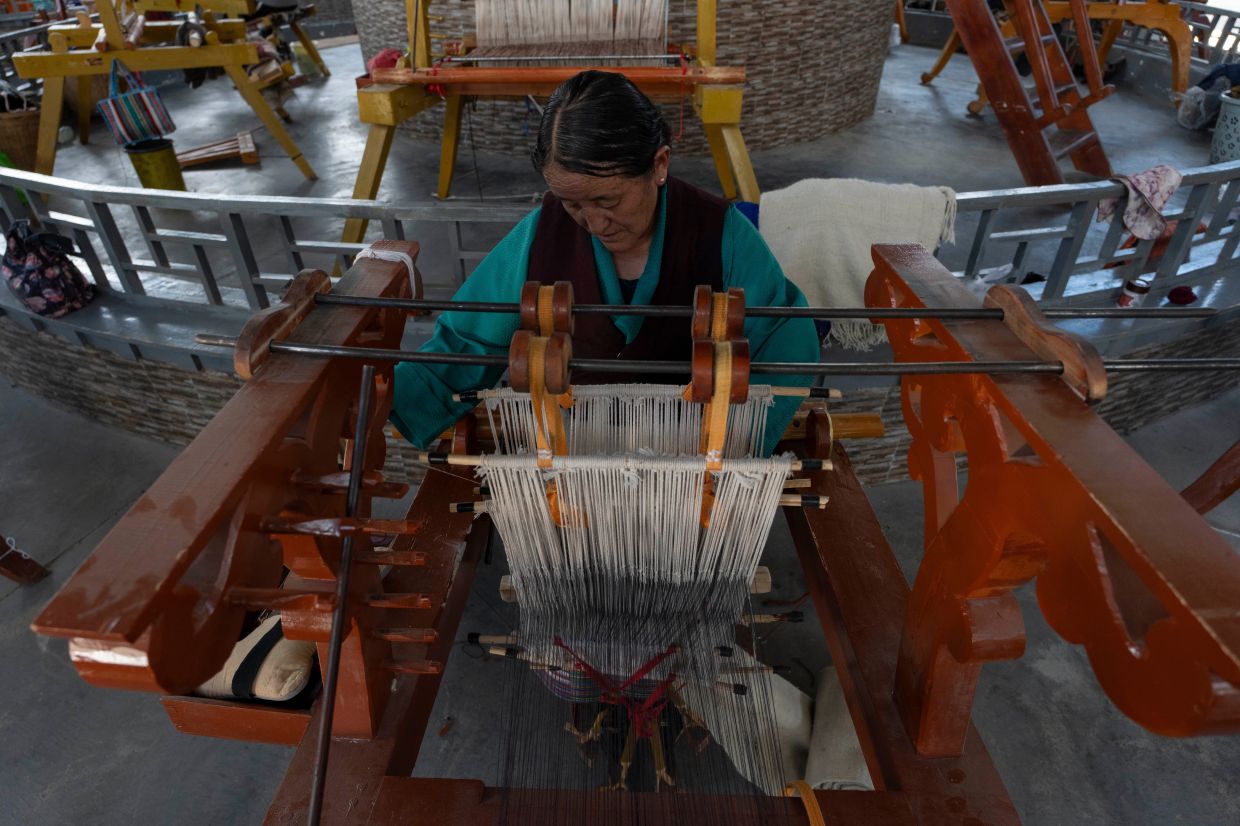
In a workshop nestled on the Tibetan plateau, artisans working at looms are breathing new life into an ancient textile tradition. The Ethnic Huaji Handwoven Cooperative in Shannan represents a rare success story in cultural preservation—one that merges heritage conservation with economic opportunity in a region where traditional crafts face existential pressure from globalisation and modern production methods. Across rows of wooden looms, weavers manipulate shuttles through fine wool yarns with the repetitive rhythm of work performed by their ancestors, creating Pulu, the traditional woolen fabric that has protected plateau dwellers from harsh mountain climates for more than a thousand years.
Pasang, a Tibetan artisan and the cooperative's founder, established the enterprise in 2008 when he recognised that knowledge of these weaving techniques was on the verge of extinction. When he first learned the craft from his parents, fewer than ten people in the entire region still possessed the skill to weave Zeter, a superior variant of Pulu distinguished by its exceptional softness and delicate texture. Today, the cooperative employs more than 100 local residents, including individuals with disabilities who might otherwise struggle to find employment in Shannan's limited job market. This expansion has transformed Pasang's original mission from personal preservation into a broader social enterprise that addresses both cultural continuity and economic inclusion in a rapidly developing Himalayan region.
Zeter represents the pinnacle of this weaving tradition, crafted exclusively from the finest wool harvested from the necks and backs of sheep raised in the high-altitude pastures surrounding Shannan, which sits approximately 3,700 metres above sea level. The softness of this particular wool makes the spinning process substantially more demanding than that required for ordinary Pulu, demanding technical expertise that distinguishes master weavers from novices. According to Pasang, Zeter's superior qualities—its lightness, softness, and refined appearance—made it a treasured commodity during imperial times. Historical records indicate that Zeter was presented as tribute from Tibetan regions to the Chinese imperial court during the Ming dynasty, suggesting that the fabric commanded significant prestige among the ruling classes and reflected the region's sophisticated textile capabilities.
The cooperative's workshop itself carries deep historical significance. Statues of Tibet's 7th century King Songtsen Gampo and his Chinese bride, Princess Wencheng, stand at the centre of the production space, overlooking the modern looms where artisans work. Local tradition attributes the introduction of weaving techniques to Tibet itself to Princess Wencheng, who brought advanced textile knowledge following her marriage to the king. This historical narrative, which features prominently in both Tibetan and Chinese historical accounts, frames weaving as a cultural technology that emerged from cross-cultural exchange and integration. Pasang himself emphasises this dimension, noting that the fabric and its production methods represent a synthesis of Tibetan and Chinese cultural elements that developed over centuries of interaction.
Recognition of the craft's cultural importance has grown in recent years. The weaving tradition has been formally designated as part of China's national intangible cultural heritage, a classification that confers official status and potential protection for the practice. This institutional recognition carries implications beyond mere symbolic validation—it can facilitate government support, educational integration, and market development initiatives that help sustain the craft economically. However, Pasang's concerns about generational transmission remain relevant; formal heritage designation does not automatically guarantee that younger Tibetans will choose to pursue weaving as a livelihood when other economic opportunities appear more lucrative or less physically demanding.
The cooperative operates a small showroom adjacent to its production facility, displaying an array of products manufactured from both Pulu and Zeter. Scarves, shawls, traditional jackets, bags, and other garments appeal to a customer base concentrated primarily within Tibetan regions, though sales to customers elsewhere in China have gradually expanded. This market limitation reflects both the specialised nature of the product and the challenges facing traditional crafts in competing with industrial textiles. The cooperative must balance preservation of authentic techniques with commercial viability, a tension that many heritage craft enterprises across Asia struggle to resolve.
The workforce itself demonstrates the cooperative's role in addressing local employment challenges. Tsering Yangchen, now 80 years old, migrated to Shannan from another county seeking work but encountered significant barriers to employment in her later years. The cooperative's training programmes provided her with new skills and enabled her meaningful participation in economic life. She has now worked at the workshop for seven years, representing one of many workers for whom the cooperative provides not merely income but dignity and connection to cultural practice. Her perspective on Pulu extends beyond commercial production—she emphasises that weavers and wearers alike value the fabric for its inherent qualities, particularly the purity of its wool and its practical utility in the region's demanding climate.
The cooperative's existence sits within a broader context of cultural change across the Tibetan plateau. Modernisation, urbanisation, and the expansion of industrial manufacturing have displaced many traditional crafts, particularly among younger populations more oriented toward urban employment and contemporary consumer goods. Educational systems increasingly emphasise skills suited to modern economies, leaving traditional knowledge holders without obvious pathways to transmit their expertise. Against this backdrop, the Ethnic Huaji Handwoven Cooperative represents a deliberate intervention—an attempt to create sustainable conditions under which ancient practices can survive not as museum pieces or tourist performances, but as living traditions integrated into contemporary economic life.
For observers across Southeast Asia and beyond, the Shannan cooperative offers instructive lessons about heritage preservation in developing regions. The model demonstrates that cultural continuity need not depend on nostalgia or top-down government intervention alone, but can emerge from entrepreneurial initiative rooted in genuine community connection. Pasang's 2008 decision to formalise the cooperative reflected recognition that informal, household-based transmission of skills had become insufficient to maintain the tradition. By creating employment structured around the craft, the cooperative aligned economic self-interest with cultural preservation—a synthesis that may offer templates for other traditional producers across Tibet, China's western regions, and Southeast Asia confronting similar pressures toward cultural homogenisation and abandonment of heritage practices in favour of industrial alternatives.

