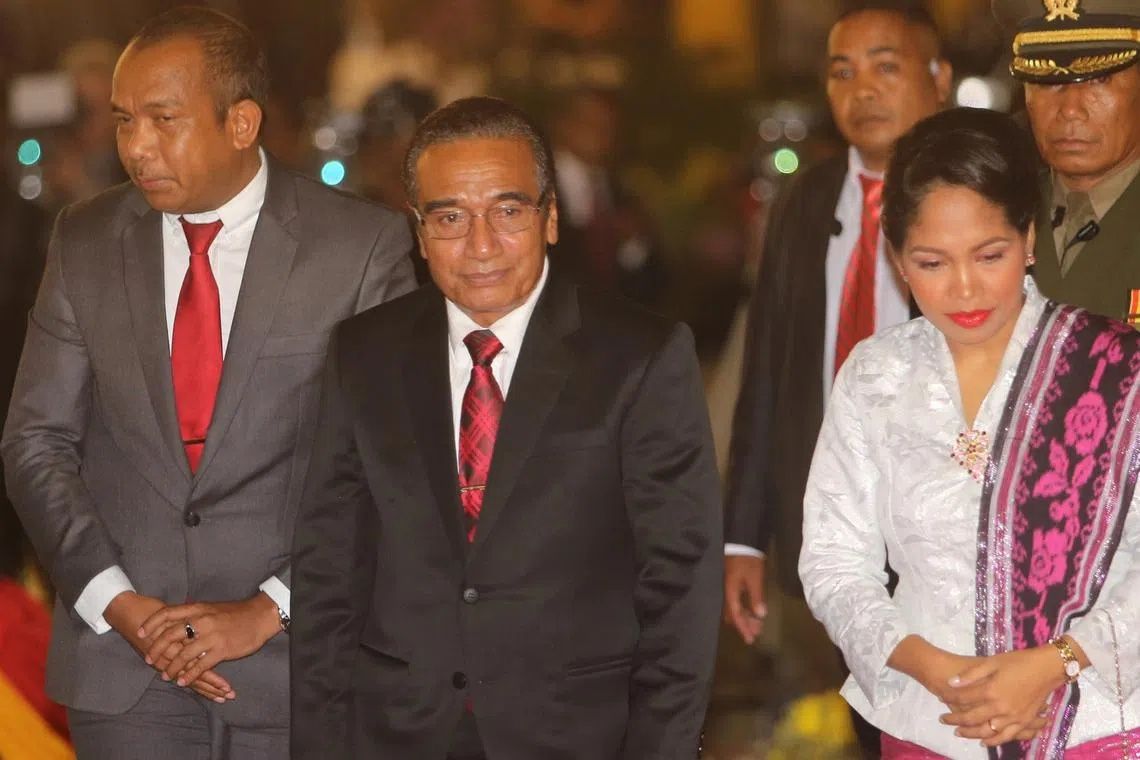
Timor-Leste has declared a week of national mourning for former president Francisco "Lu-Olo" Guterres, who passed away over the weekend at a hospital in Malaysia. The announcement came on June 22, with the government ordering flags at half-mast across public institutions, embassies, and consulates as the nation pays its respects to one of its most significant historical figures. Guterres's death marks the loss of a towering personality whose entire adult life was devoted to securing independence for his homeland and shaping the Southeast Asian nation's political trajectory in its formative years.
Guterres, aged 71, represented a generation of Timorese leaders who bore witness to the nation's suffering under Indonesian occupation and emerged as key architects of its liberation. His presidency from 2017 to 2022 represented the culmination of his decades-long commitment to East Timorese independence and self-determination. Beyond his role as head of state, Guterres was deeply embedded in the consciousness of ordinary Timorese citizens as a symbol of resilience and national struggle, having spent much of his youth engaged in armed resistance against the occupying power. His passing therefore resonates not merely as the loss of a political figure, but as the departure of a generation of independence heroes who physically lived through the nation's most harrowing period.
Guterres's body is scheduled to return to Dili, Timor-Leste's capital, on Tuesday, according to his brother Domingos Guterres, who addressed reporters regarding the logistical arrangements. The family is currently finalizing funeral preparations while requesting that the public afford them privacy during this period of grief. "We ask everyone to respect the family's privacy at this difficult time, as we join in prayer and pay tribute to his memory, his legacy, and his dedication to the Timorese people," the family stated in a brief declaration, striking a balance between acknowledging public mourning and maintaining personal space for bereavement.
Current president Jose Ramos-Horta, who defeated Guterres in a closely contested 2022 presidential runoff, released a statement acknowledging his former rival's immense contributions to the nation. Ramos-Horta, himself a Nobel Peace Prize laureate, characterized Guterres as a "great patriot" whose loss constitutes "a great loss for the nation." This public acknowledgment from Ramos-Horta underscores the respect that transcends political competition in Timorese leadership circles, where shared sacrifices during the independence struggle create bonds that endure beyond electoral contests. The government extended formal condolences not only to Guterres's immediate family but also to Fretilin, the Revolutionary Front for an Independent East Timor party he once led, and to the broader Timorese population.
Guterres's path to the presidency reflected his emergence from modest circumstances into a position of tremendous national influence. Throughout the brutal 24-year Indonesian occupation that lasted until 2002, he participated actively in the armed resistance movement, gaining recognition and respect among those fighting for the nation's freedom. When democratic elections finally became possible following independence, Guterres's credentials as a liberation struggle veteran positioned him prominently in the political landscape. In the 2017 presidential contest, he secured victory with over 57 percent of the vote, becoming Timor-Leste's sixth president and validating the public confidence placed in his leadership during a critical period of nation-building.
However, his attempt to secure a second term proved unsuccessful. The 2022 presidential runoff saw him defeated by Ramos-Horta, reflecting the evolving political preferences of the East Timorese electorate. Despite this electoral setback, Guterres retained significant moral authority and respect throughout Timorese society, a testament to the enduring impact of his decades of struggle and service. The transition between these two presidents, both respected figures with deep connections to the independence movement, illustrated the maturation of Timorese democracy and its capacity for peaceful transfers of power at the highest level.
Regional leaders have begun extending condolences to Timor-Leste, reflecting the importance of Guterres's status within Southeast Asian political circles. Malaysian Prime Minister Datuk Seri Anwar Ibrahim expressed his sadness at Guterres's passing and conveyed Malaysia's sympathies to both the bereaved family and the Timorese people. "Malaysia mourns his passing alongside the Timorese people. He will be remembered here with respect and affection," Anwar stated, underlining the regional dimension of Guterres's legacy and the esteem in which neighbouring nations held him. This external recognition highlights how Guterres transcended purely domestic significance to become an admired figure across the Southeast Asian region.
Guterres's death represents a symbolic closing of a chapter in Timor-Leste's history. The generation of leaders who personally experienced the independence struggle and guided the nation through its initial democratic years is gradually departing from the political stage. The mourning period declared by the government provides an opportunity for Timorese society to reflect on Guterres's contributions and to contemplate the challenges facing the nation as it moves forward without the steady presence of its independence war heroes. His legacy encompasses not only specific policies or achievements but also the embodiment of sacrifice, persistence, and commitment to national self-determination that characterised the liberation struggle itself.

