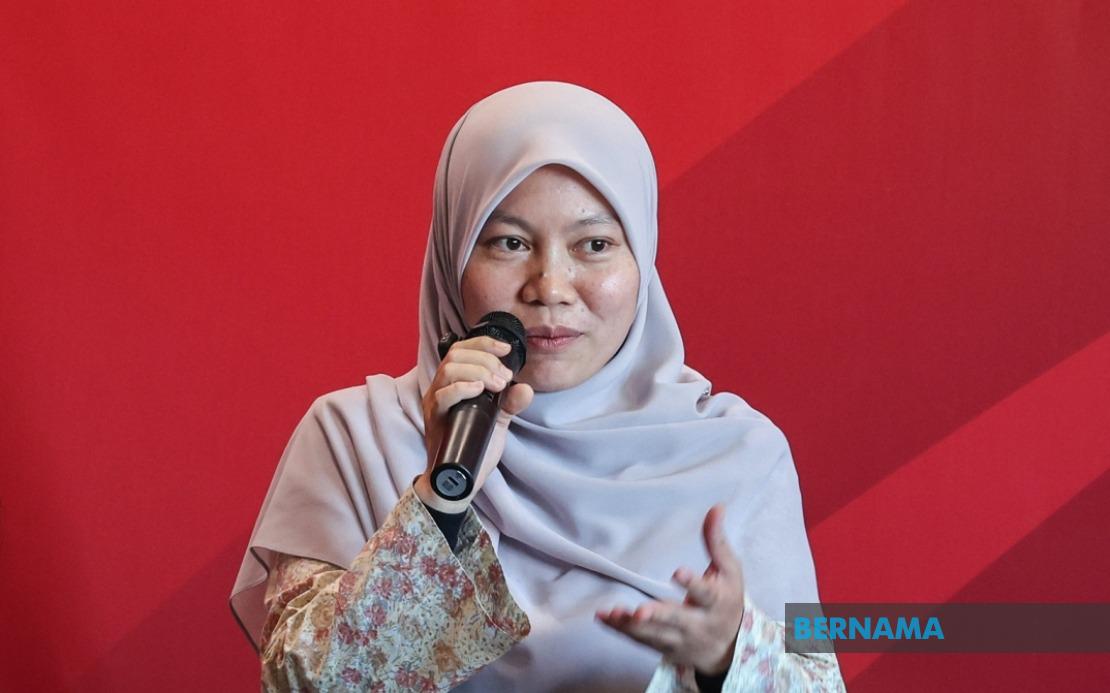
The Tiram state constituency in Johor represents far more than a routine electoral contest in the 16th state election. Rather, it encapsulates the volatility of Malaysian political dynamics, where a Malay-majority seat long dominated by one coalition has become contested territory, reflecting deeper shifts in voter sentiment and coalition fortunes. Pakatan Harapan's nomination of Nor Zulaila Abd Ghani to represent the constituency carries symbolic weight precisely because it signals PH's willingness to challenge BN's historical dominance in traditionally conservative electoral strongholds, even as conventional political wisdom might counsel otherwise.
Nor Zulaila's entry into the race marks a watershed moment for DAP, which contests the Malay-majority Tiram seat for the first time despite the constituency's demographics—nearly 60 per cent of the 117,000 registered voters identify as Malay. The appointment carries undeniable risk, particularly given Tiram's status as a BN bastion since 1959, though PH through PKR did manage to win the seat in 2018 before losing ground two years later. Yet Nor Zulaila, at 38 and serving as private secretary to Deputy Finance Minister Liew Chin Tong, frames her candidacy not as foolhardiness but as a necessary exercise in democratic challenge. She argues that if aspiring representatives only pursue comfortable constituencies, certain areas would perpetually lack contestation, leaving voters without genuine choice. This framing resonates with observers seeking to understand how Malaysian politics is gradually shifting beyond the zero-sum racial and religious calculations that once defined electoral contests.
The substantive challenge Nor Zulaila acknowledges extends beyond mere perception management around DAP's brand among Malay voters. Rather, she must convince Tiram residents that PH possesses the competence and commitment to address concrete hardships affecting their daily lives. These grievances are neither abstract nor ideological but rooted in tangible quality-of-life concerns: peak-hour gridlock that strangles commuting, village roads that require upgrading, inadequate street lighting that compromises safety, and limited economic opportunities that constrain household advancement. Nor Zulaila's strategy of prioritising smaller, achievable victories—addressing hawker permit bureaucracy, for instance—within her first 100 days suggests a recognition that grassroots trust accumulates through incremental delivery rather than sweeping promises. This ground-level focus may distinguish her campaign from broader PH positioning.
Barisan Nasional counters with Datuk Abdul Halim Suleiman, whose credentials embody the coalition's traditional approach to retaining influence: a Dewan Negara senator with tenure as Puteri Wangsa assemblyman across two terms and current standing as Tebrau UMNO division chief. Abdul Halim's familiarity with the electoral landscape contrasts sharply with Nor Zulaila's relative freshness to the constituency. His emphasis on structured development coordination across multiple tiers of government and stakeholder engagement articulates BN's preference for top-down planning frameworks involving local authorities, state entities, federal agencies, and developers. However, this orientation implicitly concedes that previous infrastructure development has lacked integrated planning, thereby validating resident complaints about haphazard growth. On traffic congestion specifically, Abdul Halim acknowledges that resolution requires federal-state coordination, a qualification that may undercut claims of straightforward problem-solving.
Parti Bersama Malaysia's candidate, Dr Harith Fakhrudin Abdul Malek, occupies the race's third lane, emphasising that traffic gridlock and road safety represent persistent rather than novel difficulties. His framing that Tiram has endured these challenges for over a decade, compounded by vehicle proliferation and deteriorating road conditions, aligns with resident testimonies. The presence of a third candidate fractures the opposition vote that BN must navigate, though the extent of that fragmentation remains unclear. For Tiram's electorate, the three-way contest offers genuine differentiation: PH's DAP representative pursuing incremental community-level solutions, BN's experienced administrator advocating institutional coordination, and Bersama's candidate highlighting systemic inertia.
Resident perspectives ground this elite-level contestation in lived experience. Farah, a 34-year-old Kampung Sungai Tiram inhabitant, articulates a crucial distinction: Tiram is not underdeveloped in absolute terms but rather has failed to keep pace with population growth and vehicle expansion. Development exists but remains piecemeal, with outdated planning frameworks unable to accommodate demographic and infrastructural realities. Her observation extends beyond Tiram's boundaries—overflow traffic affects neighbouring Puteri Wangsa as motorists navigate alternative routes to escape Jalan Tebrau congestion. Most troubling are heavy vehicles exploiting village roads as bypasses, creating public safety hazards through overloading and poor maintenance. These grievances suggest that voter dissatisfaction stems not from stagnation but from asymmetric development, where growth in some domains outpaces corresponding infrastructure upgrades elsewhere.
Political analyst Dr Mazlan Ali's assessment reorients the electoral calculus significantly. Rather than interpreting BN's 2022 victory as decisive validation of coalition strength, Mazlan contextualises the result within historically low voter participation, approximately 50 per cent and below 60 per cent. This framing is crucial for understanding Tiram's trajectory: BN's narrow 9.4 per cent majority in 2022 contrasts sharply with PH's 16.1 per cent margin in 2018, suggesting electoral volatility rather than stable allegiance. BN's historical dominance, evidenced by 74.6 per cent support in 1995, 73.0 per cent in 2004, and 31.7 per cent in 2008, demonstrates substantial decline over decades. Such deterioration implies eroding incumbency advantage, possibly reflecting accumulated dissatisfaction with service delivery and responsiveness.
Mazlan's prediction that Chinese voter turnout will exceed 2018 levels introduces demographic realignment considerations. Non-Malay and middle-class voters reportedly have grown alienated by PAS-BN cooperation in certain constituencies and controversies surrounding former Prime Minister Datuk Seri Najib Tun Razak. These represent not localised grievances but expressions of broader national political tensions. If such voters materialise in greater numbers, they potentially strengthen PH's coalition composition and electoral prospects. However, this dynamic depends on turnout mechanics that remain uncertain until polling concludes.
Mazlan's threshold hypothesis—that PH gains electoral advantage if turnout exceeds 75 per cent—proves analytically illuminating. Turnout above this level would suggest mobilisation of voters dissatisfied with current governance, presumably benefiting opposition forces challenging incumbency. Lower turnout favours BN by concentrating the vote among core supporters less susceptible to alternative messaging. This turnout-dependent outcome distinguishes Tiram from constituencies where demographic composition or historical patterns provide clearer predictive value. The seat's competitiveness ultimately hinges on factors—voter engagement levels, campaign effectiveness, local issue salience—that resist definitive pre-election forecasting.
The Tiram contest carries implications extending beyond Johor's electoral mathematics. It exemplifies how Malaysian constituencies at the state level increasingly become genuine battlegrounds rather than predetermined outcomes. The presence of credible contenders across multiple coalitions, resident engagement with substantive governance questions, and acknowledged policy interdependencies across tiers of government suggest electoral politics evolving beyond purely communal mobilisation. Tiram's voters face genuine choices, reflecting regional diversity and policy preferences rather than passive acceptance of predetermined outcomes. Whether turnout reaches the thresholds Mazlan identifies will significantly influence not merely this constituency's representation but broader patterns of voter engagement and political competition within Johor and beyond.

