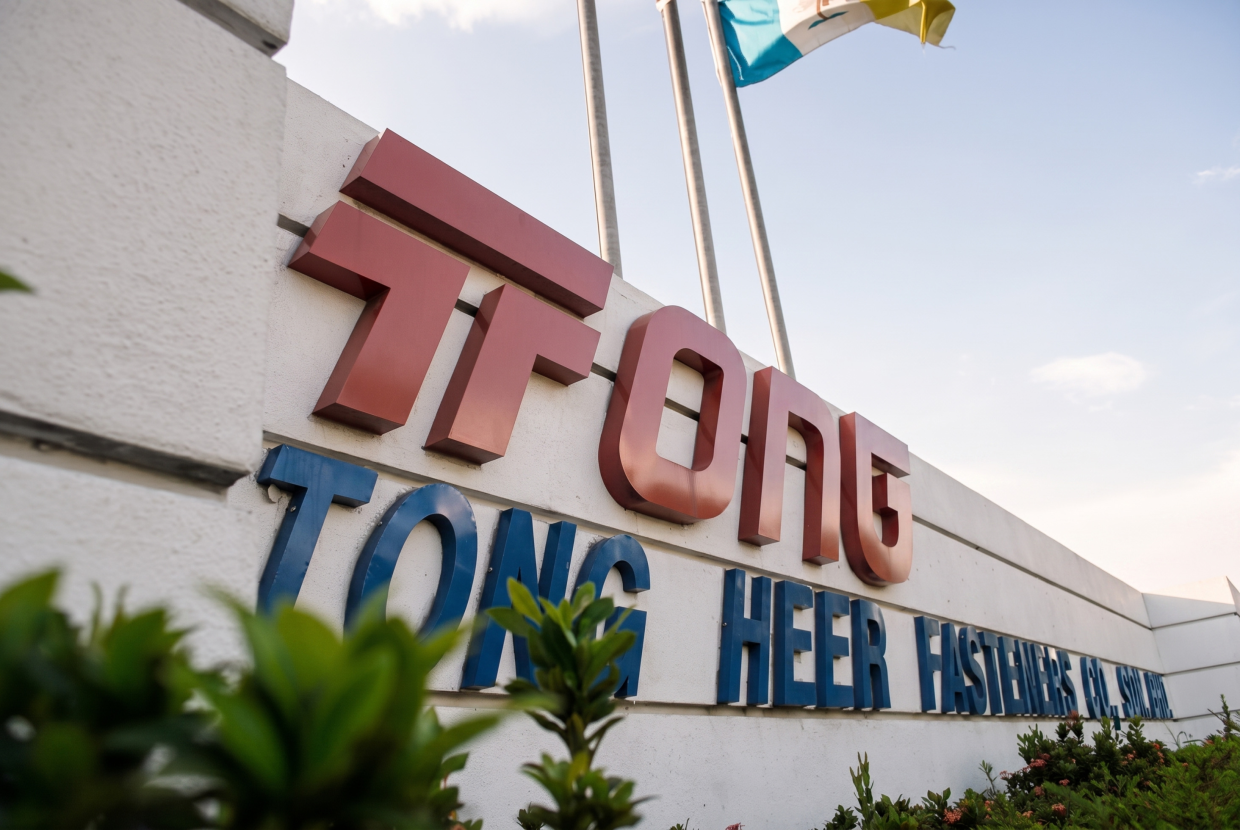
Controlling shareholders of Tong Herr Sdn Bhd have launched a formal privatisation proposal valuing the stainless steel fasteners and aluminium extrusions manufacturer at RM2.55 per share. The offer represents a substantial 34.2% uplift from the company's last recorded closing price of RM1.90, signalling the offerors' confidence in the business while providing minority shareholders with a clear exit opportunity at a marked-up valuation.
The privatisation initiative has been jointly proposed by Allrich Corp and Richard Holdings Ltd, which respectively hold 39.68% and 31.95% stakes in Tong Herr. Combined with their associated parties and persons acting in concert, these major shareholders control approximately 114.38 million shares, representing 74.5% of the company's total issued capital. This commanding shareholding position substantially de-risks the transaction's execution, as securing the necessary approvals from independent shareholders becomes more achievable when majority holders are aligned on the proposal.
The mechanism for the delisting will proceed through a selective capital reduction and repayment exercise, a structure increasingly favoured in Malaysian corporate transactions for streamlining administrative processes. Notably, when calculated against the RM1.80 closing price recorded on August 5, 2026, the offer price commands a more generous 41.7% premium based on the volume-weighted average price methodology employed during the valuation period. This dual-premium calculation emphasises the offerors' willingness to compensate shareholders substantially above recent trading benchmarks.
The joint offerors have explicitly stated their intention not to maintain Tong Herr's listing on the Main Market of Bursa Malaysia following transaction completion. They will petition Bursa Securities for the company's removal from the official list and termination of its listing status. For a manufacturing company of Tong Herr's profile—producing specialised industrial components for various downstream sectors—this strategic shift marks a consequential transition from public market scrutiny to private ownership structure.
Central to the privatisation rationale is an argument about operational flexibility and resource allocation efficiency. The offerors contend that private ownership would liberate management bandwidth currently consumed by public company compliance obligations and investor relations activities, enabling greater strategic focus on organic growth initiatives and sustained value creation. For a manufacturer in competitive industrial segments, this narrative carries particular resonance, as publicly listed companies often face quarterly earnings pressure that can conflict with longer-term capital intensity investments necessary for technological advancement and market expansion.
Crucially, the offerors have highlighted Tong Herr's chronically poor trading liquidity, a persistent challenge that diminishes shareholder utility from public listing. Over the preceding three-year period through the most recent trading day, the company averaged merely 21,075 shares exchanged daily—representing merely 0.05% of its free float. Such anaemic trading activity creates practical difficulties for shareholders seeking to build or exit positions, effectively rendering the public listing status hollow for minority investors despite theoretical liquidity benefits.
The selective capital reduction exercise simultaneously functions as a pragmatic exit mechanism for entitled shareholders who wish to crystallise their investments at the enhanced valuation. By structuring the transaction through this vehicle rather than a conventional takeover, the framework permits cleaner administrative execution whilst addressing minority shareholder cash-out requirements. For investors holding fractional or modest shareholdings, the ability to realise positions at a meaningful premium to historical trading ranges provides closure and certainty.
Approval pathways remain multi-layered and constitute material conditions precedent to transaction completion. Non-interested shareholders must grant special resolution approval, requiring support from both a simple majority in terms of shareholder numbers and 75% of votes cast by this constituency at an extraordinary general meeting. Additionally, the proposal cannot be defeated by more than 10% in value of votes attached to all shares held by non-interested shareholders, a protective provision that ensures reasonably broad shareholder backing.
Beyond shareholder approval, the High Court must confirm the selective capital reduction exercise, introducing judicial scrutiny of the transaction's fairness and propriety. Malaysian courts typically examine whether the reduction accords with statutory requirements and whether shareholders are treated equitably, particularly regarding pricing methodology and information disclosure. This confirmation phase adds procedural duration and represents a potential pressure point, though transactions structured with apparent fairness rarely encounter judicial obstacles.
Tong Herr's non-interested directors have been delegated responsibility for deliberating the privatisation proposal and determining subsequent procedural steps. This governance segmentation, separating interested from independent directors, maintains decision-making integrity and demonstrates compliance with Malaysian corporate governance standards. The independent board contingent's assessment will substantially influence minority shareholder sentiment and the regulatory environment's receptiveness to the transaction.
The proposition arrives at a particularly significant juncture for Malaysian industrial manufacturers, where the post-pandemic operating landscape has encouraged consolidation and recapitalisation across multiple sectors. Smaller publicly listed companies, particularly those with limited free float and restricted trading volumes, face mounting pressure to evaluate privatisation as a strategic alternative to maintaining costly public company infrastructure. Tong Herr's case exemplifies this broader structural transition affecting Malaysia's secondary industrial stocks.
For investors holding Tong Herr shares, the proposal fundamentally alters the risk-return calculus. The privatisation offer provides quantifiable certainty at a substantial premium, effectively eliminating extended illiquidity exposure that has characterised the stock for years. Conversely, shareholders declining to accept the offer must reconcile their investment thesis with the apparent exit of major shareholders, raising questions about future governance, strategic direction, and the sustainability of public listing status absent controlling shareholder commitment.
The transaction timeline will unfold through successive announcements as the non-interested directors complete deliberations and management charts the corporate action roadmap. Shareholders awaiting further details should anticipate formal notice of the extraordinary general meeting, detailed circular documentation, and valuation-related disclosures that will enable informed voting decisions. Resolution of this privatisation exercise will meaningfully reshape Tong Herr's corporate profile and shareholder composition.

