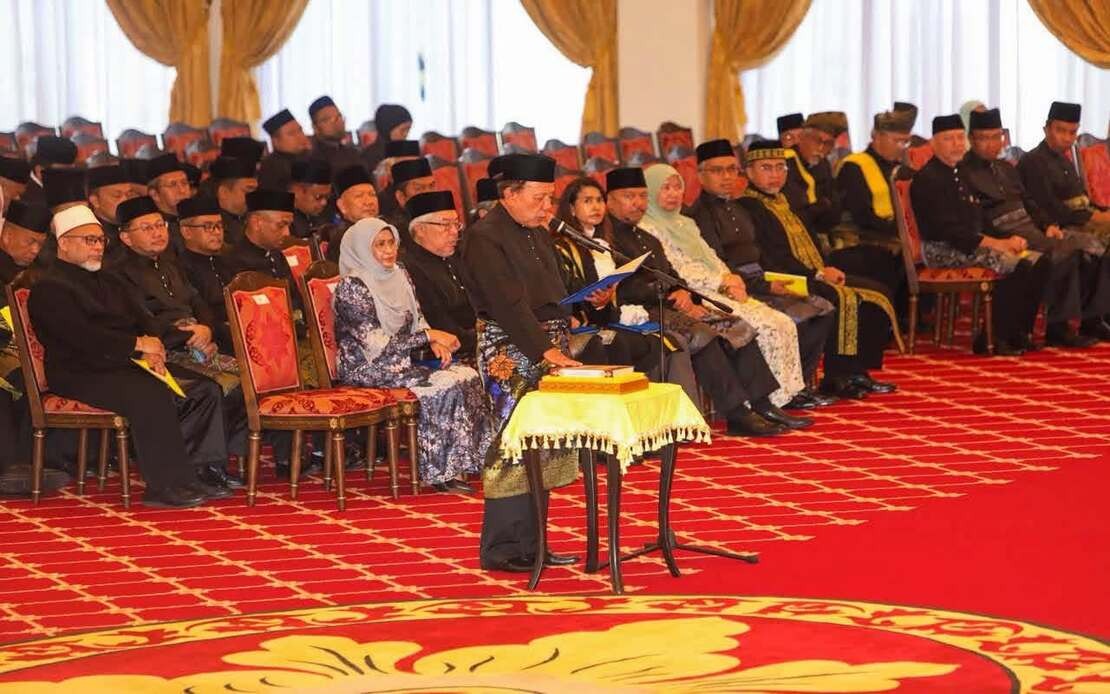
Datuk Ismail Lasim has been formally sworn in as the new Menteri Besar of Negeri Sembilan, an appointment that has drawn swift endorsement from the federal government's top leadership. The ceremony took place at the Balairong Seri of Istana Besar Seri Menanti before Tuanku Muhriz Tuanku Munawir, the Yang Dipertuan Besar of Negeri Sembilan, marking an official transition in the state's political leadership.
Deputy Prime Minister Datuk Seri Dr Ahmad Zahid Hamidi, who also serves as Rural and Regional Development Minister, was among the first to publicly acknowledge the appointment through a Facebook message. Zahid characterised Lasim's new position as one carrying significant responsibility, expressing confidence that the Juasseh assemblyman would discharge his duties effectively while prioritising the welfare of Negeri Sembilan's residents and the state's broader development agenda.
Defence Minister Datuk Seri Mohamed Khaled Nordin similarly shared his congratulations, emphasising the public's trust in Lasim as a weighty mandate to sustain the momentum of progress within the state. Mohamed Khaled's remarks underscored the importance of continuity in development initiatives, signalling that the incoming administration would be expected to build upon existing frameworks that have contributed to Negeri Sembilan's stability and economic advancement.
Plantation and Commodities Minister Datuk Seri Dr Noraini Ahmad characterised the transition as a pivotal juncture in the state's trajectory. In her statement, she positioned Lasim's leadership as instrumental in guiding Negeri Sembilan toward a fresh chapter, while invoking religious sentiment common in Malaysian political discourse by calling for divine guidance in his new responsibilities.
Ismail's appointment arrives after a political career spanning nearly three decades. The 67-year-old politician first entered electoral politics in 1999 when he successfully contested as a state assemblyman representing Juasseh. This longevity in representation suggests deep roots within local constituencies and accumulated institutional knowledge of state governance.
Prior to his elevation to the top office, Ismail served on the state executive council from 2004 onwards, holding the education portfolio across three consecutive legislative terms until 2018. His tenure in this domain gave him responsibility for shaping educational policies and human capital development strategies specific to Negeri Sembilan's needs. This background indicates that his administration may place emphasis on education and skills development as pillars of state progress.
The federal ministers' public endorsements reflect a broader pattern of centrally coordinated messaging that underscores stability and continuity during leadership transitions in Malaysia's component states. Such statements serve multiple purposes: they legitimise the new leader within their political coalition, signal federal support for state-level initiatives, and project an image of unified governance across federal and state levels.
For Negeri Sembilan specifically, Lasim's appointment represents an opportunity to consolidate past achievements while charting new policy directions. Given his education sector experience, observers may expect renewed focus on improving educational outcomes and workforce development as the state competes for investment and talent within the broader Southeast Asian context.
The succession process itself reflects Malaysia's constitutional framework, whereby state rulers retain ceremonial authority over executive appointments, although practical political dynamics determine who ascends to the Menteri Besar position. Lasim's swearing-in ceremony before Tuanku Muhriz adds constitutional legitimacy to what was fundamentally a political decision.
The timing and nature of federal ministerial statements also carry significance for Malaysian political watchers. By publicly welcoming Lasim's appointment, senior coalition figures from the ruling Barisan Nasional framework demonstrate their investment in his success and by extension, the stability of the state government. This coordinated response helps consolidate political consensus around the transition and reduces space for alternative power centres to challenge the legitimacy of his mandate.
Looking ahead, Lasim's administration will face the standard challenges confronting state governments in Malaysia: balancing development spending with fiscal constraints, managing state-federal relations, addressing local grievances, and positioning Negeri Sembilan competitively within the broader national economy. His education background may give him particular insight into human development aspects of these challenges.
The ministerial statements also reflect Malaysia's political culture, where religious references and appeals to collective progress feature prominently in official communications. Phrases invoking divine guidance and collective welfare resonate with both traditional values and contemporary governance narratives within the country's Muslim-majority society.

