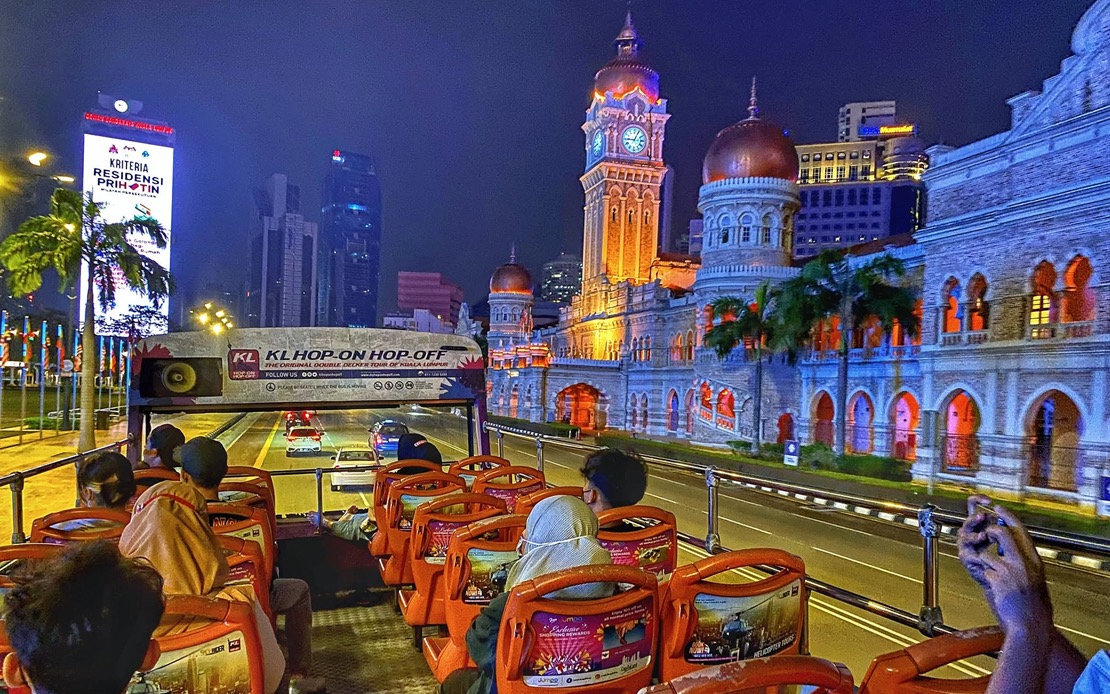
Tourism Malaysia has partnered with KL Hop-On Hop-Off operator Elang Wah Sdn Bhd to launch an ambitious domestic tourism campaign designed to energise local travel patterns and lay groundwork for the flagship Visit Malaysia 2026 initiative. The collaboration, unveiled in Kuala Lumpur on June 24, positions the iconic sightseeing buses as mobile billboards promoting Malaysia's diverse attractions to both residents and visitors traversing the capital's major routes.
Minister of Tourism, Arts and Culture Datuk Seri Tiong King Sing emphasised that domestic tourism constitutes a cornerstone of Malaysia's broader tourism ecosystem, driving economic multipliers through direct spending, employment generation across hospitality and transport sectors, and sustainable community development in destination regions. The ministerial backing underscores the government's recognition that strengthening internal tourism flows reduces dependence on volatile international visitor markets whilst capitalising on Malaysians' natural tendency to explore home territory during festive periods and school holidays.
The campaign's centrepiece comprises six buses wrapped in vibrant graphics showcasing landmark destinations spanning all 15 Malaysian states and federal territories. Featured attractions range from the architectural magnificence of the Sri Sendayan Mosque in Negeri Sembilan to the geological marvel of the Pinnacles of Mulu in Sarawak, effectively compressing Malaysia's tourism portfolio into a travelling advertisement. This visual strategy transforms everyday public transport into experiential marketing tools, exposing millions of commuters and urban explorers to curated tourism content during their regular journeys.
Innovatively, the bus wraps incorporate interactive QR codes enabling passengers and bystanders to access curated travel packages, promotional pricing tied exclusively to Visit Malaysia 2026, and the official Calendar of Events—a comprehensive scheduling tool directing travellers toward state-specific festivals, cultural celebrations, and seasonal attractions. The digital integration addresses the modern consumer's expectation for seamless information access whilst reducing friction between awareness and booking, critical for converting curiosity into actual travel reservations.
The timing of this campaign aligns strategically with exceptional recent performance in Malaysia's domestic tourism sector. During 2025, domestic visitors reached 290.1 million, representing a substantial 21.3 per cent year-on-year increase compared to 260.1 million journeys in 2024. This upward trajectory suggests fundamentally strong appetite for domestic travel, potentially driven by improved transport connectivity, targeted promotional campaigns, and post-pandemic normalisation of leisure spending patterns amongst Malaysian households.
Expenditure metrics reveal an equally encouraging picture, with domestic tourism spending climbing to RM121.0 billion in 2025 from RM106.7 billion the preceding year—a 13.3 per cent increase that outpaces the visitor growth rate. This divergence indicates travellers are spending more per journey, reflecting either higher accommodation standards, extended trip durations, premium activity selection, or inflation in tourism-related pricing. For the tourism ecosystem, elevated per-capita expenditure translates into stronger returns for hotels, restaurants, attractions, and service providers, enabling reinvestment in infrastructure and quality improvements.
For Malaysian tourists, the initiative offers practical benefits beyond marketing exposure. State-specific tourism websites accessed through QR codes provide consolidated information reducing search friction, whilst the Calendar of Events functionality helps coordinate travel plans around cultural moments—lunar new year celebrations, Raya festivities, Deepavali gatherings—maximising experiential value. Families seeking cost-effective holiday options benefit from promotional pricing concentrated through the VM2026 framework, potentially unlocking discounts unavailable through conventional booking channels.
The campaign carries particular significance for Malaysia's regional positioning within Southeast Asian tourism. Thailand, Indonesia, and Vietnam aggressively pursue domestic tourism initiatives to strengthen internal revenue streams. Malaysia's coordinated approach through Tourism Malaysia and private operators demonstrates similar strategic sophistication, leveraging public-private partnerships to achieve market penetration at scale and cost-efficiency. The wrapped bus concept proves especially effective in urban environments where exposure frequency remains high, creating habitual awareness that influences travel decision-making during planning windows.
Looking ahead toward Visit Malaysia 2026, this domestic campaign serves a foundational function beyond immediate revenue generation. By rekindling Malaysians' enthusiasm for local destinations, the initiative cultivates authentic narratives and user-generated content—travel blogs, social media testimonials, family photographs—that become invaluable marketing collateral for attracting international visitors. Domestic travellers essentially become brand ambassadors, their visible consumption of Malaysian tourism experiences lending credibility and accessibility to the broader Visit Malaysia 2026 promise.
The partnership structure merits attention as a model for sustainable tourism development. Rather than relying exclusively on government marketing budgets, Tourism Malaysia engages private transport operators with existing customer touchpoints and distribution networks. For Elang Wah, the collaboration provides brand elevation and association with national tourism objectives, potentially driving ridership through heightened social relevance. This alignment of commercial and developmental interests creates durable foundations for campaigns extending beyond singular promotional periods.
Sectorally, the initiative carries implications for Malaysia's domestic aviation, rail, and hospitality industries. Stimulated domestic demand reduces capacity constraints during off-peak seasons, improves load factors across transport networks, and sustains employment during traditionally quieter periods. Hotels outside Kuala Lumpur and major resort destinations stand to benefit from increased visitation, whilst regional attractions gain justified investment in maintenance and expansion of visitor facilities.
The KL Hop-On Hop-Off partnership also reflects broader urbanisation trends in Southeast Asia, where city-based tourists represent increasingly important revenue sources. Urban middle-class Malaysians possess disposable income, flexible work arrangements, and weekend availability to engage weekend travel patterns. By positioning the campaign within daily urban commute routes, Tourism Malaysia targets precisely this demographic when psychological receptiveness to travel ideas peaks—during routine journeys when minds drift toward leisure planning.
As Malaysia advances toward Visit Malaysia 2026, the success metrics for this domestic campaign will extend beyond immediate visitor numbers or spending figures. Measurement should encompass brand sentiment shifts, regional destination awareness improvements amongst urban populations, and conversion tracking through QR code redemption data. These analytics will inform refinement of subsequent domestic tourism initiatives and provide evidence regarding which Malaysian attractions most capture local imagination—intelligence invaluable for international marketing targeting.

