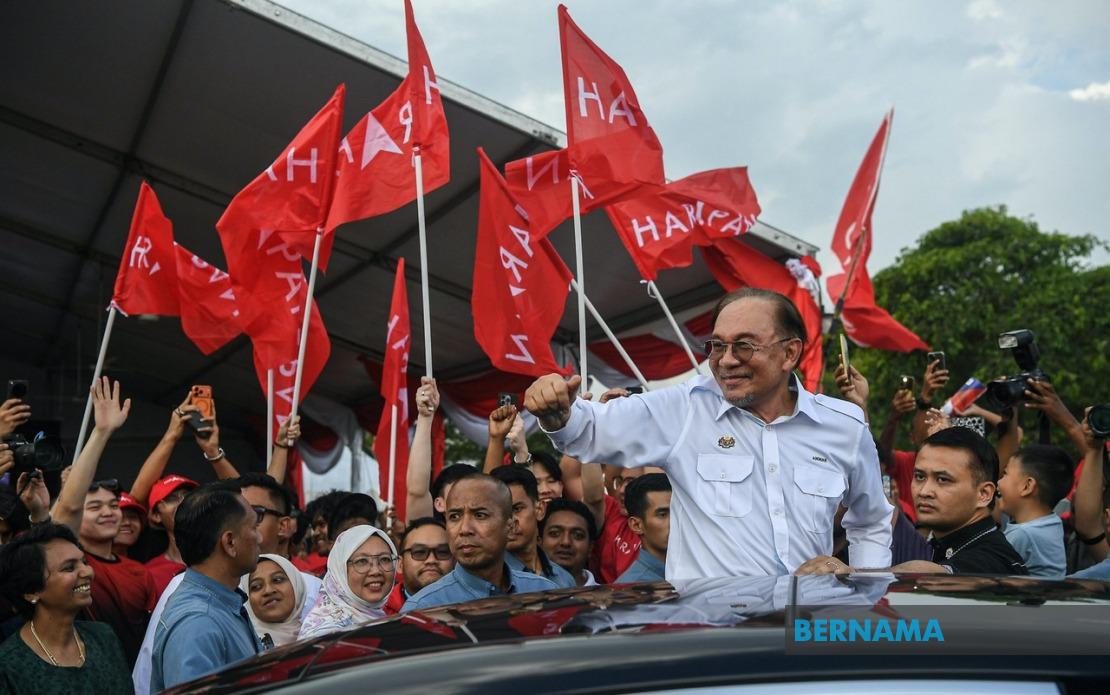
As Johor's 16th State Election unfolds with unprecedented social media activity and viral digital campaigns, a distinctive pattern has emerged among the state's older electorate: the handshake and the rally remain far more persuasive than the algorithm. A recent Bernama survey reveals that despite the ubiquitous presence of TikTok, Facebook and other online platforms dominating campaign strategy, senior voters continue to place substantial weight on the physical appearance, demeanour and perceived authenticity of candidates seeking their support. For many in this demographic, seeing a politician in person provides an intangible but crucial element that no livestreamed event or carefully edited video can replicate—a sense of genuine human connection that serves as a proxy for trustworthiness.
The appeal of face-to-face engagement among Johor's elderly voters stems partly from a fundamental belief that physical presence reflects sincerity. Chandra, a 70-year-old retired teacher from Perling, articulates this sentiment clearly: the atmosphere at a campaign event, with its energy, crowds and direct access to candidates and political leaders, offers an experience vastly superior to passive consumption of digital content from home. This preference is not merely nostalgic or generational stubbornness; rather, it reflects a rational assessment that direct observation of a candidate's personality, bearing and social ease provides valuable information about their suitability for office. The opportunity to ask questions in real time, to watch how a politician handles unexpected challenges or criticism, and to gauge their connection with ordinary constituents offers data points that no pre-recorded message can provide.
Yet the picture is more nuanced than a simple division between digital natives and analogue traditionalists. Maimunah Ismail, a 73-year-old housewife from Sedeli, exemplifies a hybrid voter who values in-person campaign events for their capacity to convey a candidate's message clearly but who simultaneously follows developments through social media while managing household duties. This blended approach reflects the practical reality of modern life for many older voters: they recognize the convenience and accessibility of digital platforms, particularly for those unable to attend crowded public events. Saadon Mohamad, 72, acknowledges that political information has become ubiquitous online, yet insists that the excitement and communal atmosphere of traditional campaigning remains irreplaceable. The distinction he draws is between information and experience—between knowing what a candidate proposes and feeling the resonance of their political presence.
Concerns about digital literacy among older voters do not withstand scrutiny in contemporary Malaysia. Fairuz Saif, a 59-year-old Kempas voter, explicitly rejects the stereotype that senior citizens struggle with social media. Instead, he identifies a more fundamental challenge: the quality and clarity of digital campaign messaging. Political parties deploying social media strategies must adopt plain language and concise content if they wish to reach voters across all age groups effectively. Even so, Saif maintains that face-to-face interaction retains superior power because candidates can respond directly to voter concerns and build confidence through immediate dialogue. For those with mobility constraints, digital platforms have become genuinely liberating. M. Sivathramani, a 73-year-old retired civil servant with limited mobility from physical injuries, explains that TikTok and similar platforms allow him to remain politically engaged without navigating the physical demands of large campaign gatherings. Yet his preference, should circumstances permit, remains to meet candidates in person.
The survey captures a broader voter sophistication regarding how different campaign channels serve different purposes. Lee Lian Chen, a 58-year-old shop owner from Bukit Permai, uses social media as a preliminary research tool to examine candidates' manifestos and policy proposals before making her ultimate assessment through ground-level observation. With elections occurring only once every five years, voters recognize that a candidate's promised agenda matters far less than their demonstrated capacity to deliver results. This rational calculus means that digital platforms, while useful for initial information gathering, cannot substitute for the accountability that personal encounters provide. Voters want evidence not merely of attractive policy platforms but of political competence and commitment to constituents.
Academic analysis from Dr Nazreena Mohammed Yasin, a senior lecturer in social sciences at Universiti Tun Hussein Onn Malaysia, situates these voter preferences within a broader evolution of electoral behaviour. Rather than viewing digital and physical campaigning as competing paradigms, she characterizes them as complementary methodologies that together reach a more comprehensive electorate. Physical campaigns retain sentimental and psychological value; they allow voters to participate in the democratic spectacle and experience the election atmosphere first-hand in ways that reinforce emotional commitment to voting. Simultaneously, expanding digital literacy among older demographics means that growing numbers of senior citizens access Facebook, TikTok and WhatsApp to monitor campaign developments and view live broadcasts.
Generational and socioeconomic factors shape how voters access political information. Some older voters continue relying on traditional broadcast media—newspapers and television—while others have embraced digital platforms for their efficiency and on-demand nature. Working adults facing time pressures and mobility constraints find social media provides a pragmatic solution for staying abreast of campaign developments without requiring attendance at physical rallies. Yet rather than different voter segments choosing entirely different approaches, Yasin observes that the prevailing pattern involves a hybrid methodology: voters combine direct experience from campaign events with information gathered through social media before arriving at their ballot-box decision. This blended engagement strategy reflects neither nostalgic attachment to old methods nor uncritical embracing of new technology, but rather a practical synthesis suited to contemporary life.
The 16th Johor State Election, scheduled to see 2.7 million voters cast ballots to elect 56 representatives, exemplifies the transitional moment Malaysian electoral politics currently inhabits. Campaign strategists cannot dismiss either traditional or digital approaches; instead, they must orchestrate both to maximize voter engagement across demographic divides. The persistence of face-to-face campaigning's appeal among older voters does not indicate resistance to modernization but reflects genuine insights about human psychology and trust formation. A candidate's physical presence, the tone of their voice, the steadiness of their gaze, the sincerity or artificiality of their smile—these elements convey information that algorithms cannot fully capture or transmit. Simultaneously, the integration of social media into even traditional voters' information-gathering routines demonstrates that the digital transformation of politics in Malaysia remains incomplete and multifaceted. Victory in Johor will likely depend less on choosing between old and new campaign methods and more on executing both with equal sophistication and authenticity.

