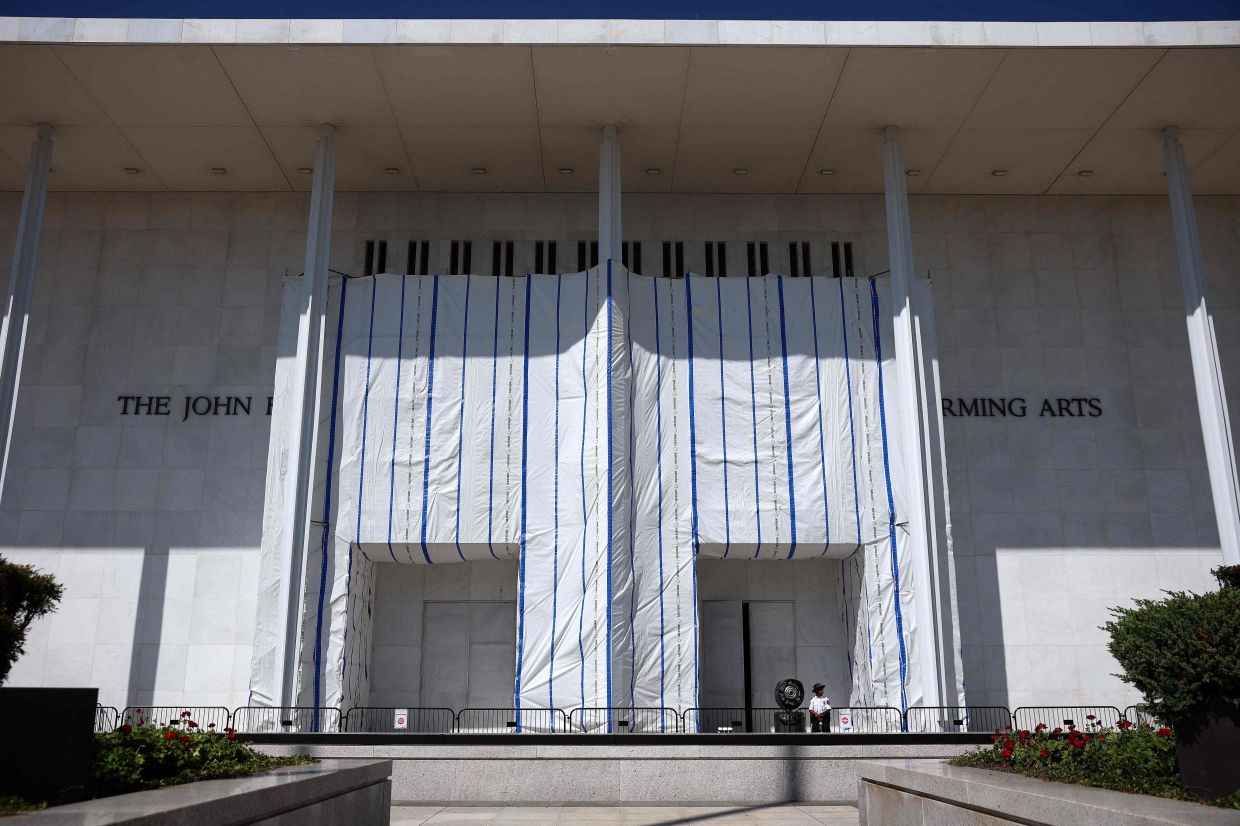
The Trump administration has raised the dramatic prospect of demolishing Washington's iconic Kennedy Center, framing the threat as inevitable consequence should courts block both the president's restoration plans and efforts to inscribe his name across the performing arts landmark. This extraordinary assertion emerged in a formal Justice Department filing on Tuesday, submitted as part of ongoing litigation initiated by Congressional Democrats seeking to prevent Trump's name being prominently displayed on one of America's most recognizable cultural institutions.
The administration's demolition warning represents a significant escalation in what has become an increasingly contentious dispute over the Kennedy Center's future governance and naming rights. While the Justice Department filing carefully avoids stating that an actual demolition plan exists, it constructs a stark choice for the courts: either permit Trump's restoration efforts and recognition, or watch the building deteriorate into such unsafe condition that removal becomes mandatory. Justice Department attorney Brantley Mayers argued in the filing that "without those efforts, the center will deteriorate further into an unsafe, decrepit structure that will be required to be taken down."
The administration's logic—that Trump's personal involvement and fundraising prowess are essential to the center's survival—has become central to its legal strategy. By linking restoration work to presidential recognition, the Justice Department essentially claims that honoring Trump is not merely political preference but practical necessity for preserving the building. The filing characterizes the current Kennedy Center as "structurally unsound, fundamentally unsafe, and embarrassing to the nation's capital," implying that without immediate intervention under Trump's stewardship, institutional decline is inevitable.
Should courts ultimately block Trump's renovation plans, the administration suggests the site could be repurposed entirely. Mayers proposed that a large outdoor amphitheater overlooking the Potomac River could replace the structure—a cheaper alternative to maintain but one he acknowledged would "fail to adequately honor" President Kennedy, the slain 35th president whom the center memorializes. This hypothetical replacement signals how willing the administration appears to be in fundamentally transforming the site if its preferred outcome cannot be achieved.
The Trump administration claims to have secured $258 million from Congress for restoration work and mobilized a new donor base. According to the Justice Department's argument, maintaining this financial momentum depends critically on recognizing Trump's role in the center's revival. Federal lawyers contend that major contributors have committed funds partly because of expectations that the president would receive prominent acknowledgment, suggesting that removing Trump's name could jeopardize ongoing fundraising commitments.
Recognizing Trump's influence became official policy when his handpicked Kennedy Center board voted to place the inscription "Restored and Renovated by President Donald J. Trump" beneath the institution's historic name and to designate the surrounding plaza as the "President Donald J. Trump Plaza." This naming effort has faced fierce legal resistance, particularly from Congresswoman Joyce Beatty, an ex officio board member who filed suit arguing that only Congress possesses authority to name the institution established as a "living memorial" to Kennedy.
A federal judge previously sided with Beatty's position, determining that the board acted beyond its powers in renaming the center and ordering earlier Trump signage removed from the building. The administration is currently appealing this decision, establishing the Thursday hearing as a crucial test of whether courts will allow Trump's name to remain permanently associated with the Kennedy Center's restoration.
Kennedy Center officials had previously described the planned renovation work in substantially more modest terms than the administration's apocalyptic framing suggests. Technical staff characterized the project as involving extensive repairs to electrical systems, stage infrastructure, and leak-prevention measures—necessary maintenance that would preserve the building's structural integrity without materially altering its iconic exterior or reducing the complex to its foundation.
This stark disconnect between operational descriptions and the Justice Department's catastrophic scenarios reveals the political dimensions underlying the ostensibly practical dispute. The administration's suggestion that either full Trump naming rights or total demolition represents the only viable choice appears designed to pressure courts into accepting the naming compromise as preferable to the alternative. For Malaysian observers and regional analysts tracking US political dynamics, this episode illustrates how effectively modern administrations can weaponize institutional threats to advance political objectives, transforming cultural preservation into leverage in partisan disputes.

