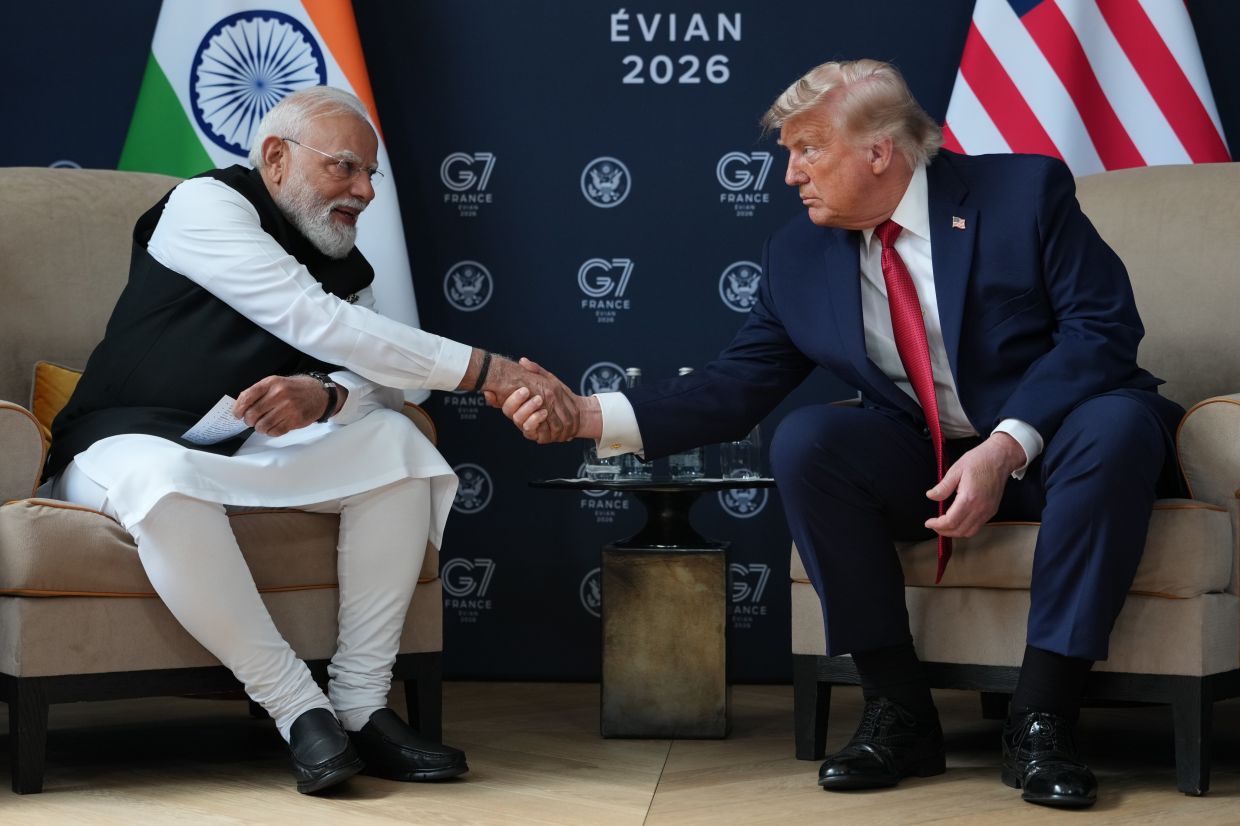
Donald Trump has offered no apology or expression of sympathy for the deaths of three Indian sailors killed when United States forces fired missiles at a commercial vessel last week, despite the incident casting a shadow over his first substantive bilateral engagement with Indian Prime Minister Narendra Modi in more than a year. During their press conference following the meeting, Trump characterised the incident with minimal concern, acknowledging he had been informed of the deaths but deflecting responsibility by describing seafaring as "a rough profession" where such tragedies have occurred "throughout time". His casual dismissal of the incident, in which the Palau-flagged MT Settebello was struck in the Strait of Hormuz, reflects a starkly different tone from Modi's position and signals deepening friction between Washington and New Delhi despite both governments' public assertions of deepening strategic alignment.
The incident that triggered this diplomatic strain occurred when American forces conducted what they characterised as enforcement operations against what they claimed were violations of a blockade on Iranian ports. United States Central Command stated that it also targeted two additional commercial vessels carrying Indian crew members for the same alleged breach. The targeting of Indian-flagged or Indian-crewed vessels raised immediate alarms in New Delhi, where Foreign Minister S. Jaishankar lodged what he termed a "strong protest" in direct communication with his American counterpart. The State Department's account of that conversation, however, revealed the pronounced gap between the two countries' perspectives, with Washington emphasising that breaches of the American-imposed blockade and illegal transportation of Iranian crude oil would not be tolerated, seemingly justifying rather than reconsidering the military action.
The American position triggered a wave of public anger across India that extended well beyond diplomatic circles. Videos circulated showing auto rickshaw drivers in New Delhi removing posters bearing Trump's image and slogans reading "Happy Birthday America", which formed part of the United States embassy's public engagement campaign. The spontaneous public rejection of Trump imagery underscored how deeply the incident had resonated with ordinary Indians, transforming what might have remained a diplomatic dispute into a moment of nationalist sentiment. This grassroots reaction suggested that the goodwill cultivated through official channels and high-profile visits was fragile when measured against perceived American disregard for Indian lives.
Political opposition to the government's response swiftly materialised. Rahul Gandhi, a prominent opposition leader, directly attacked Prime Minister Modi for what he characterised as a submissive diplomatic posture. Gandhi posted on social media that "a free country would never tolerate such language", describing Modi as "compromised" and accusing his government of behaving "like an obedient servant" complying with American orders. The criticism struck at a sensitive nerve within Indian domestic politics, questioning whether Modi's cultivation of the US relationship had resulted in India sacrificing its sovereignty and the welfare of its citizens. Such domestic political pressure can substantially constrain a government's ability to navigate international relations, particularly when popular opinion views a foreign power's actions as disrespectful.
Despite these tensions, both Trump and Modi publicly performed unity during their engagement. Trump praised Modi as a "tough trader" and characterised their personal relationship as exceptionally close, stating that Washington and New Delhi "work together" on maritime safety issues and that both nations "love all of those people" involved in maritime commerce. He suggested that the relationship between the two leaders formed the foundation for ever-closer ties between their countries. Yet these reassurances rang hollow given Trump's refusal to acknowledge the specific tragedy or express condolences, and his framing of the deaths as an inevitable occupational hazard rather than a preventable incident warranting investigation or accountability.
The bilateral encounter also advanced ongoing trade negotiations that could reshape commercial relationships between the world's largest and fifth-largest economies. Trump and Modi initiated formal discussions toward a comprehensive bilateral trade agreement during a meeting in Washington in February 2025, making India among the first nations to enter serious negotiation with the Trump administration on such matters. These talks subsequently pivoted toward an interim trade agreement, with substantive discussions continuing under the supervision of United States Trade Representative officials. The presence of major trade negotiations alongside the unresolved maritime incident creates a complex dynamic in which India's negotiators must balance commercial interests against the need to address legitimate grievances without appearing weak domestically.
Since their Washington meeting, Secretary of State Marco Rubio travelled to India, where he reinforced American commitment to the relationship by characterising India as one of America's "most important strategic partners". Rubio's visit and remarks were designed to emphasise the strategic depth of the relationship beyond any single incident, suggesting that the United States views India as fundamental to its Indo-Pacific positioning. However, such high-level visits can appear performative when they occur in the aftermath of an incident that provoked public anger and when senior American officials, particularly the president, have refused to acknowledge the gravity of that incident.
Trump indicated during the press conference that he anticipates visiting India in the future, though no specific timeframe was provided. He declined to address questions regarding the Quad, the informal security grouping comprising the United States, India, Japan, and Australia, instead pivoting to other aspects of the bilateral relationship. This evasion may reflect the administration's preference to discuss cooperation through bilateral rather than multilateral frameworks, or it may signal reluctance to further complicate regional alignments while managing tensions with India over the maritime incident.
For Malaysia and other Southeast Asian nations, this episode carries important implications regarding the stability and predictability of American conduct in the region. The incident demonstrates that Washington's enforcement of its Iran policies operates with minimal tolerance for alternative interpretations of blockade compliance, potentially affecting how other nations navigate their own commercial relationships in the Strait of Hormuz and beyond. The fact that India, despite its strategic importance to American regional objectives and despite its government's demonstrated alignment with Washington, could not prevent the targeting of its vessels or secure accountability suggests that smaller nations with less geopolitical leverage may face even greater vulnerability. The muted official Indian response, despite evident public discontent, also illustrates the constraints that nations aligned with American interests face when attempting to criticise or challenge American actions without jeopardising the broader relationship.
The episode further underscores how Trump's transactional approach to international relations emphasises bilateral ties and economic arrangements while treating security incidents as incidental to larger strategic partnerships. Modi's apparent willingness to compartmentalise the deaths of Indian nationals in order to preserve and advance the India-US relationship may frustrate segments of the Indian public and political establishment who expect their government to prioritise citizens' safety. This tension between maintaining strategic partnerships and responding to public demands for accountability will likely shape India's diplomatic strategy throughout the remaining duration of bilateral trade negotiations and broader defence cooperation discussions with Washington.

