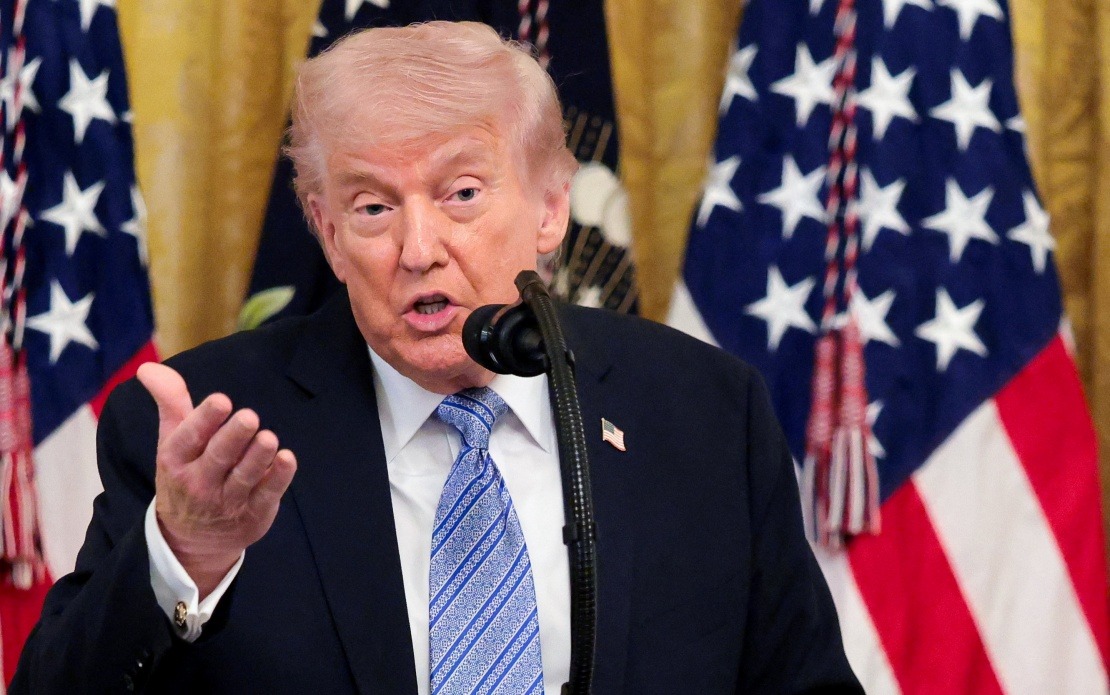
US President Donald Trump announced on Tuesday that all diplomatic channels with Iran have been shuttered, with no negotiations currently active or in the pipeline. The declaration, posted on his Truth Social platform, marks a dramatic reversal of recent efforts to engage Tehran and signals a fundamental recalibration of Washington's Iran strategy as Trump enters his second term with a considerably more hawkish posture.
The timing of Trump's announcement follows what administration insiders characterised as "positive discussions" between American envoys and Iranian representatives. According to reporting from CNN citing White House sources, the President has instructed his top negotiating trio—Vice President JD Vance and special envoys Steve Witkoff and Jared Kushner—to immediately suspend all contact with the Islamic Republic. This abrupt termination of dialogue underscores the unpredictability that has come to define Trump's approach to bilateral relations, particularly with adversarial nations.
Crucially, Trump's statement also reaffirmed America's continuing military posture in the critical energy chokepoint of the Strait of Hormuz. He stressed that Washington's naval presence maintains strict control over the waterway and that all sea mines in the region have been neutralised or destroyed. The emphasis on maintaining this blockade indicates that while diplomatic channels have been frozen, the physical assertion of American power in the region remains actively enforced, creating a paradox wherein engagement is rejected but military dominance is maintained.
What distinguishes Trump's current approach from previous cycles of confrontation is the underlying strategic philosophy that has reportedly taken hold within his administration. Rather than pursuing the immediate, aggressive "hammer Iran ASAP" stance, officials have now embraced a longer-term strategy of incremental economic strangulation. This calculated shift reflects a recognition that sustained pressure over months and years may prove more effective than rapid military escalation in achieving American objectives regarding Iranian nuclear capabilities and regional behaviour.
For Malaysian observers tracking geopolitical developments, this recalibration carries immediate relevance. Malaysia, as a significant trading hub with exposure to Middle Eastern affairs and energy markets, faces potential disruptions to maritime commerce and regional stability. The Strait of Hormuz serves as a vital corridor through which roughly one-third of global seaborne oil transits, making any escalation in US-Iran tensions a direct concern for Southeast Asian economies dependent on stable energy supplies and predictable shipping routes.
The collapse of previous diplomatic initiatives adds texture to understanding this development. In April, Tehran and Washington had achieved a ceasefire agreement, followed by a June memorandum of understanding that both sides framed as a pathway toward lasting resolution. Yet by last month, this fragile accord had unravelled, with both nations launching reciprocal military strikes across a two-week period. Trump's decision to halt these bombardments was presented publicly as a peace initiative, yet the subsequent instruction to his negotiators to cease all engagement suggests that underlying tensions never truly abated.
Jared Kushner's presence in Israel on Monday, where he met Prime Minister Benjamin Netanyahu to discuss regional architecture including Gaza, provides additional context for understanding the broader strategic realignment. Kushner's subsequent comments to Fox News that American-Iranian communications had become "more robust" than ever appear to have triggered Trump's corrective action, revealing the President's sensitivity to any appearance of meaningful engagement with Tehran without his explicit approval. This hierarchical control over diplomatic messaging reflects Trump's personalised decision-making style.
The implications of this policy shift extend beyond bilateral US-Iran relations into the wider framework of Middle Eastern stability. Regional actors from Saudi Arabia to the United Arab Emirates, which have pursued varying degrees of normalisation with Iran in recent years, must now recalibrate their own diplomatic strategies in light of Washington's hardened stance. The Abraham Accords framework, which underpinned some regional reconciliation efforts, faces renewed pressure as American policy swings toward confrontation.
For Southeast Asian nations maintaining balanced relationships across the geopolitical spectrum, this development underscores the volatility inherent in current great power competition. Malaysia and its neighbours must weigh the consequences of any perceived alignment with either Washington's maximalist pressure campaign or Tehran's resistance to American hegemony. Statements from Trump declaring the Hormuz Strait "open and operating" under American military supervision carry an implicit message about who controls regional waterways and maritime security architecture—a concern that reverberates across ASEAN's maritime domain awareness priorities.
The administration's internal shift in strategic framing, from immediate offensive action to prolonged economic coercion, also reflects broader lessons from previous Iran sanctions regimes. Extended economic pressure, while potentially more sustainable politically within the United States, risks creating conditions for humanitarian deterioration within Iran and potentially destabilising spillover effects across the Middle East. Regional refugee flows, humanitarian crises, and proxy conflicts often intensify when great power confrontation transitions from kinetic phases into grinding economic warfare.
Trump's insistence that naval blockade measures remain "in full force and effect" signals that while rhetorical engagement has ceased, operational military presence continues undiminished. This combination—closed diplomatic doors paired with active military enforcement—creates an inherently unstable equilibrium wherein miscalculation or minor incidents could rapidly escalate into wider conflict. The instruction to halt negotiations removes potential circuit-breakers that might otherwise permit de-escalation should tensions flare unexpectedly.
For Malaysian policymakers and business communities, the immediate priority involves monitoring whether this American hardline posture translates into expanded sanctions affecting third-party commerce with Iran. Previous iterations of American secondary sanctions regimes have created compliance burdens for non-American entities engaged in Iranian trade, and Malaysian companies with Middle Eastern exposure must prepare contingency plans should similar restrictions reappear.

