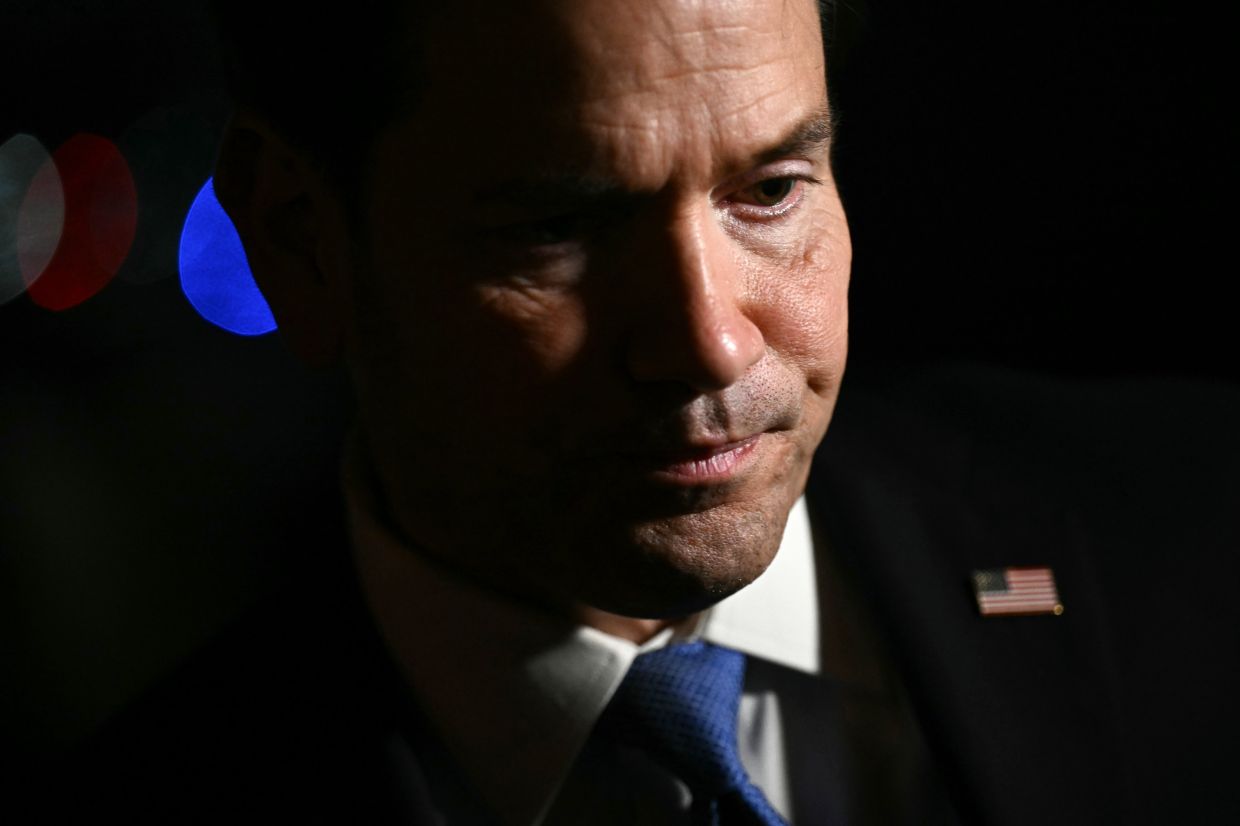
US Secretary of State Marco Rubio is headed to Manila for a crucial meeting with Chinese Foreign Minister Wang Yi on Wednesday, marking a significant diplomatic engagement even as tensions simmer over election security and geopolitical rivalry between Washington and Beijing. The encounter takes place amid a shifting rhetorical landscape, with President Trump tempering his recent accusations against China on the election interference front, though underlying strategic competition between the two powers shows no signs of diminishing.
Trump's apparent shift in messaging caught observers by surprise, given his dramatic claims just days earlier that China had conducted what he termed the "largest compromise of election data in history," alleging that Beijing had stolen over 200 million American voter records. In comments to reporters on Tuesday, however, the president adopted a markedly different tone, noting that the alleged interference "took place a long time ago" and suggested that contemporary China might operate differently from its past conduct. This recalibration raises questions about how aggressively the administration intends to pursue the matter diplomatically, particularly as both nations attempt to maintain space for dialogue despite mounting tensions.
Trump's framing explicitly acknowledged the bilateral nature of intelligence and security competition, suggesting that such activities are not exclusively a Chinese phenomenon. "They do things to us and we do things to them. I'll be honest, we do things to them too. It's not a one-way street, but we'll be talking to them," Trump remarked, a candid admission that occasionally disrupts the typical framing of such disputes in US political discourse. This pragmatic acknowledgment that great power competition operates as a two-way street may signal Trump's intention to compartmentalize the election interference issue rather than allow it to derail broader diplomatic engagement.
The Manila meeting has been scheduled on the margins of major Association of Southeast Asian Nations gatherings, including the East Asia Summit Foreign Ministers' Meeting and the Asean Regional Forum. This setting provides both delegations with diplomatic cover while allowing for substantive discussions away from the glare of purely bilateral engagements. For Southeast Asia, the Rubio-Wang conversation carries considerable weight, as the region increasingly finds itself navigating great power competition between the United States and China, with implications for trade, security arrangements, and regional stability.
Rubio himself has remained deliberately opaque about whether the election allegations will feature prominently in his discussion with Wang, declining to outline his negotiating priorities when questioned on Sunday. "I would never tell you guys in a press conference what we would raise in meetings like that. Those are delicate matters," the secretary of state explained, underscoring the sensitivity surrounding election interference accusations even as Trump's more relaxed public commentary suggested the issue might not dominate the agenda. This divergence between presidential and diplomatic messaging creates some ambiguity about US strategic intent heading into the conversation.
China has categorically rejected the election interference allegations, with a spokesperson from the Chinese embassy dismissing them as "completely groundless smears" that have "long been proven to be baseless." Beijing's official position maintains that the country has "no interest in, and has never interfered in, US elections," a standard refrain that carries diminishing credibility in Washington but remains essential for Chinese domestic consumption and international messaging. The disconnect between these competing narratives underscores the fundamental trust deficit that characterizes contemporary US-China relations, extending well beyond the immediate election security dispute.
Despite the accusations and rhetorical tensions, both administrations appear committed to maintaining diplomatic channels and preventing incidents from metastasizing into broader confrontations. Rubio reaffirmed that Chinese President Xi Jinping's anticipated autumn visit to the United States remains on track, with preparations continuing through Chinese advance teams and no reported complications. The secretary of state's statement that "when you have two big, powerful countries like the United States and China, there are always going to be irritants" reflects a recognition that bilateral friction need not preclude high-level engagement and relationship maintenance.
Rubio's four-day Manila visit extends beyond the Wang meeting, positioning the secretary of state to advance what the State Department characterizes as America's core Indo-Pacific priority: "a free and open Indo-Pacific that delivers safety, security, and prosperity for the region and for the American people." This framing, increasingly central to US strategic positioning in the region, encompasses concerns about maritime security, technological competition, and supply chain resilience. For Malaysian and other Southeast Asian governments, the reinvigorated US focus on Indo-Pacific affairs carries implications for regional alignment, economic partnerships, and security considerations.
The timing of these high-level talks coincides with Trump's recent executive order emphasizing the need to maintain US military dominance "in an era of renewed great power competition," a phrase that unmistakably references China's rise and technological advancement. While the order does not explicitly name Beijing, its emphasis on securing supply chains "against physical, cyber, and economic subversion" reflects administration thinking about structural vulnerabilities in the American economic and security architecture. For Southeast Asian nations dependent on technology transfers and supply chain integration, these American strategic pivots warrant careful monitoring, as they may accelerate technology decoupling and realignment of regional partnerships.
Disputes over trade, technology, critical minerals, and maritime security are expected to feature prominently in the broader regional meetings that Rubio will attend alongside his bilateral engagement with Wang. These issues directly affect Southeast Asian interests, particularly regarding access to critical mineral supplies, technology standards, and freedom of navigation in shared waters. Malaysia and other Asean members face the challenge of balancing relationships with both superpowers while protecting their own strategic autonomy and economic interests.
The Rubio-Wang meeting ultimately represents a moment of diplomatic recalibration rather than fundamental rapprochement between Washington and Beijing. Trump's softer rhetoric on election interference may reflect recognition that confrontational approaches have failed to deter alleged Chinese activities or shift Beijing's strategic calculations. By moderating his public tone while simultaneously advancing structural measures to contain Chinese technological and economic influence, the Trump administration appears to be adopting a more nuanced approach that acknowledges both the inevitability of great power competition and the necessity of managing that competition through dialogue rather than escalation.
For regional observers in Malaysia and across Southeast Asia, the meeting underscores the continuing centrality of US-China relations to their own strategic environments. How the Manila talks unfold and whether they produce any agreements on election security, diplomatic protocols, or strategic restraint will likely influence regional calculations about alignment, investment decisions, and technology adoption in the months ahead. The apparent American willingness to compartmentalize disputes and maintain engagement despite serious accusations suggests that neither superpower seeks immediate confrontation, though the underlying structural competition shows every sign of intensifying.

