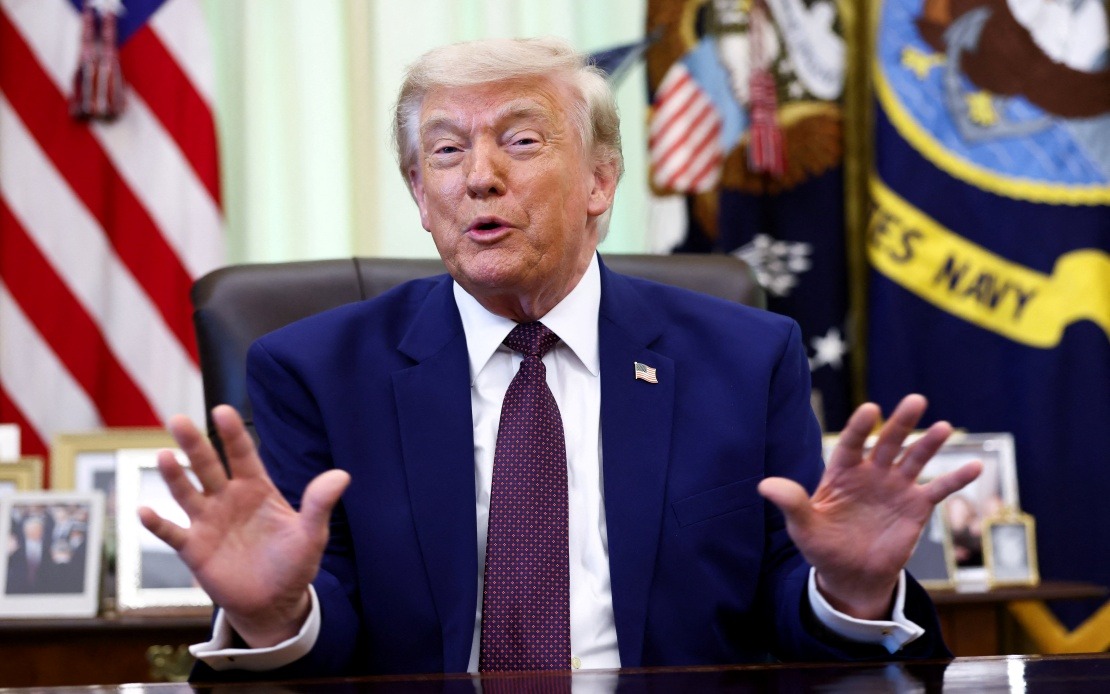
President Donald Trump has turned up the heat on Republican lawmakers to expedite passage of the SAVE America Act before Congress breaks for its August recess, signalling growing impatience with the legislative pace on Capitol Hill. The intervention underscores the centrality of voting rights reform to the Republican agenda and Trump's willingness to apply direct pressure on party members who might otherwise hesitate over procedural obstacles.
White House Press Secretary Karoline Leavitt amplified the message by suggesting that Trump's confidence in Senate Majority Leader John Thune was wearing thin. The public nature of these comments signals a willingness to hold leadership accountable if Trump's legislative priorities do not move quickly enough. For Malaysian observers watching US politics, this dynamic illustrates how executive pressure can fundamentally reshape a legislature's agenda, even when procedural challenges exist.
The SAVE Act, formally known as the Safeguard American Voter Eligibility Act, represents a cornerstone of Republican efforts to overhaul electoral mechanics. Under its provisions, anyone registering to vote in federal elections would need to present either a passport or birth certificate. Proponents argue this requirement creates a baseline verification system to prevent ineligible individuals from casting ballots in presidential and congressional races.
Republican sponsors frame the legislation as a straightforward anti-fraud measure targeting foreign nationals and undocumented immigrants, who they contend can currently register without documentary proof in numerous states. The party views this as closing loopholes that undermine electoral integrity. However, Democrats have characterised the proposal as unnecessary voter suppression that would disenfranchise eligible American citizens who lack ready access to the required documents.
Trump's strategy involves a dramatic procedural manoeuvre that has become increasingly contentious in American politics: abolishing the filibuster to enable passage with a simple majority rather than the sixty-vote supermajority currently required. In a Truth Social post, Trump directly addressed Republican senators, urging them to "terminate the Filibuster" and pass not only the SAVE America Act but also the budget and upcoming debt ceiling measures.
The former president's rationale rests on a pre-emptive argument: Democrats, he contends, would eliminate the filibuster themselves without hesitation if they returned to power and faced Republican obstruction of their agenda. Under this logic, Republicans have nothing to lose by acting first and everything to gain by securing legislative victories while in the majority. This argument has resonated among Trump allies but remains controversial even among some Republicans concerned about the long-term implications of weakening institutional checks.
The timing pressure reveals Trump's determination to accumulate legislative wins during the current congressional session. August recess traditionally marks a midpoint in the legislative calendar where momentum can be lost and priority shifts occur. By insisting that Republicans advance the SAVE Act before the break, Trump aims to prevent delay tactics and competing priorities from derailing the measure.
For Southeast Asian observers, the SAVE America Act debate illustrates broader questions about electoral security versus accessibility that resonate across the region. Malaysia, like many democracies, must balance verification mechanisms with ensuring eligible citizens can participate. The American debate demonstrates how voter registration requirements can become intensely partisan, with competing visions of electoral integrity underlying technical policy disagreements.
The procedural conflict over the filibuster also speaks to institutional tensions familiar to parliamentary democracies. When one party controls the legislature and executive, questions arise about protecting minority rights and maintaining legislative guardrails. The Republican willingness to contemplate such a dramatic procedural change reveals how polarised American politics has become, with both parties viewing institutional rules as obstacles to their agenda rather than protective mechanisms for the broader system.
Trump's direct public intervention represents a shift in presidential style that has fundamentally altered Republican legislative behaviour. Rather than working quietly through party leaders, Trump weaponises his relationship with the base and his media platform to compel compliance. Senate Republicans face pressure not only from legislative calculations but from the political risk of appearing insufficiently loyal to Trump, whose influence over the Republican base remains substantial.
The urgency surrounding the SAVE Act deadline also reflects deeper Republican anxiety about the electoral landscape heading into the next presidential cycle. If Republicans view current voter registration processes as problematic, they have limited time before certain deadlines to reshape those processes through legislation. This temporal pressure helps explain why Trump is willing to expend political capital on the issue now rather than deferring to a future Congress.
For Malaysian policymakers observing this American legislative battle, the episode underscores how electoral mechanics quickly become politicised when one party believes the existing system disadvantages it. Indonesia, Thailand, and other regional democracies have similarly contentious debates about voter access and verification, though the specific controversies differ. The American case study demonstrates how such disputes can paralyse legislatures and consume tremendous political energy.
As Republican senators navigate these crosscurrents, they face genuine dilemmas: advancing their president's agenda, respecting institutional traditions, and calculating electoral consequences. The resolution will likely determine not only the SAVE Act's fate but also signal whether procedural norms can survive in an increasingly polarised Congress, a question with implications extending far beyond American borders.

