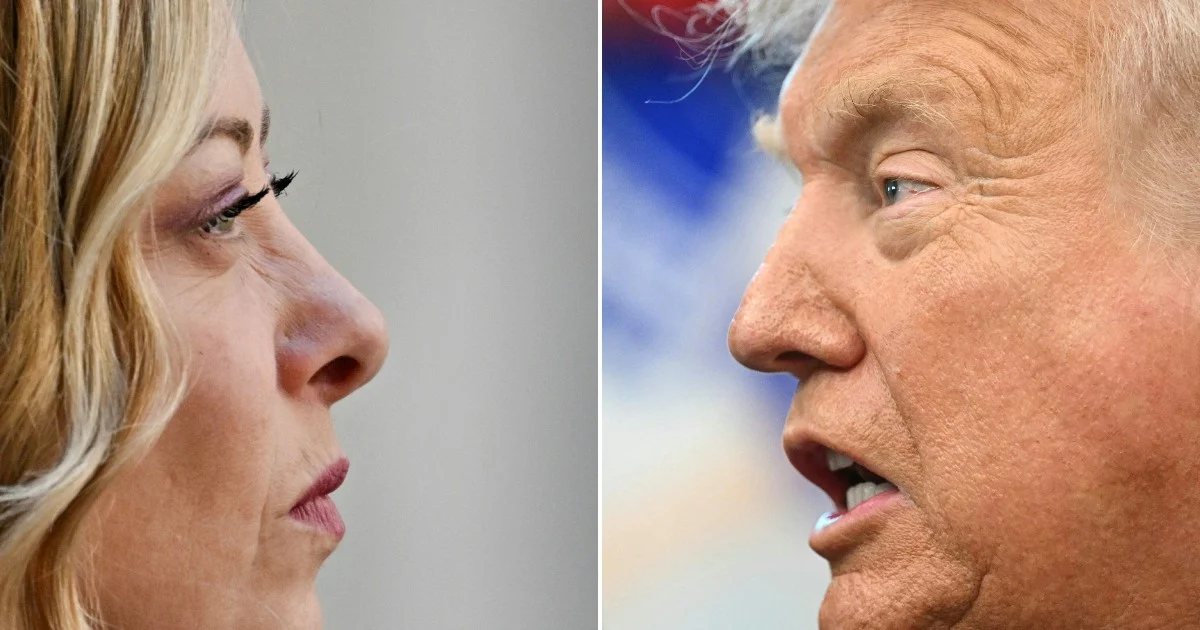
The United States and Italy found themselves in an uncommon display of discord this weekend as President Donald Trump publicly escalated tensions with Italian Prime Minister Giorgia Meloni, moving beyond a petty dispute over meeting logistics to articulate deeper strategic differences. Trump's Saturday statements marked a significant departure from the customary diplomatic restraint typically observed among Group of Seven leaders, signalling that personal grievances between two Western leaders now overshadow traditional alliance protocols.
At the heart of the immediate controversy lies an accusation that Meloni repeatedly sought individual photographs with Trump during G7 proceedings. Rather than treating the matter as a routine scheduling miscommunication—the kind that occurs regularly at multilateral summits—Trump weaponised the claim by publicly broadcasting Meloni's requests and questioning her motives. This approach represents a shift in how the American president handles diplomatic friction, choosing public confrontation over quiet resolution through back-channel communications.
The photograph request itself, whilst seemingly trivial on its surface, carries symbolic weight in international relations. Such images serve as crucial political currency for leaders domestically, demonstrating direct engagement and rapport with the world's most powerful figure. Meloni's apparent eagerness to secure such a photograph suggests she recognises the domestic political value of appearing closely aligned with Trump's administration. For Trump to publicise and mock this request represents an unusual breach of the unwritten codes governing elite diplomatic behaviour, where preserving a colleague's dignity typically supersedes scoring points in domestic political circles.
What distinguishes this quarrel from ordinary transactional friction between allies is Trump's deliberate linkage of the photograph controversy to substantive policy disagreements. By tying Meloni's photograph request to broader conflicts over NATO contributions and Iran policy, Trump signalled that the personal dispute serves as a proxy for fundamental disagreements about Europe's role in American-led security architecture. This bundling of grievances suggests that tensions between Washington and Rome run considerably deeper than a single awkward moment at a summit.
The NATO component of this dispute carries particular significance for Southeast Asian observers watching the trajectory of American alliance management. Trump's well-documented scepticism toward NATO's structure and burden-sharing arrangements remains unresolved from his previous presidency and continues to trouble European leaders. By invoking NATO tensions alongside personal criticism of Meloni, Trump reinforces his broader complaint that European allies—including Italy—underfund their military commitments whilst relying excessively on American security guarantees. This complaint, whilst periodically voiced by American administrations across administrations, takes on heightened significance when delivered with the personalised contempt Trump directed toward Meloni.
The Iran dimension adds complexity to the dispute, as Italy and the United States have experienced periodic misalignment on Tehran policy. Europe, including Italy, has maintained more pragmatic engagement with Iran in certain commercial and diplomatic contexts, whereas successive American administrations have pursued more restrictive approaches. Trump's willingness to raise Iran policy alongside a petty photographic dispute suggests that Meloni's independent positioning on Middle Eastern affairs represents a point of genuine friction rather than mere rhetorical flourish.
For Malaysia and other Southeast Asian nations, this transatlantic turbulence carries implications worth monitoring closely. The deterioration of diplomatic standards among G7 members signals that America's alliance management has become less predictable and more personalised. If Trump's administration prioritises personal relationships and perceived slights over institutional commitment to allied partnerships, Southeast Asian governments must recalculate their own strategic hedging between American and Chinese spheres of influence. A United States that damages relations with long-standing allies over trivial matters sends concerning signals about the reliability of American security commitments generally.
Meloni's position as Italy's leader adds another dimension worthy of analysis. The Italian Prime Minister has traditionally cultivated strong relationships with conservative governments and leaders, positioning herself as a reliable partner within Western institutions. Trump's public derision threatens her carefully constructed image as someone who commands respect at the highest levels of global leadership. This dynamic may push Meloni either toward greater European autonomy from American direction or toward attempting to repair the relationship through accommodations that further strain her credibility with fellow European leaders.
The escalation also highlights how social media and instantaneous global communication have transformed diplomatic discourse. Whereas earlier generations of leaders might have allowed such disputes to remain confined to private channels, Trump's penchant for public airing of grievances creates permanent records and amplified narratives that complicate subsequent reconciliation. Each public statement reinforces the conflict, making retreat increasingly difficult for both parties without appearing weak domestically.
Observers should recognise that this clash between Trump and Meloni operates simultaneously on multiple levels: the personal, the domestic political, and the strategic. What began as disagreement over protocol and photographs has expanded into a broader statement about American expectations of allied behaviour and burden-sharing. Whether this rupture proves temporary or presages a genuine realignment of transatlantic relationships remains uncertain, but the public nature and personal intensity of the dispute distinguishes it from ordinary diplomatic tension and suggests deeper structural problems within the Western alliance system itself.

