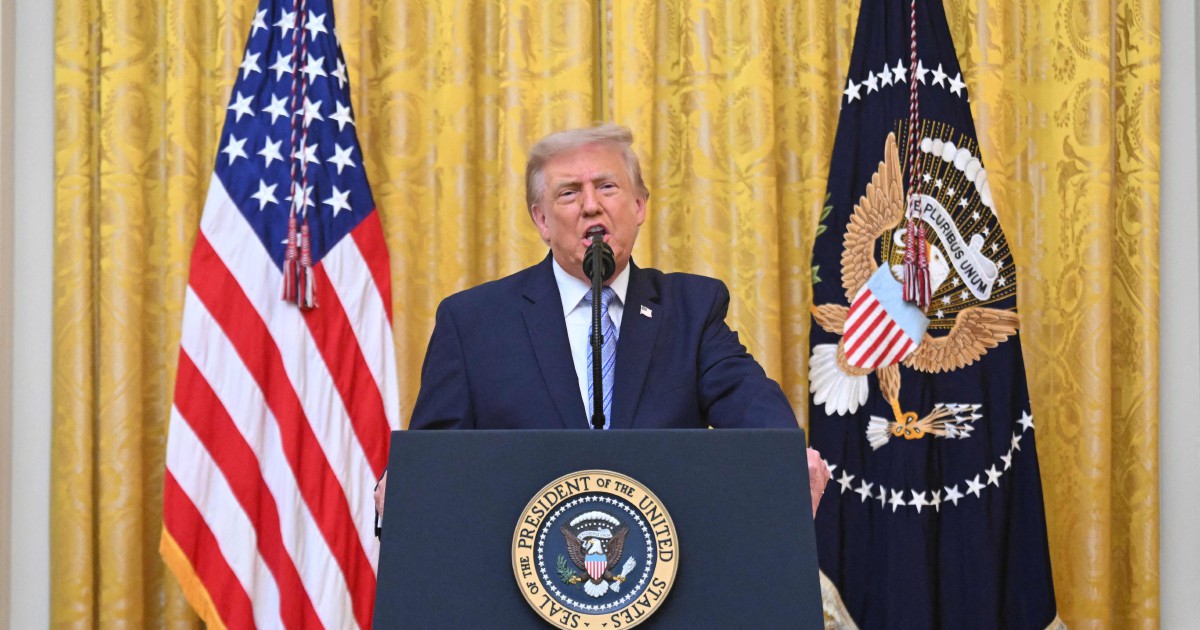
In a Thursday address to supporters, US President Donald Trump has dusted off discredited allegations surrounding the 2020 presidential election, reasserting claims that have been thoroughly investigated and rejected by election officials, courts, and independent fact-checkers across the political spectrum. The resurrection of these narratives marks a continued pattern of Trump promoting unsubstantiated theories about election integrity that have become defining features of his political messaging since his 2020 defeat.
Among the specific allegations Trump repeated was a claim that China orchestrated a massive theft of voter files during the 2020 contest. This assertion has been extensively scrutinised by cybersecurity experts and federal law enforcement agencies, neither of which has produced credible evidence supporting such a comprehensive breach. The specificity of alleging Chinese involvement appears designed to create a geopolitical dimension to election grievances, potentially resonating with voters concerned about foreign adversaries.
Equally unfounded was Trump's suggestion that Venezuela possessed the capability to manipulate American voting machines remotely. This claim conflates several distinct vulnerabilities that cybersecurity researchers have identified in election infrastructure while ignoring the multiple safeguards, audits, and redundancies built into the system. The invocation of Venezuela, a regime Trump's administration previously sanctioned, appears calculated to attach to existing anxieties about hostile foreign actors rather than reflecting documented technological capabilities.
For Malaysian and Southeast Asian observers, Trump's continued promotion of election fraud allegations demonstrates how developed democracies grapple with misinformation and institutional trust. Unlike authoritarian regimes where electoral disputes are settled through opaque processes, the American system has transparent mechanisms for addressing fraud claims. Trump's allegations were examined through 60 court cases, comprehensive audits in contested states, and investigations by his own administration's cybersecurity agency, all finding no evidence of fraud at scale sufficient to alter the election outcome.
The persistence of these claims despite thorough debunking reveals deeper questions about how public trust erodes in democratic institutions. Election administrators in both Republican and Democratic jurisdictions confirmed the 2020 election's integrity, and Republican officials—including Trump-appointed ones—attested to its legitimacy. Yet the repetition of these narratives continues shaping political discourse, influencing partisan perceptions of electoral validity regardless of factual foundation.
From a regional perspective, the durability of election fraud allegations in American political culture carries implications for Southeast Asian democracies. Malaysia, Indonesia, and other regional democracies have faced similar challenges with misinformation surrounding electoral contests, yet the American case demonstrates how even mature institutions struggle when political actors deliberately promote false narratives. The difference lies partly in institutional resilience: American courts, media outlets, and election authorities have capacity to contest and document falsehoods publicly, creating an auditable record.
Trump's rhetorical choices in this address reflect a calculated political strategy. By invoking foreign interference, he deflects from domestic explanations for his electoral loss while leveraging legitimate concerns about cybersecurity that gain traction across party lines. This conflation of real vulnerabilities with unsupported claims about actual interference exemplifies how misinformation often exploits kernels of legitimate anxiety about institutional security.
The international dimensions of Trump's allegations warrant scrutiny. Neither China nor Venezuela has been substantiated as having interfered in the 2020 election at scale, according to the Director of National Intelligence and other U.S. intelligence agencies. While these nations undoubtedly engage in information warfare and espionage, the gap between their documented capabilities and Trump's specific allegations represents a significant evidentiary chasm that fact-checkers and investigators have repeatedly documented.
For global audiences, including Malaysian readers, these repeated allegations underscore how misinformation operates in democratic societies. Unlike authoritarian contexts where alternative narratives are systematically suppressed, democratic systems must contend with the spread of false claims through decentralised networks. The 2020 election fraud allegations have become embedded in portions of the American political ecosystem despite consistent debunking, illustrating the challenge of countering organised misinformation campaigns that leverage incumbents' platforms and supporter networks.
The broader implications extend to questions of electoral legitimacy and democratic governance. When elected leaders persistently advance claims contradicted by their own administration's officials and court systems, it destabilises confidence in outcomes regardless of their accuracy. This pattern has informed election security discussions globally, with democratic theorists examining how to maintain institutional trust while acknowledging legitimate vulnerabilities.
Moving forward, the reiteration of these claims signals Trump's continued framing of the 2020 election as contested ground in American politics. For international observers assessing American institutional stability, the persistence of unproven fraud allegations—despite exhaustive investigation—reflects polarisation that transcends traditional policy disagreements and touches fundamental questions about accepting electoral results.
The Malaysian context adds perspective on these American challenges. While Malaysia has its own history of electoral contestation and transparency concerns, the institutional mechanisms for addressing disputes—including the role of courts, election commissions, and documented audit procedures—remain central to managing such controversies. Trump's approach of publicly advancing claims already examined and rejected by his own appointees illustrates how political polarisation can overwhelm institutional guardrails even in established democracies.
Ultimately, Trump's Thursday address represents another iteration of a pattern established since his 2020 loss. The specific allegations about China and Venezuela, like earlier fraud claims, have undergone scrutiny from election security experts, law enforcement, and courts across the political spectrum. The continued promotion of these narratives despite such investigation underscores how political messaging sometimes prioritises narrative coherence over evidentiary standards, a phenomenon with implications far beyond American borders as democracies worldwide confront challenges to institutional legitimacy.

