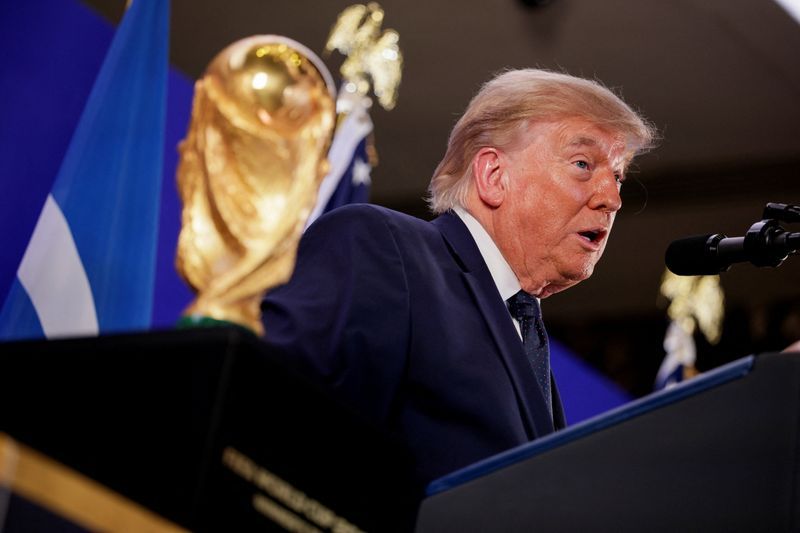
Donald Trump is poised to return to the international soccer spotlight as a central figure at the World Cup final scheduled for Sunday at the New York/New Jersey Stadium, where he will sit alongside FIFA President Gianni Infantino and present the championship trophy to either Argentina or Spain. The American leader's high-profile involvement in the tournament extends far beyond ceremonial duties, having positioned himself as instrumental in the event's remarkable commercial success while simultaneously injecting unprecedented political controversy into the competition.
Trump's appearance culminates weeks of escalating drama in which he publicly confirmed requesting Infantino to review a red card issued to United States striker Folarin Balogun, sparking fierce international criticism about the integrity of officiating and the appropriate boundaries of executive influence in sport. The incident has transformed what could have been a straightforward tournament into a flashpoint for broader concerns about governance standards and the vulnerability of FIFA decisions to political pressure, particularly as major tournaments become increasingly dependent on host nation cooperation and investment.
The relationship between Trump and Infantino has deepened considerably since FIFA awarded the 2026 World Cup to the United States, Canada, and Mexico during Trump's first presidency in 2018. On Friday, the pair demonstrated remarkable mutual admiration during a reception at Trump Tower in Manhattan, where FIFA inaugurated an office last year. Infantino publicly credited Trump's administration with the tournament's unprecedented success, particularly record-breaking attendance figures that exceeded expectations across all matches and venues throughout the co-hosted event.
Trump characteristically leveraged the occasion to suggest that America host the tournament again in 2038, but pointedly remarked, "This time we'll leave Mexico and Canada out." The comment reflects Trump's well-documented approach to international partnerships and trade arrangements, though such unilateral decisions fall entirely outside FIFA's authority and established tournament protocols. Nevertheless, the statement underscores how thoroughly Trump has inserted himself into the operational and political dimensions of international soccer governance.
For Malaysian and Southeast Asian observers, Trump's conduct at this World Cup illustrates the broader vulnerability of international sporting bodies to pressure from powerful nation-states and their leaders. This dynamic carries direct implications for regional concerns about how FIFA and other governing bodies might respond to future requests from influential countries, potentially establishing problematic precedents that undermine the meritocratic principles supposedly fundamental to athletic competition. The episode demonstrates how even prestigious international institutions can be compromised when political and commercial interests align strategically.
The broader context reveals underlying tensions that plagued preparations for the 2026 tournament even before matches began. A year before competition commenced, American cities grappled with difficult questions about reassuring international fans concerned by Trump's immigration policies and travel restrictions affecting several nations. Later, Trump threatened to relocate matches away from Democratic-controlled cities, prompting FIFA to firmly clarify that such decisions remained exclusively within the organization's purview. These disputes highlighted fundamental disagreements about the appropriate relationship between the host nation's political leadership and FIFA's administrative independence.
Trump's enthusiastic embrace of World Cup involvement reflects a deliberate strategy to maintain public visibility and cultivate support during his second presidential term, when his approval ratings have faced consistent headwinds. Over the past eighteen months, he has pursued high-profile sporting appearances to access target audiences, most notably at last year's Ryder Cup on Long Island, where he received enthusiastic receptions from American golf spectators. This pattern reveals how contemporary political figures strategically leverage sports platforms to project strength and connection with voters, particularly when formal approval metrics suggest declining support.
However, Trump's reception at sporting events has proven decidedly mixed. He experienced loud jeering at Game 3 of the NBA Finals last month, and his attendance at last year's U.S. Open tennis championship inconvenienced thousands of fans stranded outside the venue due to presidential security protocols, generating substantial public frustration. These incidents demonstrate the significant operational and social costs associated with hosting sitting American presidents at major sporting events, complications that international venues may increasingly factor into decisions about inviting sitting heads of state.
Fox Sports faces unprecedented production challenges managing Trump's prominent seating during Sunday's final broadcast, particularly because the network relies on a world feed rather than controlling camera placement independently. Announcer John Strong acknowledged the inherent difficulty: the network cannot predict when or whether international broadcasters will pan to Trump's position, meaning American viewers may encounter unexpected exposure to the polarizing political figure without warning or context. This technical arrangement essentially removes editorial control from American broadcasters regarding one of the match's most newsworthy elements.
Strong's candid observation that "there are no neutral opinions" about Trump captures the broader dilemma facing sports broadcasters and FIFA planners. The same audience member who celebrates Trump's presence as a patriotic statement may sit adjacent to someone deeply uncomfortable with his visibility and influence. This polarization reflects the fundamental problem generated by permitting executive-level political intervention in sporting governance: it inevitably transforms athletic competition into a proxy battleground for broader political divisions that have nothing to do with soccer itself.
The World Cup's transformation into a platform for Trump's political rehabilitation and self-promotion raises fundamental questions about FIFA's proper institutional role and values. An organization that claims to transcend national politics and unite global audiences through sport should arguably maintain operational distance from any nation's political leadership, particularly those embroiled in ongoing domestic controversies. Trump's central positioning at the tournament's culminating moment—presenting the championship trophy—crystallizes how thoroughly he has penetrated FIFA's decision-making structures and promotional strategy.
For Southeast Asian football communities and beyond, this episode underscores the importance of strengthening independent governance institutions capable of resisting political pressure regardless of a nation's economic or geopolitical importance. Malaysia's involvement in international soccer governance should include advocacy for FIFA reforms establishing clear boundaries between host nation governments and competition administration. The current arrangement, whereby Trump can meaningfully influence matters like player discipline while simultaneously commanding ceremonial prominence, establishes troubling precedents for future tournaments and other sporting events seeking to maintain integrity and universal credibility.
As Sunday's final approaches, the sports world confronts an unusual scenario where one of the match's most significant storylines has nothing to do with the competing teams' tactics, player performances, or legitimate sporting drama. Instead, the presence of an American president who has attempted to manipulate officiating decisions while cultivating maximum personal publicity exposure represents a cautionary tale about allowing political and commercial considerations to compromise international sports institutions' foundational principles.

