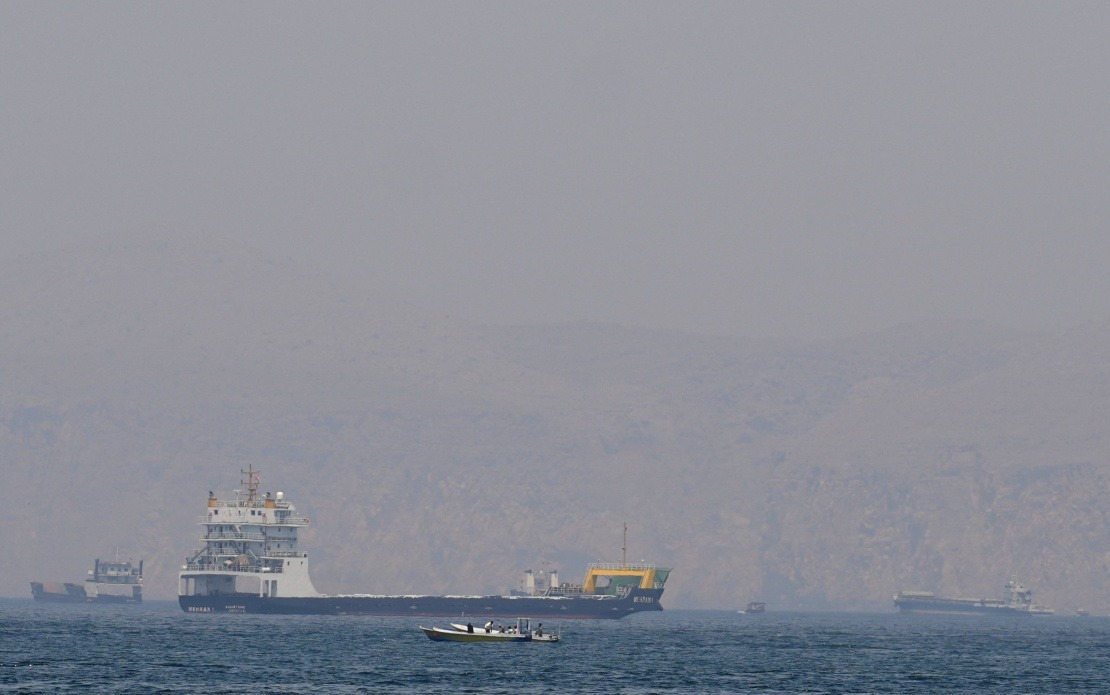
President Donald Trump has drawn a strategic line in the sand over one of the world's most critical shipping corridors, announcing that the Strait of Hormuz will remain toll-free for the next 60 days while simultaneously threatening unilateral American charges if negotiations fail to produce a lasting settlement. The declaration, made through his Truth Social platform, represents a significant assertion of US influence over a waterway through which approximately one-third of global maritime petroleum trade flows daily, a reality that makes Trump's ultimatum consequential for energy markets and regional stability far beyond the Middle East.
The American president's messaging contained a sharp economic undercurrent beneath its diplomatic language. Should the current 60-day ceasefire window not culminate in a comprehensive final agreement, Trump signalled that Washington reserves the right to levy what he termed "reimbursement of costs" for services rendered as the "guardian angel" protecting West Asian nations. This framing transforms security provision into a transactional relationship, one where the United States expects compensatory payment for its military presence and stewardship of regional maritime routes. The implication is unmistakable: American military protection comes with an implicit price tag that Washington intends to collect either through negotiated arrangements or through unilateral tolls imposed on international commerce.
Trump's ultimatum follows an escalatory declaration from Iran's Khatam al-Anbiya Central Headquarters, which announced that Tehran would close access to the strategic waterway in retaliation for what Iranian officials characterised as American breaches of commitment and Israeli violations of ceasefire agreements specifically regarding Lebanon. Such threats from Iran represent more than mere rhetoric; they signal a potential crisis point that could dramatically disrupt global energy supplies and maritime insurance costs, given the Strait's irreplaceable role in international commerce. The messaging war between Washington and Tehran has intensified considerably, with each side accusing the other of violating the terms of preliminary arrangements.
The United States military moved quickly to counter Iran's assertion of control. US Central Command dismissed the Iranian claim entirely, with spokesperson Captain Tim Hawkins delivering a categorical statement to Axios that "Iran does not control the Strait of Hormuz." CENTCOM emphasised that American forces remain positioned throughout the region with demonstrated commitment to monitoring compliance with existing agreements, and crucially, that maritime traffic continues flowing without interruption. This statement serves dual purposes: reassuring international shipping interests that supply chains remain protected, while simultaneously denying Iran's assertion of unilateral closure authority. The message to global markets was intended to be stabilising, even as the underlying tensions remain unresolved.
For Malaysian readers, the stakes warrant careful consideration. As a trading nation heavily dependent on maritime routes for crude oil imports and export commerce, Malaysia faces direct exposure to any sustained disruption in the Strait of Hormuz. Approximately eighty percent of the world's seaborne traded oil passes through this waterway, making it essential to Malaysia's energy security and overall economic wellbeing. Any prolonged conflict between Iran and the United States—or implementation of American toll systems—could translate into higher energy costs for Malaysian consumers and manufacturers, potentially triggering inflationary pressures across the economy.
The 60-day timeframe established by Trump's announcement carries specific strategic significance. This window appears designed to allow intensive negotiations without the immediate pressure of toll implementation, creating an incentive structure for all parties to pursue diplomatic resolution. However, the conditional nature of this arrangement—essentially a trial period before American fees potentially commence—suggests Washington views this primarily as leverage to extract concessions. The framing of tolls as reimbursement for past and future security services attempts to legitimise what critics would characterise as extortion of international commerce, though the terminology reflects Washington's perspective that long-term military presence justifies financial compensation.
Regional implications extend beyond simple toll concerns. Iran's assertiveness regarding the Strait demonstrates that Tehran views the waterway as a potential bargaining chip in broader negotiations concerning nuclear agreements, sanctions relief, and regional influence. By threatening closure, Iran signals its willingness to create maximum disruption if negotiations proceed unfavourably. Conversely, Trump's emphasis on American military vigilance and open passages reassures nervous shipping companies and oil producers that supplies will continue flowing, even as uncertainty about eventual terms remains unresolved. This dynamic creates a delicate balance where both sides possess leverage but neither can afford complete confrontation.
The broader regional context includes ongoing tensions concerning Israeli operations in Lebanon, which Iranian officials cited as justification for their threats. This introduces multiple conflict vectors into what might otherwise be a straightforward commercial navigation dispute. The interconnection between maritime security, ceasefire compliance, and regional conflicts means that even technical issues regarding toll structures become entangled with deeper geopolitical rivalries. Any final agreement addressing the Strait's status will necessarily require consensus on these interconnected issues, making the 60-day window potentially insufficient for comprehensive resolution.
For Southeast Asian economies, particularly maritime trading hubs like Singapore and Malaysia, the uncertainty poses challenges to regional supply chain planning. Shipping companies must factor potential toll structures into routing decisions and cost calculations. Insurance premiums for vessels transiting the Strait reflect heightened risk assessments. Port operations throughout Southeast Asia could face disruption if regional energy supplies become constrained or if shipping costs increase substantially. These cascading economic effects mean that developments in the Strait of Hormuz deserves the attention of Malaysian policymakers responsible for energy security and economic planning.
Trump's positioning also reflects broader American strategy regarding Middle Eastern engagement. Rather than maintaining permanent security commitments underwritten by taxpayer funding, the administration appears intent on shifting toward models where regional actors finance their own security protection. This represents a philosophical departure from post-Cold War American foreign policy, one that seeks to reduce the financial burden of hegemonic regional military presence. Whether other nations and international shipping companies will accept toll arrangements remains uncertain, but the direction of American policy seems clear: the era of American security provision without explicit compensation may be transitioning toward a more transactional model.
The coming weeks will determine whether the 60-day moratorium produces meaningful diplomatic progress or merely postpones inevitable confrontation. Malaysian stakeholders monitoring these developments should prepare contingency plans for energy supply disruptions and evaluate how potential toll systems might affect freight costs for exports dependent on Hormuz transit. The intersection of American domestic political calculations, Iranian regional ambitions, and global energy security creates a volatile mixture where economic consequences for distant countries like Malaysia remain very real regardless of the outcome.

