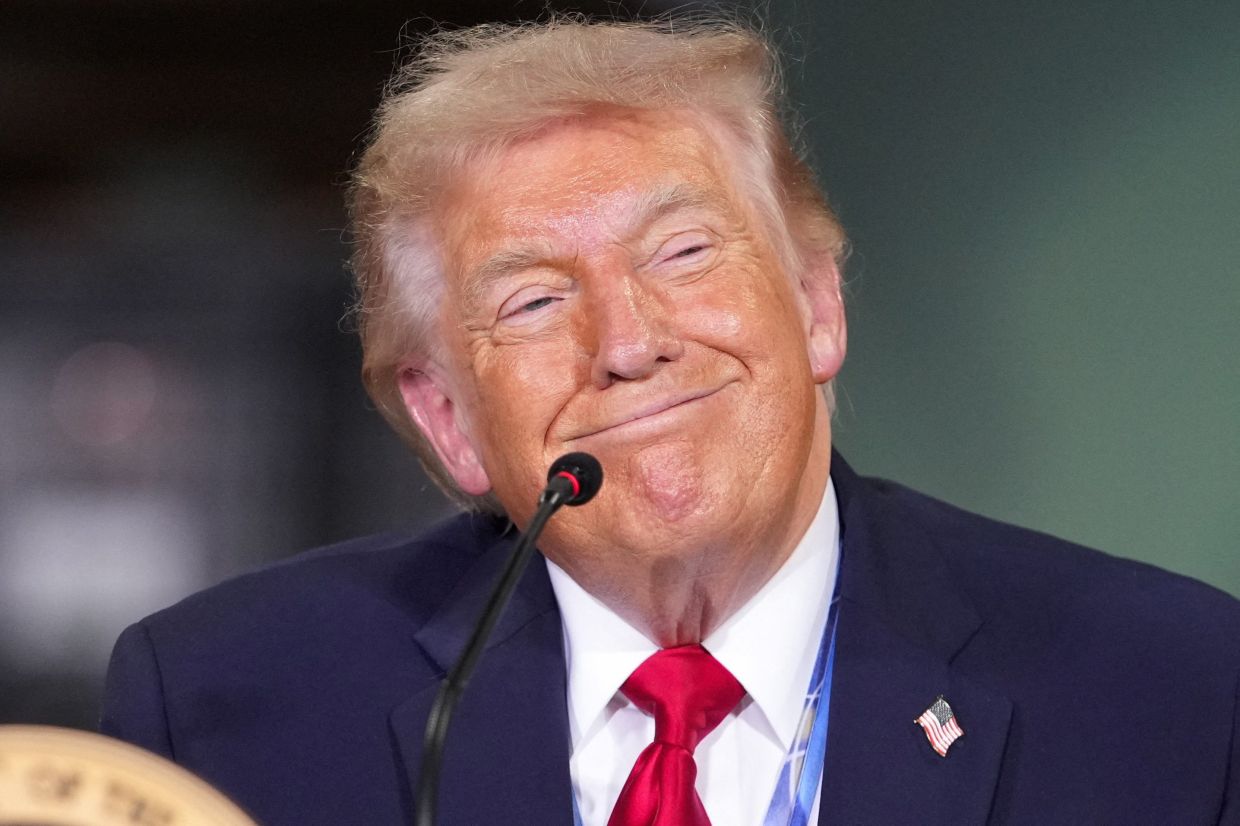
President Trump's protectionist agenda has undergone a significant recalibration following a Supreme Court decision that invalidated his initial sweeping tariffs imposed on all major trading partners. Rather than abandoning his core objective, the administration has constructed a legally defensible alternative that seeks to replicate the tariff structure from April 2, 2025—a date the president symbolically termed Liberation Day—while using investigative mechanisms to justify country-specific duty rates. This shift from blanket application to targeted investigations under Section 301 of the Trade Act of 1974 has fundamentally altered the competitive landscape for American trading partners, creating unexpected winners and losers compared to the original regime.
The new framework channels tariff investigations through two main pathways: accusations of forced labour practices and allegations of excess industrial capacity. Not every nation faces both inquiries, and importantly, the temporary 10 percent across-the-board tariffs that took effect earlier this year expire at month's end, meaning individual country tariffs will solidify at varying levels. This bifurcated approach creates a complex patchwork where some economies could secure lower duties than they faced four months ago, while others risk escalating penalties. For multinational corporations with supply chain flexibility, this reconfigured landscape potentially opens fresh arbitrage opportunities to redirect sourcing toward more favourably treated jurisdictions.
The Trump administration's tariff regime operates within a framework that simultaneously acknowledges existing trade agreements and threatens to upend them through exemptions and expansions. The presidency has already selectively exempted certain imports—notably artificial intelligence equipment, farm machinery, and Brazilian coffee—to avoid domestic cost pressures, while simultaneously expanding tariff scope in other sectors. This unpredictability complicates long-term planning for foreign exporters and American importers alike, as exemptions can vanish as quickly as they appear and previously untargeted goods can suddenly face duties. For nations that have negotiated lower tariff caps through bilateral or regional agreements, including the European Union, Japan, South Korea, and the United Kingdom, the viability of these agreements remains contested, with US officials offering reassurances that ring somewhat hollow given the administration's demonstrated willingness to bypass established arrangements.
The Philippines emerges as a notable winner in this reconfiguration. Under the April levies, the nation faced a 19 percent tariff rate, but the forced-labour investigation framework reduces this to 12.5 percent, a reduction of nearly seven percentage points. Crucially, the Philippines faces no excess-capacity investigation, eliminating the risk of further increases. This improved treatment arrives at a pivotal moment for bilateral trade, with American goods imports from the Philippines reaching 7.7 billion dollars in the first four months of 2025, representing a striking 51 percent surge compared to the same period last year. The tariff reduction provides breathing room for Philippine manufacturers and traders navigating an otherwise volatile protectionist environment.
South Africa represents another dramatic reversal, though one shaped by political rather than economic considerations. The nation previously suffered a 30 percent tariff rate imposed amid Trump's controversial allegations of government discrimination against white Afrikaners. The forced-labour investigation pathway now reduces this to 12.5 percent. However, South African exporters have already experienced significant market contraction, with goods shipments into the United States declining 56 percent year-on-year through April to just 3.5 billion dollars. Whether the tariff reduction will reverse this decline remains uncertain, as supply chains disrupted by months of elevated duties may not quickly relocate back to South African suppliers.
Pakistan and several smaller trading nations secure substantial relief through the new framework. Pakistan's tariff rate drops 19 percentage points from 29 percent down to 10 percent, while Myanmar faces a dramatic transformation from the punitive 44 percent April rate to somewhere between zero and 2 percent on most goods. Laos and Lesotho similarly benefit from steep reductions. These compression-level improvements for nations conducting less than 10 billion dollars in annual trade with the United States potentially create attractive alternative sourcing destinations for multinationals seeking to diversify away from higher-tariff jurisdictions. This dynamic could trigger a secondary wave of supply chain reallocation, complicating the original tariff policy's intended effects.
Singapore, however, faces a notably different trajectory despite its status as a crucial Southeast Asian trading hub. The city-state avoided country-specific emergency tariffs in April but received the standard 10 percent rate applied universally at that time. The new regime threatens to push Singapore into a worse position, as the economy now faces a 12.5 percent forced-labour tariff and anticipated additional duties from the excess-capacity investigation. According to trade analysts at The Hinrich Foundation, Singaporeans are acutely aware of this deterioration, having previously inhabited a comfortable 10 percent tier. Singapore's position is particularly acute because the economy functions as one of the world's premier transhipment hubs, with massive volumes of raw materials entering its ports and industrial zones before exiting as finished products. Higher tariffs on Singapore-processed goods could ripple throughout regional supply chains that depend on the city-state's logistics infrastructure.
Canada's position presents ambiguities despite surface-level improvements. Tariffs on Canadian imports have declined relative to April 2025, and the United States-Mexico-Canada Agreement provides exemptions for qualified goods. Nonetheless, industry-specific tariffs targeting metals have created considerable strain on Canadian producers. The larger uncertainty stems from Trump's repeated threats to withdraw from the North American trade agreement he helped negotiate during his first administration, combined with his stated grievances over Canadian retaliatory measures. Even if these withdrawal threats constitute negotiating tactics, Canada cannot comfortably rely on trade agreement protections heading into comprehensive USMCA renegotiations scheduled for the second half of 2025.
Mexico confronts distinct sector-specific challenges within the broader tariff framework. The nation is actively pushing for relief on auto-sector tariff rates, arguing that Mexican automotive imports face higher duties than equivalent vehicles from South Korea or Japan. Simultaneously, Washington is leveraging ongoing USMCA discussions to pressure Mexico into implementing new rules requiring North American automobiles to incorporate at least 50 percent American-sourced components. These talks will extend through at least July, leaving Mexico's effective trade position in near-term limbo while negotiators wrangle over precise tariff schedules and domestic content requirements.
The European Union confronts an imminent deadline as it races to ratify a trade agreement before Trump's July 4 ultimatum. Should ratification fail, automobile tariffs would escalate from 15 percent to 25 percent. The European Parliament approved the agreement last week, and EU member states are expected to deliver final approval this week, completing a year-long ratification marathon. However, this procedural victory masks underlying tensions, exemplified by Trump's launch last week of a Section 301 investigation against Germany specifically, alleging systematic underpayment for innovative pharmaceutical products. Chancellor Friedrich Merz responded by insisting the United States honour its trade commitments, characterizing pharmaceutical pricing as a domestic policy matter beyond trade agreement scope. This friction signals that even successful trade agreement ratification may not guarantee stability if Trump identifies additional alleged unfairness within EU-member jurisdictions.
China occupies an extraordinarily transformed position compared to the opening weeks of Trump's second term. During the 2024 presidential campaign, Trump pledged to impose a 60 percent tariff on Chinese goods, yet the effective rate has settled at approximately 21 percent according to Bloomberg Economics analysis. This represents a dramatic compression from the threatened level, reflecting either negotiating movement or a tactical pause. The United States and China are scheduled to revisit their tariff arrangement in autumn, creating another temporal inflection point for the trading relationship. Chinese President Xi Jinping demonstrated meaningful leverage over American economic interests last year through selective blockading of rare-earth mineral exports, suggesting that Beijing retains substantial negotiating capacity should tariff disputes intensify heading into the fall discussions.
The tariff reconfiguration exposes fundamental contradictions within Trump's protectionist strategy. While the administration ostensibly grounds duties in objective investigations of labour practices and industrial capacity, the selective application of exemptions, the sudden launch of investigations against favoured trade partners like Germany, and the dramatic variance in outcomes across nations suggest that geopolitical and personal considerations heavily influence purportedly technical determinations. For Malaysian policymakers and regional businesses, the volatility embedded within this framework demands sustained engagement and contingency planning, as tariff classifications and investigation outcomes remain subject to rapid revision based on presidential sentiment rather than stable rule-based criteria.

