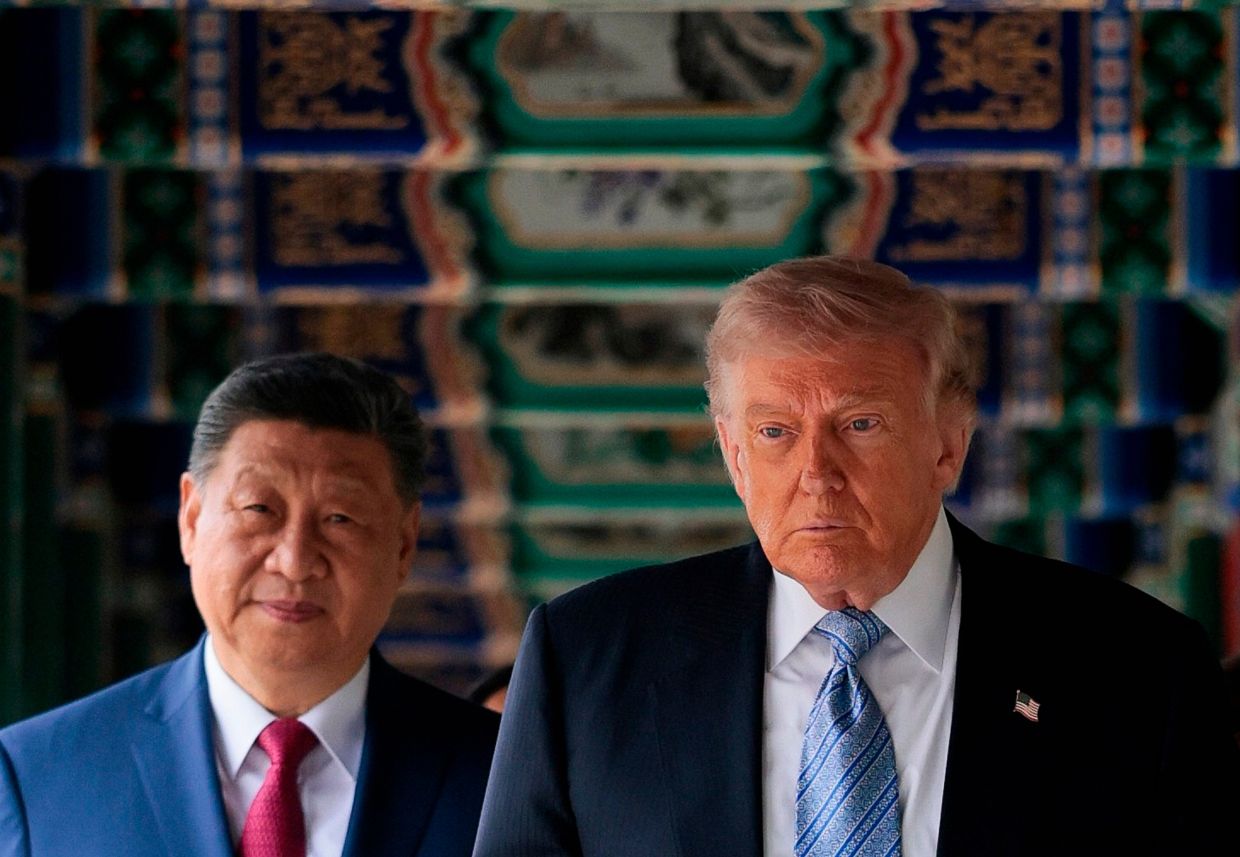
The Trump administration's approach to China continues to oscillate between confrontation and conciliation, a pattern evident in recent remarks regarding alleged weapons shipments and the impending state visit by Chinese President Xi Jinping on September 24. These mixed signals underscore the fundamental tension within US-China relations under the current leadership, where public accusations coexist with behind-the-scenes diplomatic engagement.
Reports emerged this week indicating that China may be supplying weapons to Iran through a supply chain originating in western China and routed through Pakistan, with the transaction valued between US$60 million to US$70 million. This allegation prompted Trump to express frustration, stating he would find such conduct "surprising" while referencing his personal conversations with Xi. Trump indicated that the Chinese leader had assured him during their May meeting in Beijing that China would not provide assistance to Iran under any circumstances. Yet his language revealed underlying scepticism: "he told me very strongly he wouldn't partake. But he knows I'd be quite disappointed," suggesting Trump recognises potential gaps between Xi's public commitments and actual policy implementation.
China's foreign ministry swiftly rejected the weapons trafficking report as "untrue and not factual at all," reiterating Beijing's stated commitment to de-escalating regional tensions and resolving the Iran conflict through diplomatic means. This denial mirrors Beijing's earlier dismissal of similar accusations made before Trump's May visit, when the ministry characterised claims of Chinese weapons supplies to Iran as "completely groundless." For Malaysian policymakers observing regional dynamics, these competing narratives complicate efforts to assess the true nature of Chinese foreign policy and its implications for Southeast Asian security.
Hours before commenting on the weapons report, Trump launched an extensive attack via his social media platform against Dr Anthony Fauci, the long-time senior US health official. Trump reiterated his long-standing assertion that the Covid-19 pandemic originated from a laboratory in Wuhan, China, accusing Fauci of consistently defending Beijing's position. "I said from the beginning that the virus came from the Wuhan Laboratory in China. Fauci strongly disagreed, always trying to protect China," Trump declared, reviving a theory he has promoted throughout his presidency. While Trump continues advancing the laboratory-leak hypothesis, the broader scientific consensus has increasingly favoured the natural spillover explanation, wherein the virus jumped from animal to human populations. This persistent politicisation of pandemic origins remains relevant to Southeast Asian nations, where Covid-19 caused significant economic and social disruption.
The apparent contradiction between Trump's cautionary tone regarding Chinese weapons transfers and his stated willingness to accept Xi's assurances exemplifies the inconsistency that has characterised Trump's China policy throughout his tenure. Just one week prior to his recent comments, Trump claimed that, in his view, China and Russia were not actively participating in the broader Iran conflict. He referenced his May discussions with Xi, stating: "Considering our relationship, I take him at his word." Simultaneously, however, Trump issued a veiled threat, warning that Chinese involvement in Iran's affairs "would be very bad for them – certainly not in their best interests," suggesting underlying distrust despite his publicly expressed confidence in Xi's reliability.
This diplomatic vacillation becomes even more pronounced when examined alongside Trump's rhetoric from merely twelve days earlier. In a prime-time address delivered to the nation, Trump accused Beijing of executing "the largest compromise of election data in history," alleging that China had illegally obtained approximately 220 million American voter records. He subsequently declassified documents purporting to support this claim and characterised the situation as representing an "unprecedented election security nightmare," language suggesting severe national security implications requiring substantial governmental response. For observers in Malaysia and across the region, such declarations typically presage significant diplomatic or economic consequences.
Yet strikingly, since Trump's dramatic election security speech, the administration has not announced any new sanctions, trade penalties, or diplomatic repercussions specifically targeting China over the alleged interference. Planning for Xi's September state visit has proceeded without interruption, suggesting that even as Trump publicly castigates Beijing for electoral meddling, behind-the-scenes negotiations and diplomatic preparations continue unabated. This disconnect between rhetoric and substantive policy response reveals a strategic calculation within the Trump administration that maintaining a viable diplomatic channel with China outweighs the domestic political benefits of demonstrating tough action on election security.
For Southeast Asian nations closely monitoring US-China dynamics, this pattern of mixed messaging creates interpretive challenges. Malaysia and its ASEAN neighbours rely partly on the stability and predictability of great power relations to chart their own foreign policy courses. When the world's largest economy sends contradictory signals—simultaneously threatening serious consequences for alleged infractions whilst preparing cordial state visits—regional actors struggle to assess likely trajectories and adjust their own strategic positioning accordingly. The absence of material consequences following Trump's election security allegations may signal to Beijing that such accusations carry limited weight in Trump's actual decision-making calculus.
The broader pattern suggests that Trump views Xi personally as someone with whom productive dialogue remains possible, despite systemic concerns about Chinese government conduct across multiple domains. This personalised approach to great power relations, wherein individual leaders' assurances are weighted heavily against institutional distrust, represents a notable departure from traditional diplomatic frameworks emphasising structural incentives and verifiable commitments. Trump's willingness to accept Xi's word regarding Iran involvement, combined with his public expressions of disappointment rather than concrete punitive measures, reflects faith in personal relationships as diplomatic tools—an approach with uncertain implications for long-term US-China stability.
The September visit by Xi thus assumes significance beyond mere ceremonial state diplomacy. It represents an opportunity for Trump and Xi to recalibrate their relationship following months of competing accusations and conflicting narratives. Whether Trump will press substantively on the election interference allegations remains unclear, given his demonstrated preference for maintaining positive personal rapport. For Malaysian observers, the outcome of their discussions may indicate whether the US intends to pursue aggressive China containment or instead will compartmentalise concerns to preserve higher-level cooperation on select issues deemed strategically vital. The mixed signals emanating from Trump's recent statements suggest that even the administration itself has not determined its ultimate prioritisation strategy.
Ultimately, Trump's simultaneous expressions of disappointment over alleged weapons transfers, acceptance of Xi's personal assurances, accusations of election interference without follow-through consequences, and advancement of disputed Wuhan laboratory theories demonstrate a China policy lacking internal coherence. This incoherence reflects genuine strategic complexity—the United States confronts legitimate concerns about Chinese conduct across multiple domains whilst simultaneously recognising mutual benefits in selective cooperation. However, for regional powers in Southeast Asia seeking to calibrate their own China policies, such ambiguity complicates rational strategic planning. The Trump administration's approach suggests that great power relations remain substantially driven by personalities and ad hoc judgments rather than consistent institutional frameworks, a reality with implications for all nations operating within the broader US-China strategic competition.

