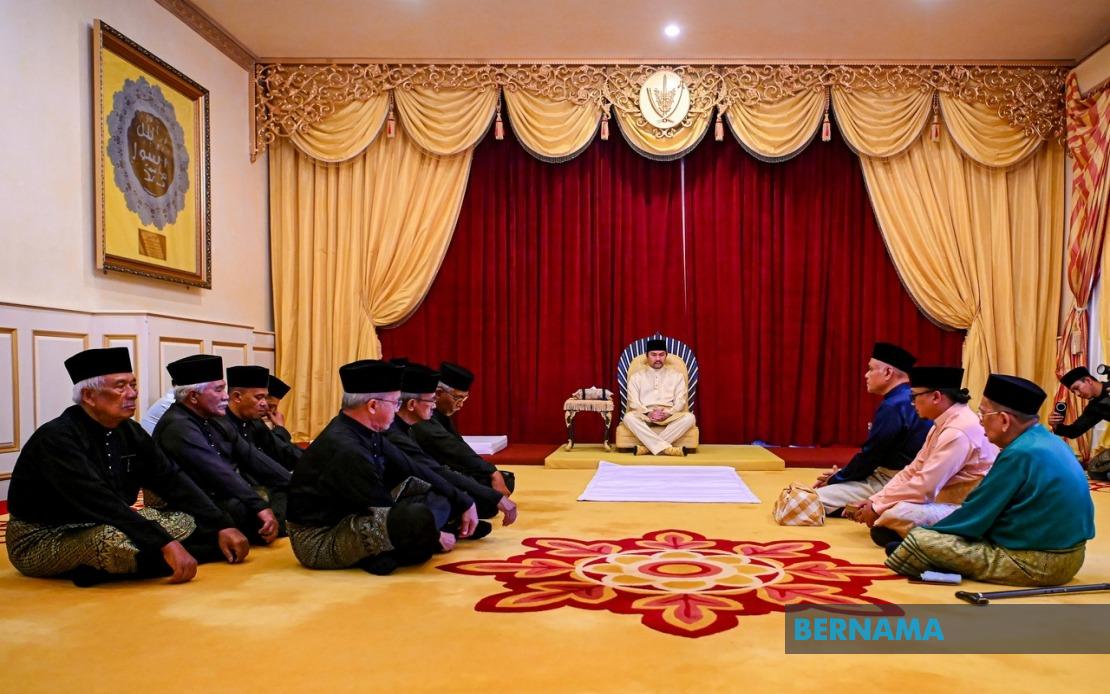
Negeri Sembilan's paramount ruler, Tuanku Muhriz Tuanku Munawir, has granted his consent for a ceremonial royal audience to formally recognise the appointment of a new traditional leader in one of the state's historic administrative divisions. The Istiadat Menghadap Menjunjung Duli ceremony, scheduled for Saturday morning at Istana Besar Seri Menanti in Kuala Pilah, will mark the culmination of a succession process governed by centuries-old Minangkabau customs unique to Negeri Sembilan's federal structure.
The news came through an official pronouncement made by Tunku Besar Seri Menanti Tunku Ali Redhauddin Tuanku Muhriz during a formal audience with the traditional leadership council of Luak Sungei Ujong. The Tunku conveyed his father's approval following a presentation by representatives of the luak, the territorial subdivision whose customary governing body had completed the selection process in accordance with adat practices long embedded in the region's governance framework.
Muhammad Faris Johari, at 29 years old, has been selected by the Buapak customary council assembly to become the 11th Undang of Luak Sungei Ujong. His elevation comes through traditional election procedures rather than appointment by state administration, preserving the distinctive character of Negeri Sembilan's system where adat councils retain significant autonomy in selecting their leaders. The Undang position represents one of the most important roles in the luak's governance structure, carrying both ceremonial and administrative responsibilities rooted in the state's unique federal arrangement.
The appointment follows the formal dismissal of his predecessor, Datuk Klana Petra Datuk Mubarak Dohak, who had served as the 10th Undang until the Dewan Keadilan dan Undang, the justice and customary law council, accepted his removal at a special sitting chaired by Tuanku Muhriz. The circumstances surrounding the previous Undang's departure were not immediately elaborated, though such transitions in Negeri Sembilan's traditional hierarchy typically reflect broader community concerns or governance issues within the luak rather than personal failings alone.
Negeri Sembilan's constitutional structure distinguishes it from Malaysia's other states through its preservation of powerful adat institutions. The state operates under a federal framework where the Yang Dipertuan Besar shares ceremonial sovereignty with nine territorial chiefs, each presiding over their respective luak. This arrangement, rooted in the 1898 Pangkor Engagement, represents a living remnant of pre-colonial Minangkabau political organisation adapted to modern Malaysia's constitutional monarchy. Understanding this system is essential for appreciating how Negeri Sembilan maintains traditions of decentralised customary governance within the broader Malaysian federation.
Menteri Besar Datuk Seri Aminuddin Harun's involvement in announcing the dismissal of the previous Undang underscores the interplay between state administration and customary authority. While adat councils exercise genuine decision-making power, these decisions typically unfold in consultation with state leadership, reflecting practical accommodations necessary for functioning alongside modern bureaucratic governance. The royal audience ceremony itself embodies this synthesis, formalising a customary decision through the paramount ruler's ceremonial recognition and blessing.
The timing of Saturday's ceremony will also include a parallel installation, as the royal audience will simultaneously formalise the appointment of the 22nd Undang of Luak Rembau, another of Negeri Sembilan's constituent divisions. This dual ceremony, while efficient administratively, also highlights how leadership transitions across multiple luaks occasionally synchronise, potentially indicating broader generational shifts within the state's traditional elite or the culmination of concurrent succession processes.
For Malaysian observers accustomed to more centralised state governance, Negeri Sembilan's persistent adat institutions may appear anomalous. Yet they represent an important constitutional principle: that federal systems can accommodate meaningful devolution of authority to traditional governing bodies, and that modernity need not entirely displace customary law and leadership selection. The formality with which Saturday's ceremony will proceed—the specific Islamic invocations, the protocol surrounding the Undang's approach to the throne, the witnesses required—all derive from centuries of accumulated practice documented in Negeri Sembilan's adat canon.
The selection of Muhammad Faris Johari suggests confidence in younger generations to steward these traditional institutions forward. At 29, he represents a cohort of adat leaders substantially younger than many of his predecessors, potentially signalling changing demographics within Negeri Sembilan's traditional elite. His youth may also indicate the Buapak council's judgment that contemporary luaks require leaders with fresh perspectives capable of navigating the intersection between preserving adat traditions and accommodating modern state administration.
Regionally, Negeri Sembilan's continued investment in elaborate ceremonial recognition of adat appointments contrasts with the erosion of customary governance institutions in other Southeast Asian territories. While Indonesia has substantially reformed its adat systems and the Philippines has concentrated traditional authority recognition, Malaysia has permitted states like Negeri Sembilan considerable latitude in maintaining parallel customary hierarchies. This conservative approach to institutional change reflects broader Malaysian constitutional commitments to protecting traditional ruler prerogatives, though the practical implications of maintaining multiple competing governance frameworks continue generating nuanced debates among scholars and practitioners.
The Dewan Keadilan dan Undang that formally accepted the previous Undang's dismissal functions as a specialized judicial and customary review body with deep historical roots. Its willingness to process the removal signifies that even within adat systems, procedures for addressing leadership shortcomings exist and remain operational. Saturday's ceremony will thus represent not merely a succession, but an affirmation that Negeri Sembilan's customary institutions retain vitality and function according to procedures their communities continue recognising as legitimate.

