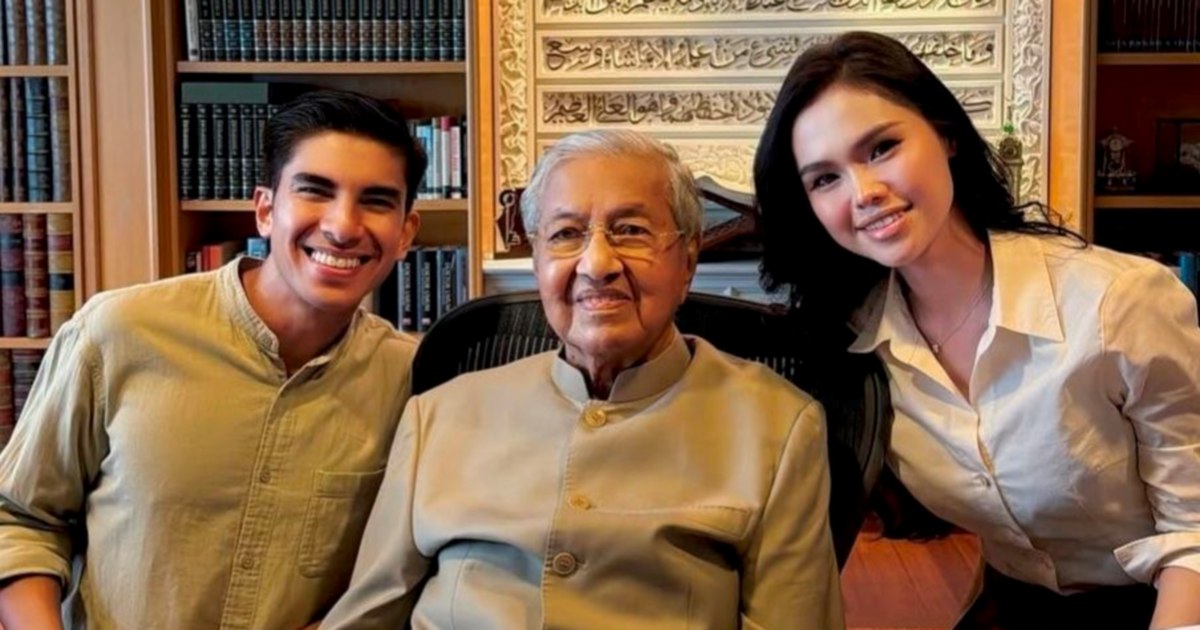
Prominent entertainer Bella Astillah has shared details of a meaningful encounter with former Prime Minister Tun Dr Mahathir Mohamad, during which the veteran statesman offered his perspectives on marriage to the actress-singer and her intended husband, Muar Member of Parliament Syed Saddiq Syed Abdul Rahman.
The revelation of this personal consultation underscores the ongoing interest in the union between two figures who occupy distinct spheres within Malaysian public life. Astillah, whose career spans music and acting, represents the creative industries that have grown increasingly visible in the nation's popular culture landscape. Her engagement to Syed Saddiq marks a notable intersection between entertainment and politics, two domains that rarely overlap in such direct fashion among Malaysia's younger generation of public figures.
Syed Saddiq's position as the parliamentarian for Muar, a constituency in Johor, has made him one of the more visible voices in the current legislative body. His parliamentary profile, combined with his relatively youthful standing compared to many colleagues across the political spectrum, has maintained public interest in his personal milestones and life decisions. The decision to seek counsel from Tun Mahathir suggests that both Astillah and Syed Saddiq place value on guidance from senior figures with extensive life experience, despite the generational divide.
The timing and nature of this advisory session reveal something instructive about contemporary Malaysian society's informal networks and relationship dynamics. Tun Mahathir's willingness to engage in such personal matters, even with individuals outside his immediate political circle, demonstrates the continuing cultural respect afforded to elder statesmen in advising younger generations on life passages. The former premier's long tenure and varied experience governing the nation have positioned him as a figure whose opinions remain sought across diverse sectors.
For Astillah and Syed Saddiq, receiving guidance from someone of Tun Mahathir's stature carries both practical and symbolic weight. The practical element involves benefiting from the accumulated wisdom of an individual who has navigated complex personal and professional relationships across decades. The symbolic dimension relates to the broader message it sends about recognizing institutional experience and the continuities that bind Malaysian society across ideological and generational lines.
The entertainment industry in Malaysia has traditionally maintained distance from electoral politics, creating a perception of separate spheres. Astillah's professional standing as a recognised performer and her engagement to an active parliamentarian thus represents a subtle shift in how these boundaries may be evolving. Such unions challenge conventional assumptions about the compartmentalisation of public life in the country.
The involvement of an elder statesman in providing matrimonial guidance also reflects enduring cultural values within Malaysian society, where family and community elders retain significant influence over major life decisions, regardless of modern changes in social structures. Even within an increasingly globalised context, many Malaysians continue to value counsel from senior figures, particularly when navigating significant personal transitions such as marriage.
This encounter may also carry implications for broader political and social discourse in Malaysia. When figures from different domains—entertainment, politics, and the elder generation of governance—interact harmoniously around personal matters, it suggests potential for collaboration and mutual respect across previously divided constituencies. Such interactions, though primarily personal in nature, can indirectly influence public perception of cross-sector cooperation.
The disclosure itself indicates that both Astillah and Syed Saddiq are comfortable sharing aspects of their engagement with public audiences. This transparency contrasts with earlier eras of Malaysian public life, where entertainment figures and politicians might have kept such intersections private. The willingness to discuss their meeting with Tun Mahathir suggests confidence in their relationship and its reception among their respective audiences.
As Malaysia continues to navigate evolving social attitudes toward celebrity, political involvement, and interfaith and intercultural relationships, moments like this serve as barometers of broader cultural shifts. The couple's engagement itself represents the kind of social integration that characterises modern Malaysia, where traditional boundaries between sectors become increasingly porous.
Looking ahead, this marriage will likely be observed as a test case of how contemporary Malaysia manages the intersection of entertainment prominence and political responsibility. The counsel offered by Tun Mahathir, whatever its specific content, appears to have been received warmly by both parties, suggesting they view traditional wisdom as compatible with their modern circumstances. For a nation often characterised by generational and sectoral divisions, such moments of connection carry broader cultural significance beyond the immediate context of one couple's personal milestone.

