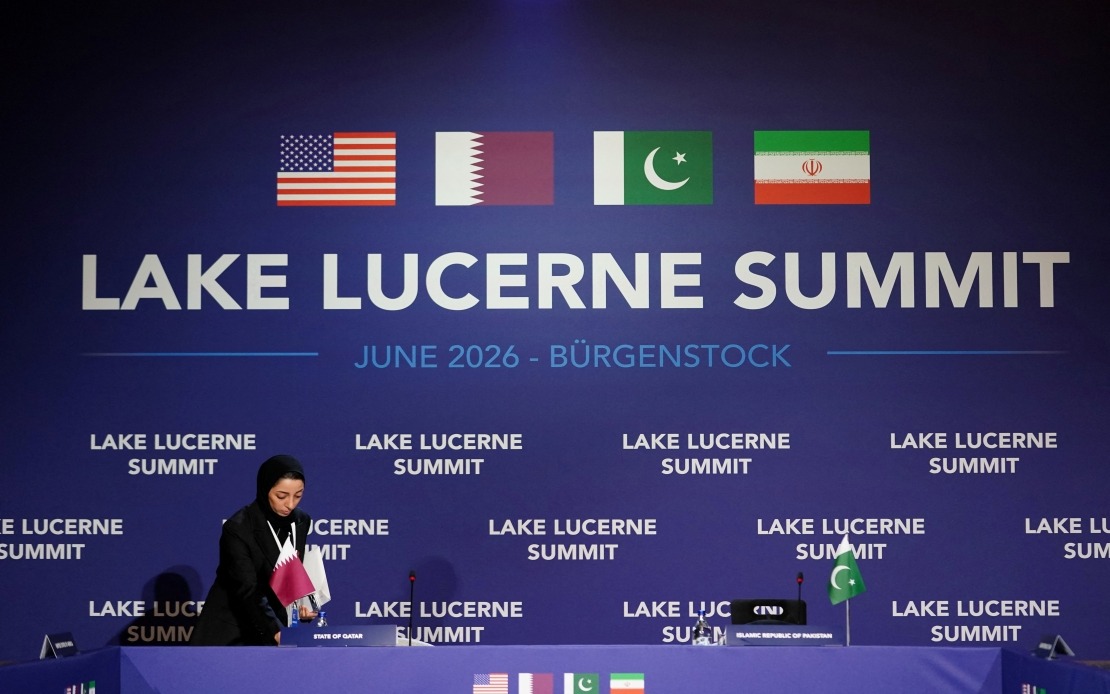
A quartet of influential regional powers — Türkiye, Egypt, Pakistan and Saudi Arabia — have thrown their diplomatic weight behind a recently signed understanding between the United States and Iran, viewing the accord as a meaningful move toward reducing tensions in West Asia. The four foreign ministers issued a joint statement on Sunday following their meeting in Cairo, praising what they characterised as a constructive development with potential consequences extending far beyond Middle Eastern borders.
The agreement in question, formally known as the Islamabad Memorandum of Understanding, represents a rare moment of consensus among nations with competing strategic interests in one of the world's most geopolitically fractious regions. In their statement, the ministers emphasised that the accord addresses not merely bilateral US-Iranian relations but broader security concerns affecting the entire Gulf and eastern Mediterranean area. The timing and composition of the endorsement underscore how closely countries across the Islamic world are monitoring efforts to defuse the longstanding antagonism between Washington and Tehran.
Beyond security considerations, the four nations highlighted the practical spillover effects of regional instability. Their joint statement specifically referenced threats to global energy markets, international shipping lanes, supply chain disruptions, and international commerce — concerns that resonate acutely for trading nations dependent on uninterrupted passage through the Persian Gulf and surrounding waters. For Malaysia and other Southeast Asian economies reliant on stable energy supplies and free passage through critical maritime corridors, the stabilisation of West Asia carries tangible economic implications. Disruptions in this region directly influence fuel costs, shipping insurance premiums, and production timelines for regional manufacturers.
The statement accorded particular recognition to Pakistan's instrumental role in brokering negotiations that culminated in the Islamabad memorandum, alongside Qatar's supportive diplomatic efforts. This acknowledgement reflects the delicate balancing act required to bring hostile parties to the negotiating table and underscores why certain nations, perceived as relatively neutral or respected by multiple sides, prove invaluable in such processes. Pakistan's position as a major Muslim-majority nation with relationships spanning the Arab world, Iran, and the West made it a natural convener, while Qatar's established track record as a discreet mediator in regional disputes lent credibility to the process.
Crucially, the four ministers cautioned against treating the Islamabad memorandum as a final settlement. Instead, they urged rapid progression to subsequent negotiation phases aimed at achieving what they termed a long-term, verifiable and mutually acceptable resolution of outstanding disagreements. This measured language reflects realistic expectations — the memorandum is positioned as an important but interim achievement, not a comprehensive peace accord. The emphasis on verification mechanisms suggests ongoing concerns about implementation and compliance, issues that have historically plagued agreements in this region.
The joint statement further stipulated that any future arrangements must accommodate the security interests of Gulf Cooperation Council states and Levantine nations. This explicit caveat demonstrates that Saudi Arabia and its partners intend to remain at the centre of negotiations, ensuring their defence concerns — particularly regarding Iranian regional activities — receive serious consideration. The inclusion of this requirement signals potential resistance to any bilateral US-Iran understanding perceived as marginalising Gulf Arab security preoccupations.
The four ministers devoted substantial attention to the Israeli-Palestinian conflict, identifying its resolution as foundational to lasting West Asian stability. They reiterated longstanding Arab and Muslim positions supporting Palestinian statehood within pre-1967 borders, with East Jerusalem as capital, aligned with United Nations resolutions. This emphasis reflects the reality that Palestinian grievances remain deeply intertwined with regional tensions and that any comprehensive stabilisation effort must address this fundamental issue. For Malaysian observers, this commitment reaffirms the centrality of Palestinian rights within the broader Islamic world's diplomatic framework.
The statement's careful framing reveals the delicate diplomatic balance required to maintain unity among countries with distinct national interests. Türkiye, Saudi Arabia, Egypt and Pakistan have differing relationships with Iran, varying degrees of dependence on US security guarantees, and distinct regional ambitions. Yet their collective endorsement of the US-Iran understanding suggests sufficient common ground on the imperative for de-escalation. This consensus carries weight precisely because these nations represent diverse interests — from Gulf monarchies to a transcontinental power to North Africa's largest state.
For Southeast Asian nations, particularly Malaysia, the endorsement by these four influential Muslim-majority countries carries symbolic and practical significance. It demonstrates that major players in the Islamic world view regional stability as preferable to continued confrontation, despite legitimate disagreements. The message extends beyond West Asia to suggest that multiparty frameworks emphasising dialogue over escalation remain possible even amid deep historical antagonisms. The Islamabad memorandum itself, despite its modest scope, demonstrates that patient diplomacy channelled through respected mediators can achieve incremental progress where head-on confrontation fails.
The joint statement's emphasis on protecting global supply chains and maritime commerce reflects growing recognition that West Asian instability imposes costs on distant trading nations. As a Southeast Asian trading hub significantly dependent on Gulf energy and goods transiting through Indian Ocean and Persian Gulf routes, Malaysia has material interest in maintaining the diplomatic momentum these four nations have endorsed. Any renewed escalation could rapidly translate into higher costs for Malaysian consumers and manufacturers.
Looking forward, the success of subsequent negotiation phases will determine whether this collaborative statement translates into sustained regional de-escalation. The involvement of these four ministerial voices in publicly backing the process provides political cover for further diplomatic engagement and sends cautionary signals to any faction preferring confrontation. Their statement, though diplomatically cautious, represents a meaningful declaration that the world's major Muslim-majority regional powers see advantage in pursuing negotiated solutions rather than military contests.

