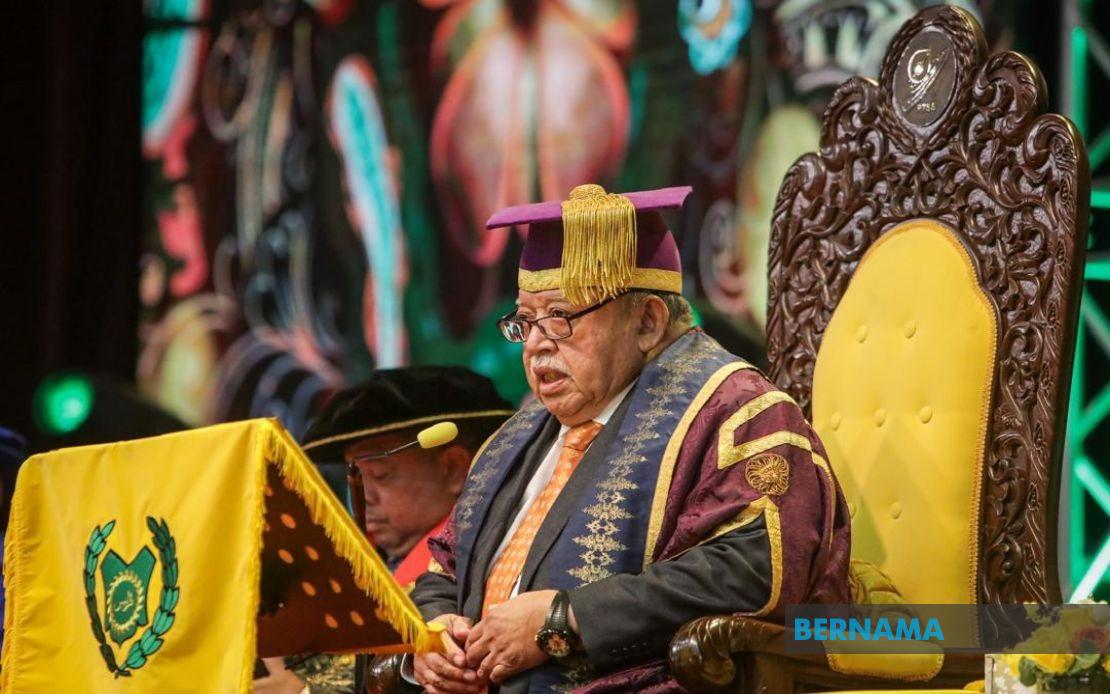
The Raja of Perlis, Tuanku Syed Sirajuddin Jamalullail, has underscored the strategic importance of technical and vocational education in developing a workforce capable of driving national progress and economic competitiveness. Speaking at the 2026 Northern Zone Polytechnic and Community College Convocation Ceremony held at Politeknik Tuanku Syed Sirajuddin in Arau on August 3, the Ruler stressed that Technical and Vocational Education and Training (TVET) remains instrumental in producing human capital equipped with advanced skills, creative thinking, and innovative capabilities needed to navigate an increasingly complex global economy.
The Ruler's remarks come at a critical juncture for Malaysia's educational landscape, where rapid technological shifts are fundamentally reshaping employment patterns and industrial structures across the region. Artificial intelligence, automation systems, robotics technologies, and widespread digitalisation are no longer peripheral concerns but have become central drivers reshaping how businesses operate and what competencies employers demand from their workforce. For Malaysia and its neighbours in Southeast Asia, this transformation presents both challenges and opportunities, particularly for institutions tasked with preparing graduates for a labour market that barely existed a decade ago.
Tuanku Syed Sirajuddin articulated a vision where innovation extends beyond mere concept generation, emphasizing that true progress emerges when ideas translate into practical solutions addressing real societal needs and contributing to national development objectives. This perspective reflects growing recognition among policymakers that TVET institutions must cultivate not only technical proficiency but also entrepreneurial mindsets and problem-solving capabilities. The distinction matters significantly for Malaysia's positioning within Southeast Asia's increasingly knowledge-intensive economy, where countries like Singapore and Vietnam have invested heavily in upgrading their vocational education systems to compete for high-value manufacturing and technology-driven sectors.
Beyond technical competencies, the Ruler delivered a pointed message to convocation attendees regarding the integration of ethical foundations with professional excellence. His Royal Highness cautioned that graduates must never compromise moral principles, integrity, and patriotic commitment in their pursuit of career advancement. This emphasis on character development alongside skill acquisition addresses a broader societal concern about ensuring that technological progress remains anchored in humanistic values and social responsibility. For Malaysian employers increasingly operating in cross-border regional contexts, workers who combine technical expertise with ethical grounding represent a genuinely competitive advantage.
The convocation ceremony itself demonstrated the scale of TVET's reach across the northern corridor of Peninsular Malaysia. The event, spanning from August 3 through August 9, recognized 6,104 graduates from polytechnic and community college programmes across Perlis, Kedah, and Penang. This number reflects substantial institutional capacity and sustained enrolment patterns across the northern region, suggesting that TVET pathways continue attracting significant cohorts of Malaysian students seeking alternatives to traditional university education. For policymakers monitoring educational trends, such numbers indicate that vocational training has successfully repositioned itself from a stigmatized option to a mainstream educational pathway.
Among those recognized during the ceremony's opening session was Teerti Ganapathi Rao, a 22-year-old diploma graduate from the Department of Information and Communication Technology at Politeknik Tuanku Syed Sirajuddin, who received the Director-General of Polytechnic and Community College Education Award. Rao's recognition for excellence in Digital Technology studies exemplifies the type of specialization increasingly valued in digital-first economies. Information and communication technology represents one of the fastest-growing fields within TVET systems regionally, driven by sustained demand from both multinational corporations establishing regional hubs and emerging Malaysian tech enterprises seeking skilled digital professionals.
The focus on digital technology and information communication systems within the northern zone's polytechnic offerings reflects broader regional workforce patterns. Southeast Asian economies, including Malaysia, have witnessed explosive growth in demand for digital specialists across e-commerce, fintech, software development, and digital transformation services. TVET institutions that successfully develop curricula aligned with these industry requirements position their graduates for meaningful employment and career progression, addressing persistent skills gaps that employers across the region consistently identify as constraining their growth prospects.
For Malaysian readers and policymakers, the Raja's convocation address carries particular significance given ongoing national efforts to upgrade technical education and position Malaysia competitively within Southeast Asia's knowledge economy. Malaysia's aspiration toward high-income nation status inherently depends on developing human capital capable of commanding premium compensation through superior skill levels and innovative contributions. TVET institutions throughout the country play central roles in this transition, yet their success requires sustained investment, curriculum modernization, and ecosystem coordination between educational institutions, industry partners, and government agencies.
The integration of character development with technical training, as emphasized by Tuanku Syed Sirajuddin, also addresses concerns about preparing graduates for increasingly complex professional environments where ethical decision-making intersects with technological deployment. As Malaysian organizations grapple with implementing AI systems, managing cybersecurity risks, and navigating data governance requirements, employees with both technical competence and strong ethical foundations become invaluable assets. The Ruler's emphasis on trustworthiness and integrity as markers of genuine professional excellence therefore extends beyond philosophical observations to practical workforce development strategy.
Looking forward, the convocation's recognition of over 6,100 graduates entering the Malaysian labour market represents a significant annual contribution to the nation's human capital base. Each of these individuals carries potential to drive innovation within their respective organizations and communities. However, realizing this potential requires complementary efforts: employers must recognize TVET graduates' value and provide appropriate career advancement pathways; policy frameworks must evolve to recognize qualifications across state boundaries and within regional contexts; and educational institutions must maintain commitment to currency and relevance as technological landscapes continue shifting with remarkable speed.
The broader regional context matters considerably for Malaysian TVET policy. Neighbouring countries have established their own technical education systems with varying levels of sophistication and industry alignment. Thailand's dual education model, Vietnam's rapid expansion of vocational capacity, and Indonesia's efforts to modernize technical institutions all represent competitive developments. Malaysia's TVET system must therefore balance meeting immediate domestic labour market needs with positioning graduates for possible regional employment opportunities and contributing to the Association of Southeast Asian Nations' collective capability development.
Tuanku Syed Sirajuddin's remarks ultimately frame TVET not as a secondary educational pathway but as essential infrastructure for national development and regional competitiveness. The message carries particular weight given his position as a reigning monarch addressing thousands of graduating students at the outset of their professional careers. By elevating TVET's status and explicitly connecting technical excellence with character development and patriotic commitment, the Raja reinforced societal recognition that vocational and technical training deserves parity with academic education in national planning, resource allocation, and cultural prestige. For Malaysia navigating profound technological transformation, such institutional validation of TVET's importance provides crucial political and social support for sustaining investment in systems that increasingly determine whether the nation successfully transitions toward sustainable prosperity within the broader Southeast Asian context.

