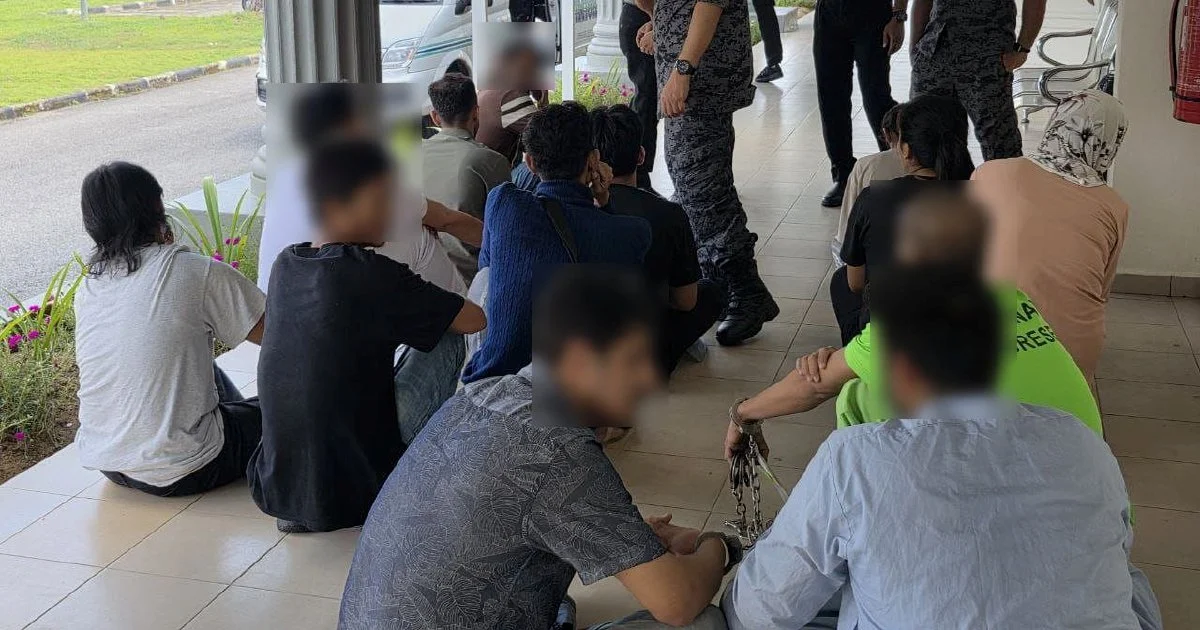
A group of twelve undocumented migrants appeared before the Sessions Court in Pasir Mas, Kelantan, today to face charges stemming from illegal entry into Malaysia, extended stays beyond visa validity, and the misuse of official travel documents. Among those prosecuted, three were women, highlighting a persistent vulnerability among female migrant populations who face heightened risks during irregular border crossings and unlawful residence in the country.
The case underscores the ongoing challenges facing Malaysian immigration authorities as they contend with the steady flow of irregular migration across the country's land and maritime borders. Kelantan, positioned along Malaysia's northeastern frontier with Thailand, remains a critical enforcement zone where immigration officials regularly intercept undocumented individuals attempting to enter or remain in the country through illicit means. The frequency of such prosecutions reflects both the determination of enforcement agencies and the persistent demand for unauthorised entry routes among migrants seeking economic opportunities or fleeing difficult circumstances in their home countries.
Illegal entry prosecutions form a cornerstone of Malaysia's immigration compliance strategy. The charges brought against these twelve individuals carry significant legal consequences, including substantial fines and potential imprisonment, designed to serve as a deterrent against future violations. The misuse of passes—a charge that often involves the alteration, borrowing, or fraudulent presentation of travel documents—represents a particularly serious category of offence that compounds the severity of the undocumented status and overstaying violations.
Overstaying remains one of the most common immigration infractions in Malaysia, driven partly by the complex interplay between economic desperation, limited legal pathways for temporary work, and the relative ease with which certain migrants can evade detection after their authorised period ends. For many undocumented workers, extending their stay illegally appears preferable to returning home empty-handed after accumulating debts incurred during recruitment or travel. This structural incentive, combined with labour market demand in sectors such as manufacturing, agriculture, and domestic work, perpetuates a cycle where enforcement actions like today's prosecution become necessary but insufficient to address root causes.
The involvement of female migrants in these prosecutions warrants particular attention. Women face distinctive vulnerabilities within irregular migration networks, including heightened exposure to trafficking, exploitation, and abuse. Their presence in enforcement actions suggests that gender-disaggregated data and gender-sensitive approaches to immigration policy remain essential priorities for Malaysian authorities seeking to protect vulnerable populations while maintaining border security and rule of law.
Kelantan's geographic position has made the state a focal point for immigration enforcement efforts. The porous border with Thailand, combined with established smuggling networks and family connections that span the international frontier, creates persistent operational challenges for authorities. Regular court proceedings such as today's demonstrate sustained commitment to prosecution, yet observers have long noted that supply-side enforcement alone—targeting migrants after entry—cannot substitute for comprehensive prevention strategies that address recruitment networks, document fraud, and labour market dynamics that attract irregular workers.
The Sessions Court prosecution pathway indicates that these cases were deemed sufficiently serious to warrant judicial proceedings rather than administrative settlement or deportation alone. This reflects Malaysian practice where severe violations or repeat offences merit criminal prosecution beyond standard immigration administrative procedures. The court setting also enables the application of sentencing guidelines designed to balance deterrence against humanitarian considerations regarding individual circumstances and the presence of dependent family members.
For the individuals concerned, conviction will result in criminal records that severely restrict future legal entry into Malaysia and potentially into other regional countries with whom Malaysia shares immigration intelligence and enforcement cooperation agreements. This consequence significantly impacts long-term economic prospects for migrants and their families in origin countries, potentially driving them toward even riskier migration strategies or greater vulnerability to exploitation by smuggling networks offering false assurances of safe passage.
The broader regional context matters considerably for understanding Malaysia's immigration enforcement priorities. The country hosts one of Asia's largest migrant populations, with estimates suggesting several million documented and undocumented foreign nationals residing and working across economic sectors. Neighbouring countries including Bangladesh, Myanmar, Indonesia, Thailand, and the Philippines generate persistent outflows of labour migrants seeking higher wages than available domestically. This regional labour market reality shapes Malaysia's enforcement approach, which must balance economic dependence on migrant labour against legitimate concerns about security, public services capacity, and wage competition affecting local workers.
Today's prosecution also reflects international pressure on Malaysia regarding immigration compliance and human trafficking prevention. Regional and international organisations have consistently urged stronger enforcement against document fraud and labour exploitation networks. By bringing these prosecutions through the court system, Malaysian authorities demonstrate responsiveness to such international scrutiny while maintaining operational focus on border security and rule of law.
Looking forward, immigration policy analysts suggest that sustainable solutions require integrated approaches combining enforcement with labour policy reform, including expanded legal temporary worker pathways, regularisation programmes for workers already established in the economy, and stronger accountability for employers who knowingly hire undocumented workers. Without such complementary measures, prosecutions—however necessary—remain responses to symptoms rather than structural causes driving irregular migration into Malaysia.

