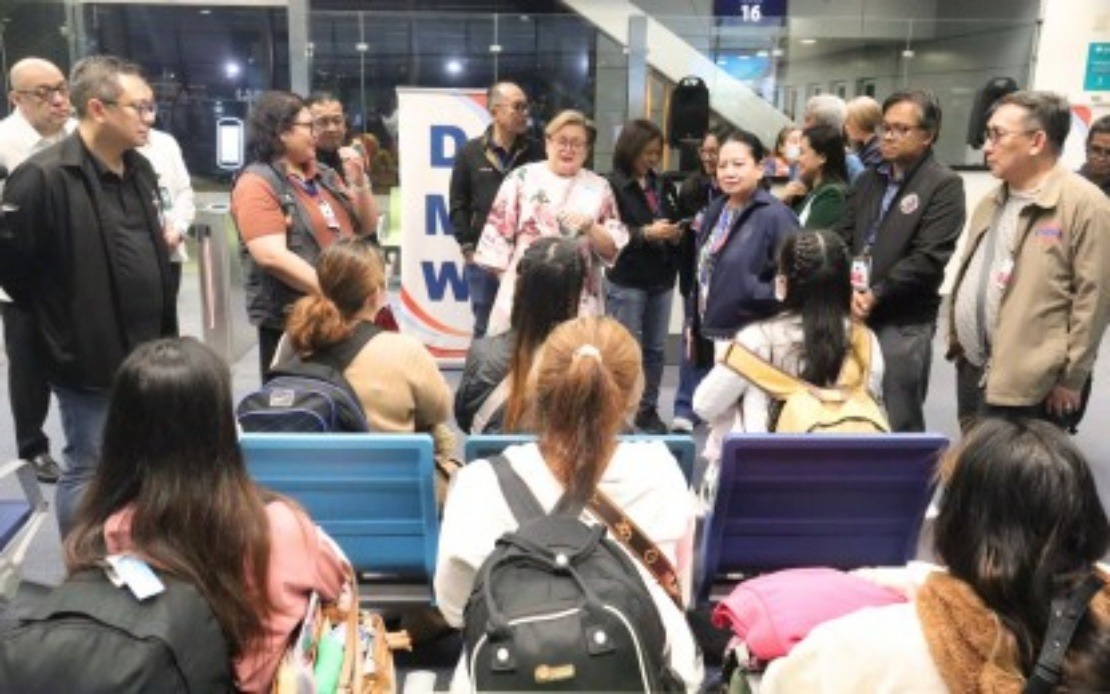
Twenty-four Filipino nationals who spent approximately nine months in detention within Russia have successfully returned home, marking the resolution of a diplomatic case that drew personal attention from the highest levels of the Philippine government. The returnees touched down at Ninoy Aquino International Airport's Terminal 1 early Sunday morning after flying through Bangkok, Thailand, arriving in two separate aircraft operated by Philippine Airlines. The breakthrough in securing their release came directly from a bilateral meeting between President Ferdinand R. Marcos Jr and Russian President Vladimir Putin during the ASEAN-Russia Commemorative Summit held in Kazan this week, where the Philippine leader personally advocated for the detainees' case.
The repatriation operation unfolded methodically across two flights to accommodate all individuals. Philippine Airlines Flight PR737 brought six of the detainees through the airport shortly after midnight, while the remaining eighteen arrived early Sunday morning aboard PAL Flight PR733. Both arrivals were co-ordinated through a complex bureaucratic process involving multiple Philippine government agencies working in tandem with Russian authorities. The swift execution of the repatriation demonstrated the level of priority Manila had assigned to resolving the situation once diplomatic channels opened at the presidential level.
The welcome reception underscored the government's commitment to the migrant workers' welfare. Foreign Affairs Secretary Maria Theresa Lazaro and Migrant Workers Secretary Hans Cacdac personally greeted the returnees upon arrival, signalling the importance the administration placed on the case. This high-level reception reflected not merely diplomatic protocol but genuine concern for Filipino citizens who had found themselves trapped in a foreign legal system. The presence of both the Foreign Affairs and Migrant Workers departments highlighted how the situation transcended ordinary consular matters to become a significant bilateral issue.
Coordination among Philippine agencies played a crucial supporting role in facilitating the repatriation. The Department of Foreign Affairs worked alongside the Department of Migrant Workers and the Overseas Workers Welfare Administration to manage logistics and ensure proper documentation. This inter-agency collaboration ensured that the repatriation process adhered to both Philippine and Russian legal requirements while prioritising the welfare of the detainees. Such coordination represents standard practice in complex repatriation cases but underscores the multi-faceted support required when citizens become ensnared in foreign detention systems.
The circumstances of the initial detention remain significant for understanding how Filipinos become vulnerable to such situations. The detainees had been held in Irkutsk, a major city in southeastern Siberia, without formal charges being laid against them throughout their confinement. Preliminary investigations by Philippine officials suggested that the workers had fallen victim to illegal recruitment schemes, a persistent problem within labour migration networks across Asia. Once in Russia, they encountered custody over alleged immigration violations, compounding their legal difficulties and leaving them isolated in a foreign jurisdiction without proper legal representation or understanding of the charges against them.
The case exemplifies broader vulnerabilities within labour migration systems that continue to affect Filipino workers seeking employment abroad. Illegal recruitment syndicates deliberately exploit information gaps and financial desperation, targeting workers with promises of legitimate employment and reasonable wages. Once transported across borders, victims find themselves in precarious situations with limited recourse to consular assistance. The nine-month detention in Irkutsk represented an extended period of uncertainty for both the workers and their families back in the Philippines, during which the government's ability to secure their release remained uncertain.
President Marcos's personal advocacy for the case during his meeting with Putin proved instrumental in accelerating the resolution. Rather than allowing the matter to remain within standard diplomatic channels, the Philippine president elevated the issue to the highest level of bilateral discussion, framing the detainees' situation as a humanitarian concern requiring urgent attention. This approach proved effective, with the Russian government subsequently cooperating to facilitate the workers' release and return. The outcome demonstrates how presidential engagement can cut through bureaucratic obstacles when workers find themselves trapped in foreign legal systems.
The government has committed to providing comprehensive support to the returning Filipinos as they reintegrate into society. Both the Department of Foreign Affairs and the Department of Migrant Workers plan to offer assistance programmes designed to facilitate their transition back to civilian life following months of detention. Such support typically encompasses psychological counselling, vocational training assistance, and financial aid to help workers stabilise their situations. These measures recognise that detention abroad leaves lasting psychological and emotional impacts that require professional intervention to address.
Investigations into the recruitment and transportation scheme remain ongoing as authorities work to dismantle the networks that enabled the workers' exploitation. Understanding how these individuals were recruited, which intermediaries facilitated their movement to Russia, and what promises were made to them provides essential intelligence for disrupting similar operations in future. The Department of Foreign Affairs and Department of Migrant Workers will coordinate efforts to identify and prosecute those responsible for the illegal recruitment and trafficking. Such investigations often reveal connections to broader syndicates operating across multiple countries, making information sharing with international partners crucial.
For Malaysia and other ASEAN nations, the case serves as a cautionary reminder of persistent dangers within regional labour migration systems. Filipino workers represent a significant portion of ASEAN's migrant workforce, but the experience of these twenty-four individuals demonstrates how quickly legitimate job-seeking can transform into detention and exploitation. Malaysia, hosting substantial Filipino migrant populations, should consider how its own regulatory frameworks address illegal recruitment and worker protection. The incident underscores the necessity for stronger bilateral cooperation among ASEAN states to combat trafficking networks and illegal recruitment schemes that victimise workers seeking improved economic circumstances.
The successful resolution also signals the importance of maintaining high-level diplomatic channels on humanitarian matters. While geopolitical tensions exist between nations, the ability to raise individual cases at presidential level demonstrates that worker protection can transcend diplomatic divides. For ASEAN nations including Malaysia, this suggests the value of institutionalising mechanisms through which worker welfare issues receive attention at senior government levels. The Marcos-Putin engagement, though focused on Philippine citizens, establishes a precedent that regional leaders should prioritise worker protection in their bilateral discussions, ensuring that labour migration concerns are not relegated to secondary importance beneath trade or security considerations.

