Southern Thailand experienced a sharp escalation in militant violence on Friday when two separate bomb attacks struck police units within hours of each other across Yala and Pattani provinces, leaving 11 officers injured and renewing concerns about security in the restive border region.
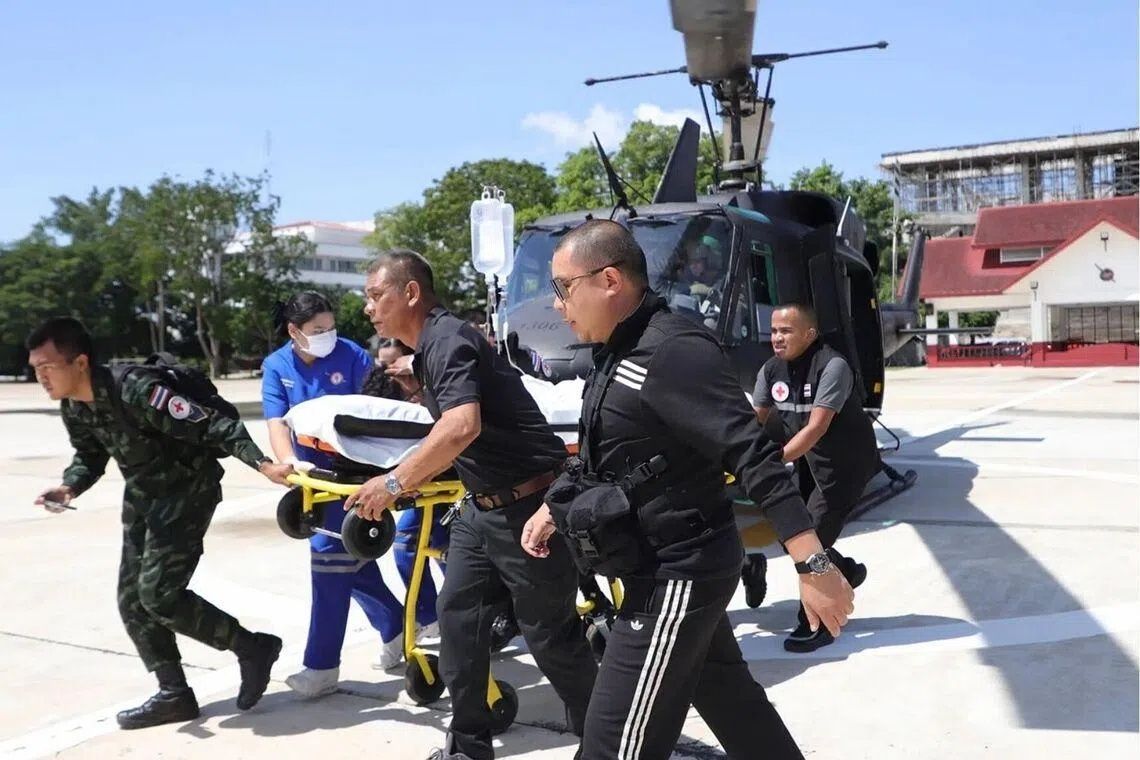
The first incident erupted just after 8:10 am along the Ban Pulo Saniyae–Ban Sakai road in Thanto district, Yala province, where a group of assailants targeted a border patrol police contingent responsible for protecting local educators. The explosive device detonated with enough force to wound six officers, though the severity of injuries varied considerably. Two personnel sustained critical wounds that immediately triggered emergency protocols, prompting helicopter evacuation to regional medical facilities.
Corporal Kittisak Saksang suffered severe facial trauma from shrapnel fragmentation, while his colleague Corporal Poraphat Wongruaydee sustained injuries to his chest that severely restricted his mobility and breathing. Despite their grave condition, Wongruaydee remained conscious throughout initial treatment. Medical personnel initially transported all six injured officers to Thanto Hospital, but the gravity of the two critical cases necessitated rapid transfer by helicopter to Yala Hospital for specialised trauma care.
The condition of Wongruaydee deteriorated at Yala Regional Hospital, where doctors determined that blood had accumulated in his pleural cavity—the space surrounding the lungs—creating a life-threatening situation. Surgeons prepared urgent intervention to drain fluid and repair lung tissue damage. The hospital subsequently issued an emergency call for blood donations of all types to support surgical procedures and post-operative recovery for the injured officers.
Forensic teams and explosive ordnance disposal specialists descended on the attack site to collect evidence and neutralise any unexploded devices. Security checkpoints were immediately reinforced throughout the surrounding area as authorities scrambled to prevent follow-up attacks. The coordinated nature of the violence suggested potential involvement by organised militant networks familiar with police patrol patterns and checkpoint locations.
Just three hours and twenty minutes later, at 11:30 am the same morning, a second bomb detonated near Ban Khuan Yi in Mayo district, Pattani province. This attack specifically targeted personnel from the Pattani Police Special Operations unit who were returning from establishing a security perimeter in the locality. The placement and timing of the explosion indicated planners possessed operational intelligence about police movements in the area.
Five special operations officers sustained injuries from the blast, all experiencing chest tightness and respiratory distress consistent with blast overpressure trauma. Sergeants Anuchit, Bunyawat, Wisitphon, Aphisit and Sumit were transported to Mayo Hospital for treatment and observation. While their injuries appeared less severe than those sustained in the Yala incident, chest trauma from explosions can develop complications requiring extended medical monitoring.
The timing and geographic separation of the two attacks—occurring within the same timeframe but across different provinces—raised questions about whether the incidents were coordinated by a single militant faction or represented independent operations by separate groups. Both Yala and Pattani provinces form part of Thailand's troubled southernmost region, where a protracted insurgency has claimed thousands of lives over two decades. Multiple separatist and jihadist organisations operate in the area, though the Barisan Revolusi Nasional (BRN) and Pattani United Liberation Organization (PULO) have traditionally claimed responsibility for attacks on Thai security forces.
The targeting of teacher protection units and special operations personnel reflects strategic choices by militants seeking to undermine state authority in provinces where ethnic Malay populations predominate. Police units tasked with protecting educators represent government presence in schools and communities, and attacks on such units aim to demonstrate the state's inability to provide basic security and deter teachers from remaining in contested areas.
Police investigators cordoned off both blast sites and launched forensic examinations to recover physical evidence that might identify perpetrators. Authorities announced efforts to accelerate investigations and pursue legal action against those responsible. The bombings occurred against a backdrop of cyclical violence in the region, where periods of relative calm are frequently interrupted by coordinated attack campaigns targeting police, military, and civilian infrastructure.
For Malaysia's security establishment, the incidents carry particular significance given the proximity of Yala and Pattani to the Malaysian border and the historical involvement of some militant networks with sympathetic groups across the frontier. The coordinated nature of Friday's attacks reflects operational capabilities that merit careful monitoring by regional intelligence services concerned with preventing cross-border activity.
The injuries to 11 police officers underscore the persistent human cost of Thailand's southern insurgency and the risks faced by security personnel working in high-threat environments. As Thai authorities investigate the bombings, the incidents reinforce the challenge of balancing security operations with the protection of civilian populations and the maintenance of government legitimacy in ethnically diverse border regions.

