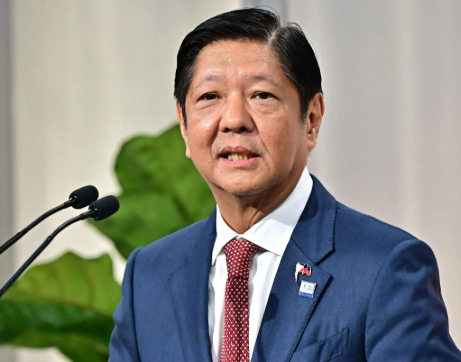
The Philippine capital experienced a security crisis early Monday when a homemade bomb detonated near the entrance of the justice ministry just after midnight, followed by the discovery of a second suspected unexploed device near the Senate building hours later. Neither incident resulted in casualties, but the twin events have cast a shadow over the political calendar, occurring on the same day President Ferdinand Marcos was scheduled to deliver his annual State of the Nation address to Congress.
The initial explosion at the Department of Justice occurred in the early morning darkness with limited immediate clarity on its scale. Manila police spokesman Philipp Ines acknowledged the investigative challenges facing authorities, stating that officers could not yet determine whether the blast had been relatively minor or substantial. Images from the scene circulated by Philippine media outlets suggested moderate damage, with photographs showing a cracked vehicle windshield and scattered debris in the vicinity of the government building.
The second incident emerged approximately eight and a half hours after the first explosion when a tow truck driver spotted suspicious material on a street adjacent to the Senate building. Security personnel were immediately alerted to the discovery, prompting specialist ordnance disposal teams to secure the area and extract the device for analysis. Technicians identified components consistent with an improvised explosive, including a blasting cap, timing mechanism fashioned from a clock, and a glass container holding a brownish powder intended for destructive effect.
National police chief Jose Melencio Nartatez Jr indicated during a Monday morning briefing that investigators were operating from the presumption that the two incidents likely stemmed from a coordinated operation. While acknowledging that police had implemented contingency protocols designed to address bomb threats and actual detonations, Nartatez conceded that security arrangements had failed to prevent the justice ministry blast. His candid admission reflected the significant breach in the capital's security apparatus, particularly given the sensitive political calendar.
Regional police spokeswoman Hazel Asilo declined to speculate on the destructive potential of the unexploded device recovered near the Senate, underscoring the ongoing investigative process and the need for expert analysis before drawing conclusions about the intended impact. The restraint in public statements reflected standard procedures for handling sensitive security matters, though the lack of detailed information also highlighted the early stage of the investigation.
The timing of both incidents immediately preceding Marcos's address raises questions about potential political motivations. The President was scheduled to deliver remarks to Congress at a period marked by considerable political turbulence within the Philippine establishment. Vice President Sara Duterte finds herself in the midst of an impeachment proceeding, reflecting broader fractures within the executive branch. Simultaneously, the government faces substantial public criticism over a corruption scandal involving fraudulent flood control projects that have siphoned resources intended for public infrastructure.
These political circumstances provide context for the security breaches, though investigators have not yet established definitive links between the bombing attempts and either the impeachment proceedings or the corruption allegations. Philippine law enforcement remains in the investigative phase, with authorities focused on identifying the individuals responsible for constructing and deploying the devices. The homemade nature of both explosives suggests limited technical sophistication, though effective enough to breach multiple security perimeters in the capital's core administrative district.
The incidents mark a concerning escalation in threats to governmental institutions in the Philippines, where security agencies have long grappled with various security challenges ranging from organized crime to political violence. The positioning of explosive devices at both the justice ministry and near the Senate indicates either coordinated targeting of key governmental bodies or the work of individuals with sufficient knowledge of security patterns in central Manila. Either scenario presents troubling implications for public order and the physical safety of elected officials and government workers.
For Malaysia and the broader Southeast Asian region, the Manila security breach carries implications for inter-regional cooperation on counterterrorism and law enforcement coordination. The Philippines remains a critical partner in regional security arrangements, and incidents involving suspected domestic terrorism underscore the ongoing security challenges facing the archipelago. Malaysian authorities monitor developments in neighboring countries closely, particularly where they might involve transnational criminal networks or extremist organizations operating across Southeast Asian borders.
The response by Philippine security forces, while ultimately preventing the second device from detonating, nonetheless revealed defensive gaps that officials will need to address systematically. Enhanced intelligence gathering, improved perimeter security at key government buildings, and better coordination between different police and security agencies represent immediate priorities for the administration. President Marcos proceeded with his scheduled address, demonstrating continuity of governance despite the security disruptions, though the underlying tensions and the apparent vulnerability of key government facilities remain unresolved questions as the investigation deepens.

