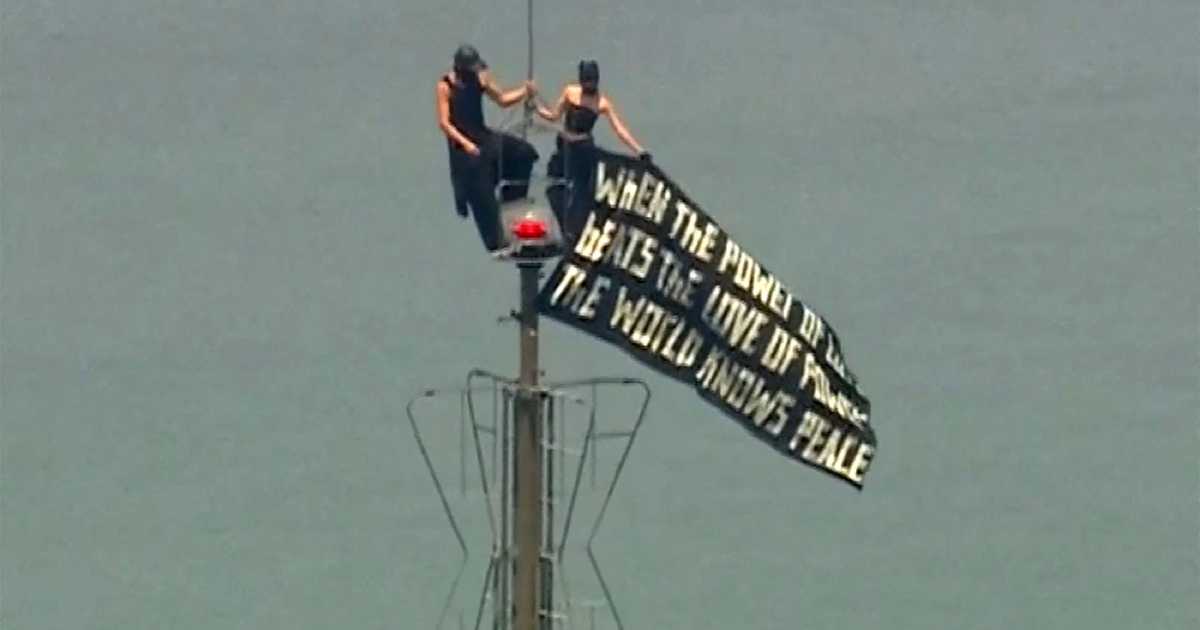
A dramatic incident unfolded at one of America's most recognisable landmarks when two climbers reached the antenna at the summit of the Empire State Building in Manhattan on Wednesday. What made the ascent particularly striking was the apparent proposal that may have taken place during their unauthorised stunt at the iconic skyscraper's peak, transforming a moment of architectural daring into what could be a memory of romantic significance for those involved. Both individuals were subsequently arrested following the incident, facing charges related to their unauthorised access and climb.
The Empire State Building, completed in 1931, stands as one of the world's most famous office and tourist destinations, attracting millions of visitors annually who typically experience its heights through authorised observation decks. The building's distinctive Art Deco architecture and commanding height of 380 metres above ground level have made it a symbolic fixture of the New York skyline for nearly a century. However, this iconic status has occasionally made the structure a target for unauthorised climbers seeking either notoriety or, as appears to be the case here, an extraordinary backdrop for a personal milestone.
The climb to the antenna represents an escalation beyond typical unauthorised entry to the building itself. The antenna structures atop the Empire State Building serve functional purposes related to broadcasting and telecommunications, making them both technically challenging and restricted areas. Accessing these uppermost sections would have required the climbers to navigate past multiple security checkpoints, surveillance systems, and structural obstacles designed to prevent exactly this type of incursion. The fact that two individuals managed to reach such a sensitive height speaks to both their determination and the complexity of securing a building of this magnitude.
Building security and the New York Police Department responded promptly to reports of the unauthorised climbers. The incident likely triggered elevated alert protocols, including potential evacuation measures or restricted access to certain building sections during the police response. Such breaches raise ongoing questions about security vulnerabilities at high-profile landmarks that must balance public access with safety and security concerns. The building's management has consistently worked to implement measures preventing unauthorised ascents while maintaining the experience for legitimate visitors.
The apparent proposal element adds a compelling human dimension to what might otherwise be viewed as simple trespassing. Romantic gestures have increasingly featured elaborate or unconventional staging in recent years, with couples seeking distinctive backdrops for significant moments. The Empire State Building, with its deep associations with New York culture and romance in popular media, represents an almost irresistible target for those planning unorthodox proposals. Yet the risks are substantial—security violations, physical danger from height and exposure, and legal consequences all accompany such attempts.
From a legal perspective, the arrests raise questions about what specific charges the individuals might face. Unauthorised entry, trespassing, and potentially endangerment charges are likely, given the heights involved and the hazards posed by climbing exposed structural elements at elevation. New York authorities typically pursue such cases robustly, particularly when high-profile locations are involved, to establish clear deterrence for potential imitators. The outcome of their legal proceedings will likely set parameters for how similar incidents might be treated in future.
This incident reflects broader challenges facing iconic landmark management globally. The desire to experience or celebrate in extraordinary locations drives some individuals toward risky or illegal behaviour, even when safer alternatives exist. For Malaysian readers familiar with similar pressures at landmarks like the Petronas Twin Towers, the Merdeka Tower, or heritage sites throughout Southeast Asia, the tension between public access and security restrictions is immediately recognisable. Authorities across the region navigate comparable issues regarding how to maintain building security without entirely foreclosing opportunities for visitors to experience these structures meaningfully.
The incident also highlights the enduring symbolic power of certain architectural spaces in popular imagination. The Empire State Building's presence in countless films, photographs, and cultural references has made it more than merely a building—it functions as a stage for personal and collective aspirations. This psychological magnetism, while fostering genuine connection to architecture and place, simultaneously incentivises risky behaviour among those seeking to create memorable moments against these celebrated backdrops.
Looking forward, the incident will likely prompt a review of security protocols at the Empire State Building and potentially influence how other major landmarks approach unauthorised access prevention. Enhanced surveillance, additional personnel, or technological solutions might be considered. Yet completely preventing all unauthorised access to such vast structures remains technically challenging, particularly at a facility that accommodates hundreds of thousands of legitimate visitors annually. The balance between accessibility and security will continue to define management strategies at the world's most prominent landmarks.
Whether the couple in this incident actually became engaged during their climb, and what the long-term legal and personal consequences of their actions will be, remains to be determined. Their story nonetheless underscores the persistent human desire to mark significant life moments in extraordinary ways, even when doing so crosses from the dramatic into the dangerous and illegal.

