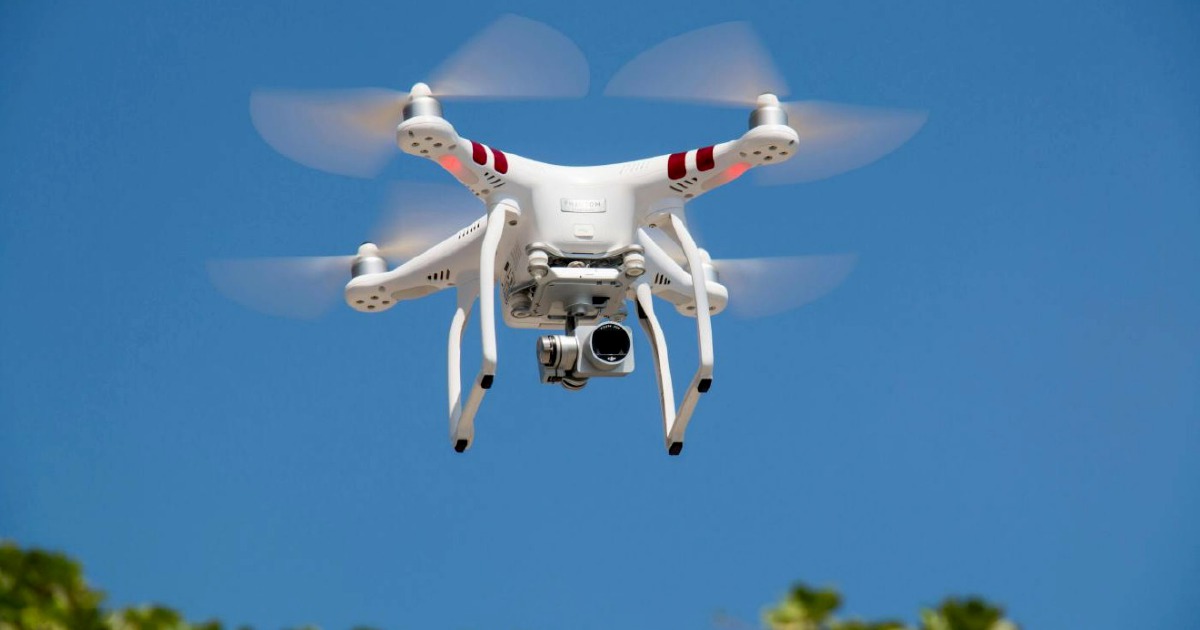
Law enforcement authorities in Melaka have apprehended two individuals in connection with an attempted tobacco smuggling operation targeting Sungai Udang Prison. The arrests, made following a coordinated raid at a residence in Taman Kris Satria, Sungai Udang, on Wednesday, highlight an evolving trend in prison contraband operations where perpetrators deploy unmanned aerial vehicles to circumvent traditional security measures at detention facilities.
The use of drone technology to smuggle prohibited items into correctional institutions represents a significant challenge for prison authorities across Malaysia and the broader region. Unlike conventional contraband routes that rely on corrupt staff members or hidden compartments in visitor belongings, drone-assisted smuggling operates with minimal human contact and can deliver items directly into prison grounds in seconds, making detection and interdiction substantially more difficult. This method has gained traction internationally among criminal networks seeking to supply inmates with narcotics, tobacco, mobile phones, and other prohibited goods.
Tobacco products remain a valuable commodity within Malaysian prisons, where tobacco-dependent inmates face strict purchasing restrictions and elevated prices. The commodification of cigarettes and related products behind bars creates economic incentives for external smuggling operations, with organised groups viewing prisons as lucrative markets. Such activities undermine institutional security, fuel internal prison economies that operate parallel to official systems, and can exacerbate tension between inmates competing for scarce contraband resources.
The investigation leading to the Wednesday raid demonstrates police commitment to disrupting supply chains that service incarcerated individuals. By targeting external operatives rather than focusing exclusively on prison-based detection, authorities address the root cause of contraband availability. This approach requires coordination between police narcotics and organised crime units, prison security personnel, and intelligence divisions to identify and monitor individuals suspected of organising drone deliveries or other smuggling schemes.
For Malaysian corrections authorities, this case underscores urgent infrastructure and technological gaps in prison security systems. Most facilities lack comprehensive counter-drone detection capabilities, leaving them vulnerable to aerial incursions. Upgrading perimeter security to incorporate radar systems, signal jamming technology, and enhanced CCTV coverage requires substantial capital investment, yet remains essential to maintain prison security integrity. Regional prison administrations have begun evaluating such technologies, though implementation varies significantly across states and federal institutions.
The involvement of drone technology also raises questions about how individuals outside prisons acquire and operate such equipment without triggering regulatory oversight. Civilian drone ownership in Malaysia requires Civil Aviation Authority approval, yet enforcement of registration requirements remains inconsistent. Strengthening drone-related regulations and increasing coordination between aviation authorities and law enforcement could establish additional barriers to potential smugglers while protecting legitimate operators.
Incarcerated individuals' access to tobacco and nicotine-related products carries broader implications for prison health management. Restricted tobacco availability creates artificial scarcity that inflates prices and incentivises smuggling, yet unrestricted access would conflict with public health objectives and Malaysia's broader tobacco control frameworks. Balancing security, public health, and practical prison management requires nuanced policy approaches that some facilities have yet to implement comprehensively.
The Sungai Udang facility, a medium-security institution, processes hundreds of inmates daily and maintains regular visitor schedules, creating legitimate human traffic that complicates security screening. Drone-based delivery bypasses these conventional inspection points entirely, representing a security vulnerability that extends beyond Sungai Udang to prisons nationwide. Authorities must develop protocols for responding to detected drone incursions, including establishing restricted airspace boundaries and training staff to recognise and report suspicious aerial activity.
International experience suggests that successful counter-smuggling strategies require simultaneous intervention at multiple points: disrupting external supply networks through arrests and prosecution, enhancing prison security infrastructure, and reducing demand through rehabilitation programmes and improved prisoner welfare conditions. Countries like Singapore and Australia have invested heavily in technological solutions, yet criminal networks continuously adapt tactics, suggesting that technological approaches alone prove insufficient without complementary strategies.
The two individuals detained during Wednesday's raid face investigation under relevant legislation addressing smuggling and prison security violations. Their prosecution will likely feature as a test case establishing precedent for drone-assisted smuggling charges, potentially influencing how prosecutors frame similar cases nationwide. The outcomes may also shape judicial interpretation of applicable statutes and inform sentencing frameworks for technology-enabled contraband operations.
Looking forward, Melaka police and prison authorities will likely increase coordination to identify and monitor suspected smuggling networks operating in the region. Intelligence gathered from the current investigation may reveal connections to broader criminal organisations, additional participants, or methods used in similar operations elsewhere. Such information sharing across jurisdictions could help authorities identify patterns and prevent future incursions at other facilities.
This incident serves as a tangible reminder that prison security extends far beyond institutional walls, encompassing the communities, supply chains, and technologies that interact with correctional systems daily. As criminal networks demonstrate increasing sophistication in deploying emerging technologies for contraband operations, Malaysian authorities must respond with equivalent innovation in detection, prevention, and enforcement strategies to maintain prison security and order.

