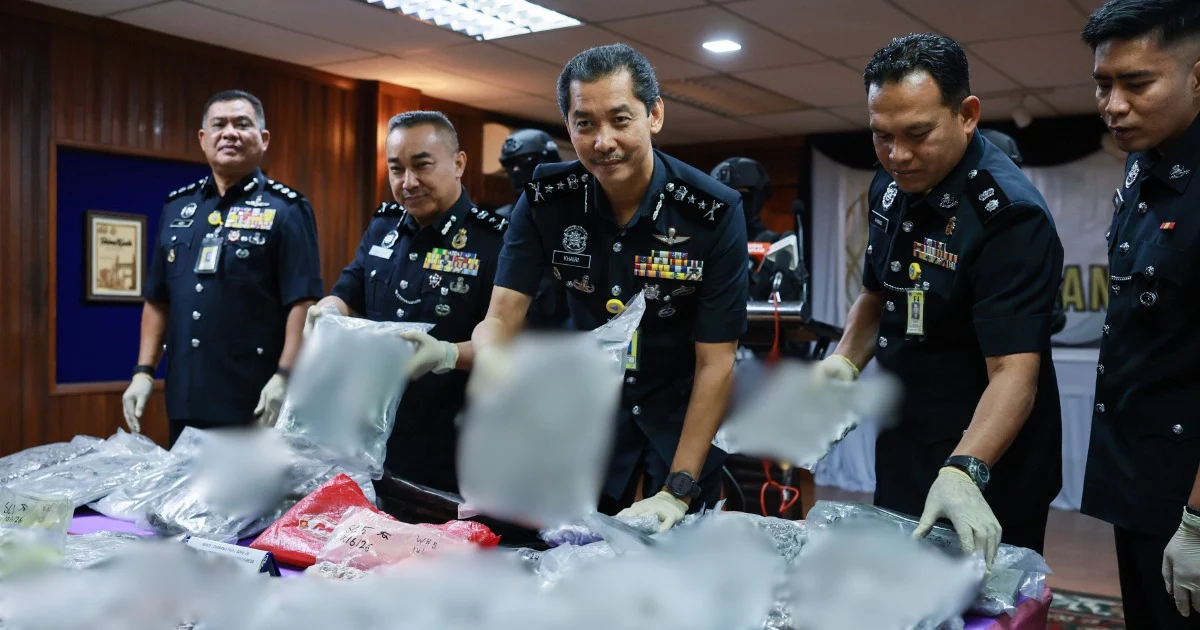
Law enforcement authorities in Kuala Terengganu have arrested two sibling suspects following the discovery of a substantial narcotics cache at a private residence in Kampung Duyong Besar. The confiscated drugs, valued at RM1.76 million, were reportedly kept at the brothers' residential property, which investigators believe functioned as a storage and distribution hub for the illicit operation.
The bust underscores the persistent challenge facing Malaysian law enforcement agencies in combating drug trafficking networks that increasingly exploit residential locations to circumvent detection. Unlike large-scale pharmaceutical warehouses or commercial facilities that typically draw regulatory scrutiny, private homes offer traffickers relative anonymity while enabling rapid distribution to street-level dealers throughout the region. This operational method has become increasingly common across Peninsular Malaysia and East Malaysia, as organised crime syndicates adapt their logistics to evade established checkpoint and surveillance protocols.
The Terengganu operation represents one of several major drug seizures recorded in the state over recent years, indicating that the northeastern region has emerged as a significant transit point and storage area within Malaysia's broader narcotics supply chain. Geographically positioned along major transportation corridors connecting the central and northern states, Terengganu provides strategic advantages for distribution networks seeking to move product southward to Klang Valley markets or northward into Perlis and Kedah.
The arrest of two related individuals suggests the possibility of a family-based trafficking operation, a structural pattern that law enforcement agencies have identified across multiple investigations. Such arrangements often provide traffickers with perceived trust advantages and operational security, as family members may be less likely to inform on one another compared to unrelated criminal associates. However, this structural approach has repeatedly proven counterproductive, as family connections frequently become entry points for investigation and disruption.
The RM1.76 million valuation placed on the seized narcotics reflects current street-level pricing for controlled substances across Malaysia, though actual wholesale value may differ significantly depending on the drug composition and purity levels determined during forensic analysis. This distinction between wholesale and street value underscores the economic incentives driving participation in trafficking networks, particularly for individuals in economically disadvantaged regions where legitimate income opportunities remain limited.
Investigators will now focus on identifying the broader supply chain connected to this storage operation, including upstream sources and downstream distribution networks. The proximity of the residence to commercial shipping facilities and port infrastructure in Kuala Terengganu raises questions about whether maritime smuggling routes may have supplied the confiscated inventory. Establishing these connections could uncover additional trafficking participants and potentially larger distribution networks operating across multiple states.
The case highlights ongoing coordination between federal and state law enforcement units in executing drug enforcement operations. Successful dismantling of storage facilities requires intelligence gathering, surveillance, and coordination across multiple agencies, particularly when cross-state trafficking connections exist. The success of this operation will likely inform future enforcement strategies targeting similar residential-based distribution hubs throughout the region.
From a broader Malaysian perspective, this seizure contributes to national narcotics enforcement statistics while revealing the scale and sophistication of domestic trafficking operations. Government agencies have repeatedly emphasised the rising threat posed by organised drug networks, particularly syndicates trafficking methamphetamine, fentanyl analogues, and heroin into Malaysia via traditional maritime routes and increasingly through postal and express courier services.
The judicial proceedings against the two brothers will proceed through Malaysia's established drug trafficking prosecution framework, potentially resulting in significant custodial sentences depending on the quantity involved and evidence of trafficking intent. Malaysia's Dangerous Drugs Act carries mandatory minimum sentences for trafficking offences, with penalties escalating substantially for seizures exceeding specified thresholds. Both the arrest and any subsequent conviction will be recorded in law enforcement databases informing risk assessment protocols for future investigations.
For residents and businesses in Kampung Duyong Besar and surrounding communities, the operation may prompt increased public awareness regarding suspicious residential activities, though police involvement in drug enforcement often remains largely invisible to civilian populations until public announcements follow arrests. Community-based tip lines and anonymous reporting mechanisms have proven instrumental in identifying trafficking operations, encouraging residents to report observations of unusual activity, including frequent visitor traffic and vehicle movements.
The successful location and seizure of this RM1.76 million cache reinforces the importance of sustained intelligence collection and inter-agency cooperation in reducing drug supply availability within local markets. However, enforcement experts note that even major seizures address only portions of overall trafficking volumes, suggesting ongoing expansion of enforcement capacity remains necessary to meaningfully impact market-level drug availability and trafficking organisation profitability.

