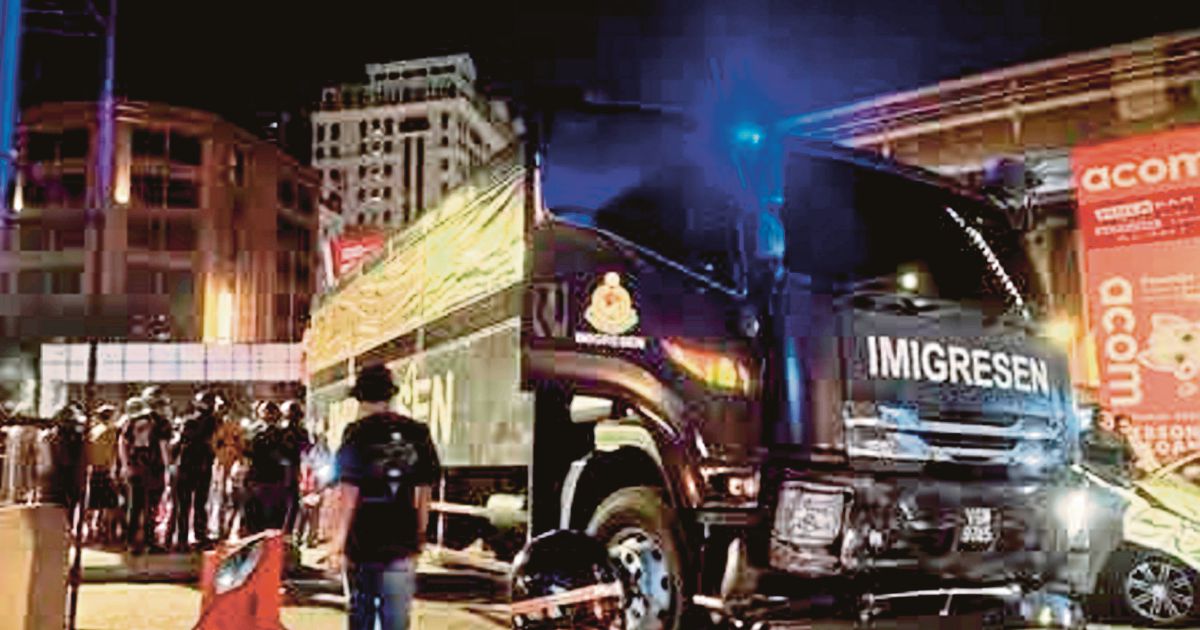
Police have remanded two drivers for questioning following a fatal collision on Jalan Sultan Ismail in Kuala Lumpur that claimed three lives, including a father and two young daughters. The tragedy unfolded in the early hours when an Immigration Department lorry was involved in the devastating crash, marking a sobering reminder of road safety hazards during peak and off-peak traffic periods in the capital's busy thoroughfares.
The remand decision represents a standard investigative procedure aimed at determining the precise circumstances that led to the accident. Authorities are examining multiple factors that may have contributed to the collision, including vehicle speed, road conditions, visibility, and driver alertness at the time of impact. By securing the drivers in custody, investigators gain access to detailed statements and are able to cross-reference accounts without external interference, a crucial step in reconstructing the sequence of events.
The involvement of an official government vehicle, operated by the Immigration Department, adds a layer of complexity to the inquiry. Such incidents invariably prompt internal departmental reviews regarding vehicle maintenance schedules, driver training protocols, and adherence to traffic regulations by government employees. The Immigration Department may face scrutiny over whether its lorries undergo regular safety inspections and whether drivers receive adequate refresher training on defensive driving techniques.
Jalan Sultan Ismail, located in the heart of Kuala Lumpur's business and administrative district, witnesses substantial vehicular traffic throughout the day and night. The street serves as a vital arterial route connecting multiple parts of the city, making it particularly susceptible to congestion-related incidents. Early morning collisions on such routes often involve heightened risk factors, including reduced visibility, driver fatigue following night shifts, and potentially decreased traffic enforcement presence during off-peak hours.
The loss of a parent and two children in a single incident represents a profound tragedy for Malaysian families and communities. Such accidents typically generate broader conversations about road safety culture, enforcement of traffic laws, and the adequacy of safety barriers and warning systems on major city routes. Authorities often use high-profile incidents as catalysts for reviewing speed limit compliance, mandatory rest periods for commercial drivers, and visibility enhancements on accident-prone sections of major roads.
Investigators will scrutinize various elements including whether either driver was fatigued, distracted, or operating under the influence of substances. Vehicle defects, such as brake malfunction or tire failure, represent additional avenues of inquiry. Weather conditions and lighting circumstances along Jalan Sultan Ismail during the collision will also factor into the comprehensive accident reconstruction process that forensic experts undertake.
The remand period allows police and road safety specialists access to surveillance footage from nearby establishments and traffic cameras that may have captured the incident. Digital evidence, including vehicle dashcam recordings and mobile phone data, increasingly plays a pivotal role in contemporary accident investigations. Witness statements from early morning commuters or residents in the vicinity could provide corroborating accounts of what transpired.
Malaysia's road fatality statistics remain a concern for public health and safety authorities. Annual traffic collision data consistently positions the country among nations with elevated accident rates relative to vehicle population and road network size. Multiple campaigns launched by the Road Safety Department and the Institute of Road Safety Research have attempted to address contributing factors including speeding, failure to maintain safe following distances, and inadequate vehicle maintenance.
The incident raises questions about occupational safety standards for government vehicle drivers, who operate under specific regulations distinct from private commercial transport operators. Driver fatigue represents a particularly acute concern given the irregular shift patterns common in government departments. Recommendations typically emerging from such tragedies include mandatory fatigue management systems, in-vehicle alertness monitoring technology, and enhanced penalties for traffic violations involving official vehicles.
The remand decision reflects Malaysia's structured approach to serious traffic offences, distinguishing them from minor violations typically handled through fines or court summonses. The severity of consequences—the loss of three lives—justifies the elevated investigative response. Families of the deceased will await the investigation's findings, which should clarify whether the incident resulted from driver error, mechanical failure, or environmental factors beyond the operators' control.
For the broader Malaysian driving community, incidents of this magnitude underscore the permanence of road hazards and the consequences of momentary lapses in judgment or vehicle control. Public discourse surrounding the investigation may shift focus toward infrastructure improvements, enforcement enhancement, and driver accountability at governmental levels. The case will likely inform future policy discussions regarding commercial and government vehicle operation standards in Malaysia's urban centres.

