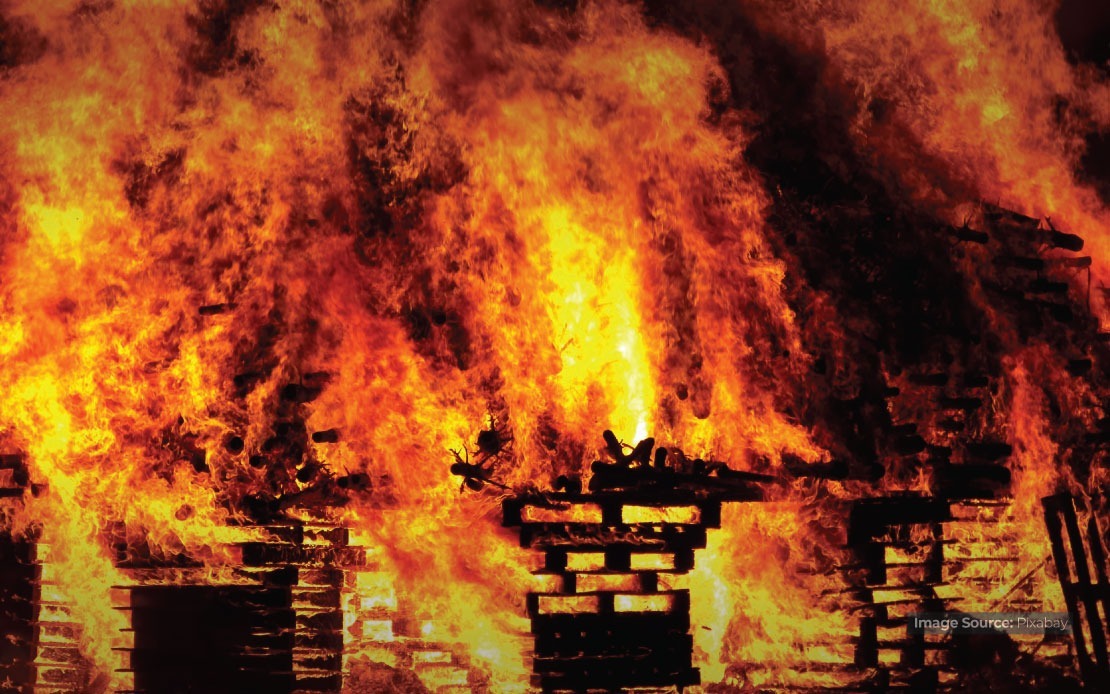
Two firefighters have lost their lives while responding to a major fire that erupted near Bordeaux Airport in southwestern France, French Interior Minister Laurent Nuñez announced to parliament in Paris on Tuesday. The fatal incident occurred as the pair battled flames that engulfed two buildings located adjacent to the airport's long-term vehicle parking facility, according to regional newspaper Sud Ouest. The deaths mark a sobering reminder of the dangers faced by emergency responders, particularly during periods of heightened fire risk.
The outbreak originated on land situated beside the long-term parking zone at the airport, with the initial discovery prompting immediate mobilisation of emergency resources. Beyond the regular local fire service, responders were bolstered by the airport's dedicated firefighting unit, which deployed alongside civil rescue crews to combat the spreading flames. Recognising the scale of the emergency, authorities also called in firefighting aircraft to assist ground crews in containing and eventually extinguishing the blaze, demonstrating the serious nature of the incident.
The Gironde region, with Bordeaux as its capital, remains under the highest red-level alert for forest fire danger, reflecting meteorological conditions that have created an extreme risk environment across southwestern France. This elevated warning status underscores how vulnerable the area has become to rapid fire spread, a factor that likely complicated firefighting operations. The timing of this incident during such a critical weather period meant that resources were already stretched and vigilance heightened throughout the region's emergency services.
The fire's visual impact extended well beyond the immediate airport vicinity. Enormous plumes of smoke billowed into the sky, becoming visible from Bordeaux city centre several kilometres away, as emergency crews worked methodically to suppress the flames and prevent further propagation. The dramatic smoke columns served as a stark visual representation of the intensity of the blaze and the scale of the emergency unfolding at the airport perimeter.
Airport operations experienced significant disruption as a consequence of the fire. While arriving aircraft were permitted to continue landing throughout the emergency, departing flights faced temporary suspension of operations, creating delays and logistical challenges for passengers and airlines. However, evening departures were expected to resume relatively quickly, with a flight scheduled to depart for Munich anticipated to operate as planned, suggesting that containment efforts proved effective enough to permit resumption of normal airport function within a reasonable timeframe.
The incident highlights the critical role played by firefighting personnel in protecting critical infrastructure and safeguarding lives, even as they confront increasingly challenging environmental conditions. For Malaysia and Southeast Asia, where similar extreme weather patterns and fire risks occur seasonally, particularly during the dry season in various parts of the region, this tragedy serves as a poignant illustration of the human cost associated with fighting large-scale fires. Regional countries, including Indonesia and Malaysia, face their own challenges during periods of elevated fire danger, particularly when transboundary haze becomes a concern.
The deployment of aerial firefighting assets in the Bordeaux incident reflects modern emergency management practices that many developed nations now employ as standard procedure. In Southeast Asia, where budget constraints and technological limitations sometimes restrict access to such resources, the contrast underscores disparities in firefighting capabilities across different regions. The tragic outcome in France demonstrates that even with advanced equipment and well-trained personnel, firefighting remains an inherently dangerous profession with unpredictable outcomes.
The investigation into the exact circumstances surrounding the deaths of the two French firefighters will likely focus on factors including weather conditions at the time, the fire's intensity and spread rate, visibility challenges created by smoke, and the specific tactical decisions made during emergency response. Such post-incident analysis forms a critical part of improving future emergency management protocols and identifying any gaps in safety procedures that might prevent similar tragedies.
This incident coincides with broader concerns across Europe regarding changing climate patterns and their effect on fire seasons. Southern France has experienced increasingly severe fire conditions in recent years, a trend authorities attribute to warming temperatures and shifting precipitation patterns. For nations in Southeast Asia monitoring global climate trends and their potential implications for their own regions, the European experience provides cautionary evidence of how environmental changes can intensify existing natural hazards and create new demands on emergency services.

