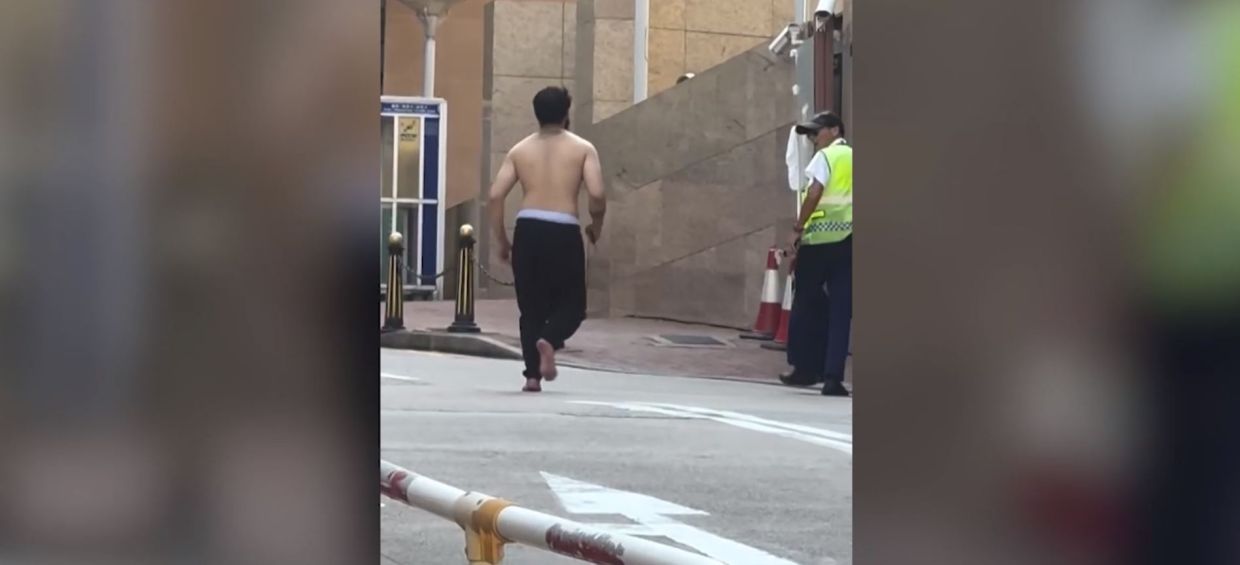
A violent incident at one of Hong Kong's prestigious residential compounds has left two people injured and authorities investigating what appears to be an unprovoked assault. The attack occurred at Baguio Villa, an upscale housing estate situated in the Southern District, with police apprehending a 22-year-old resident in connection with the incident that took place on Monday, 10 August.
The morning's events began around 9am when the suspect departed his unit in block 47 of the estate, reportedly dressed only in sweatpants and without shoes or a shirt. Witnesses described him as appearing dishevelled and in an agitated state as he moved through the residential compound with a knife in hand. His emergence from the block without proper clothing in broad daylight immediately marked the encounter as unusual and potentially concerning to residents in the area.
The assailant's first target was a male passerby who encountered him near block 43. In what observers described as a narrow escape, the pedestrian managed to avoid the suspect's initial lunge, stepping out of harm's way as the knife-wielding man charged toward him. The quick reflexes of this first victim prevented what could have been serious injury, but the attack had only begun. The incident reveals the unpredictable nature of random violence in public spaces, even within ostensibly secure residential environments where residents typically feel protected.
Within moments, the suspect shifted his focus to a security guard who was on duty within the estate. An altercation erupted between the two men as the guard attempted to contain the threat and protect other residents. The struggle continued until reinforcements arrived, with additional security personnel rushing to the scene to assist their colleague. Their timely intervention prevented the confrontation from escalating further and may have saved lives by immobilising the suspect's movements.
As security personnel engaged with the man, he managed to break away from their grasp and continue his rampage. A foreign domestic helper who happened to be in the vicinity became his next victim, sustaining a stab wound to the back. The vulnerability of migrant domestic workers, who often move through residential areas during their daily duties, becomes starkly apparent in such incidents. The injured helper required immediate medical attention, as did the security guard who had confronted the assailant during the initial struggle.
Multiple witnesses and security staff successfully restrained the suspect before police officers arrived at the scene. Their swift action prevented further casualties and ensured that the man could be safely apprehended and taken into custody. The rapid response from the estate's security infrastructure and bystanders reflected the coordinated efforts sometimes necessary to contain such situations before law enforcement can assume full control.
Both the domestic helper and the security guard were transported to hospital for treatment of their injuries, though the severity of their wounds remains undisclosed in initial reporting. The injuries sustained in knife attacks can vary considerably depending on depth of penetration and location, but any such incident requires professional medical evaluation and care. Hospitals in Hong Kong are well-equipped to handle trauma cases, and both victims received prompt attention following their injuries.
Following the arrest, police conducted a search of the suspect's residential unit in block 47. During this search, officers discovered a pet cat that bore signs of injury, specifically a wounded right ear. The condition of the animal suggested that violence may have preceded the outdoor attack, indicating that the man's aggressive behaviour may have begun within his home before spilling into the communal areas of the estate. This discovery raised concerning questions about the suspect's mental and emotional state prior to the incident.
Authorities transferred the injured cat to the Society for the Prevention of Cruelty to Animals for veterinary care and treatment. The animal's injuries were consistent with deliberate harm, reinforcing investigative theories that the suspect had engaged in violent behaviour before leaving his residence. Animal welfare organisations in Hong Kong routinely handle cases where pets suffer harm during domestic incidents, and such cases sometimes provide early warning signs of escalating violence.
The incident at Baguio Villa, despite occurring in an affluent neighbourhood with security infrastructure, underscores the reality that violent crime can emerge unpredictably even in gated communities and upscale residential areas. Hong Kong, while generally considered safe by international standards, does experience sporadic incidents of random violence that perplex residents and authorities alike. The attack raises questions about mental health crises, early intervention capabilities, and the role that security personnel must play in contemporary urban residential settings.
For domestic workers and service staff across Hong Kong, the incident serves as a stark reminder of occupational hazards that extend beyond typical employment concerns. Many migrant workers travel through residential estates daily, often alone, and incidents such as this demonstrate the potential dangers they face despite the controlled nature of these environments. The broader implications for workplace safety and security protocols in residential settings will likely come under renewed scrutiny following this attack.
Investigations into the suspect's background, mental health history, and circumstances leading to his violent outburst continue. Understanding the motivations and triggers behind such seemingly random attacks remains a priority for law enforcement, as does determining whether warning signs had been missed or ignored prior to the incident.

