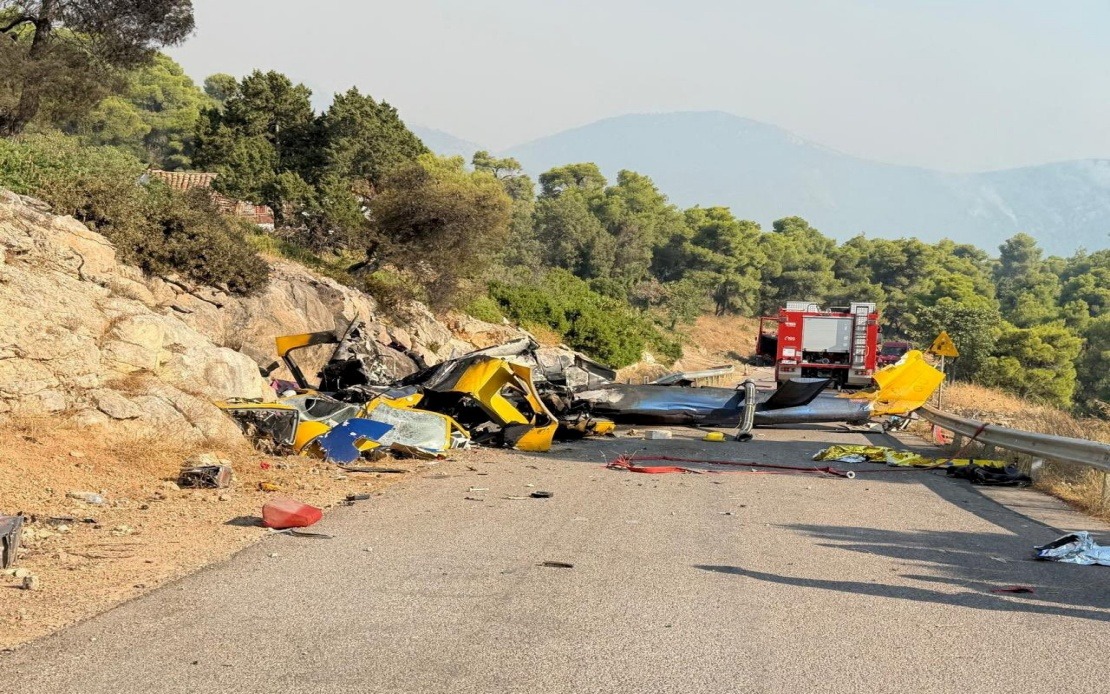
A major incident unfolded in western Attica on Sunday when two firefighting helicopters collided during aerial operations against a spreading wildfire, resulting in two fatalities and two survivors. The collision occurred as crews worked to contain the blaze that has engulfed parts of Attica and Boeotia, adding another layer of tragedy to Greece's ongoing struggle with multiple large-scale fires fuelled by scorching summer conditions.
Greek Fire Service spokesperson Vassilis Vathrakogiannis confirmed at a press briefing that the two deceased were a Danish pilot and a Greek firefighting coordinator. The crash, which took place near the coastal town of Psatha, also claimed the lives of these two professionals who were responding to an urgent operational need. The two survivors—a British pilot and a Greek firefighting coordinator—were rescued from the wreckage, though one sustained injuries from the impact.
Both aircraft involved in the incident were Bell helicopters leased specifically to support Greece's wildfire containment efforts. Each helicopter was carrying a crew of two personnel, meaning all four occupants were accounted for following the collision. The crash site near Psatha triggered an immediate search and rescue response, demonstrating the rapid coordination between emergency services despite the challenging circumstances under which they were operating.
The exact cause of the mid-air collision remains under investigation by Greek authorities. Questions about visibility, communication protocols, and coordination procedures between the two aircraft are likely central to the inquiry. Such accidents during firefighting operations are particularly significant because they occur under high-stress conditions where pilots and coordinators must balance speed, safety, and precision while navigating challenging terrain and dealing with smoke, heat, and unpredictable wind patterns that can suddenly shift aircraft trajectories.
For Southeast Asian observers, this incident carries sobering implications. The region faces similar wildfire challenges, particularly during dry seasons in Indonesia, Malaysia, and other neighbouring countries. The reliance on aerial firefighting assets—whether helicopters or fixed-wing aircraft—creates inherent risks that operators and governments must carefully manage through rigorous training, maintenance protocols, and operational procedures. The loss of experienced personnel during such operations represents not only human tragedy but also a depletion of specialized expertise that takes years to develop.
Greece's ongoing battle with multiple wildfires reflects broader climate and weather patterns affecting Mediterranean regions. The combination of exceptionally hot, dry conditions coupled with strong winds creates an environment where fires spread rapidly and become extraordinarily difficult to suppress. Firefighting resources, whether ground-based or aerial, become stretched thin during such periods, potentially increasing the pressure on crews and operators to take operational risks that might otherwise be avoided.
The incident highlights the complex interplay between firefighting strategy and safety management. Aerial operations are critical for tackling fires in terrain inaccessible to ground crews and for preventing fires from advancing toward populated areas. Yet every flight carries inherent risk, particularly when multiple aircraft operate in close proximity in environments obscured by smoke and affected by volatile wind conditions. The collision suggests that even experienced international crews—indicated by the presence of Danish and British pilots—face dangers that careful planning and advanced safety protocols may not entirely eliminate.
The loss of a Danish pilot and Greek firefighting coordinator underscores the international dimension of modern wildfire response. Countries increasingly share resources and personnel across borders, creating multinational teams that combine expertise and capabilities. This cooperation is necessary given the scale of contemporary fire seasons, but it also means that accidents in one country affect the international firefighting community and the nations that provided personnel and equipment.
Greek authorities will conduct a thorough investigation into the collision to identify factors that contributed to the accident. This investigation will likely examine communication logs, radar data, weather conditions at the time, crew training records, and aircraft maintenance histories. The findings will be important not only for Greek aviation safety but potentially for all countries operating aerial firefighting missions, as lessons learned from such accidents are typically shared through international aviation channels.
For Malaysia and other regional nations facing their own wildfire challenges, particularly during El Niño-influenced dry seasons, the Attica incident serves as a reminder of the comprehensive safety framework required when deploying helicopters for firefighting. Investment in proper training, communication infrastructure, weather monitoring, and operational protocols yields dividends not only in incident prevention but also in the efficiency of firefighting operations themselves. The two survivors from Sunday's collision will contribute valuable firsthand accounts that may help prevent similar accidents elsewhere.
As Greece continues managing the immediate consequences of its wildfire season and investigates this tragic accident, the international firefighting community will be watching closely. The collision near Psatha demonstrates that even in developed nations with sophisticated emergency services, aerial firefighting remains an inherently dangerous undertaking. The challenge for governments worldwide is maximizing the fire suppression benefits these operations provide while minimizing risks to the courageous personnel who undertake them.

