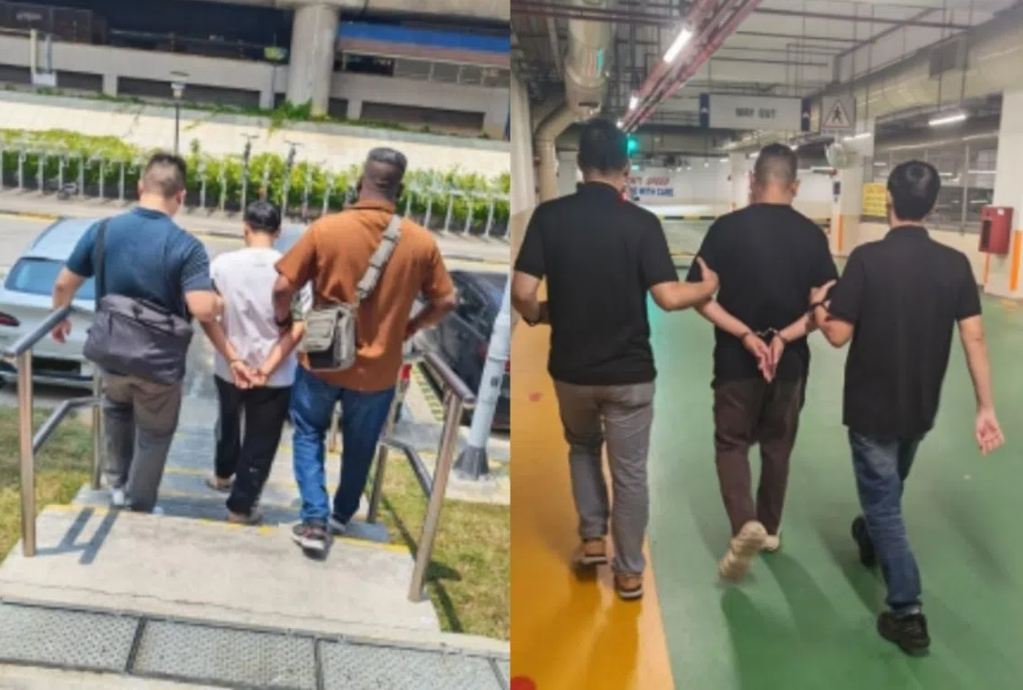
Singapore authorities have arrested two Malaysian nationals employed in mobile phone retail for their suspected role in a sophisticated digital fraud operation targeting Singpass accounts. The arrests on Tuesday, August 25, mark a significant enforcement action against what police believe is a wider syndicate exploiting identity verification weaknesses in Singapore's digital infrastructure. The two men, aged 25 and 47, operated from mobile phone shops where they had direct access to customers, allowing them to harvest sensitive login credentials under the guise of routine service transactions.
The scheme relied on a straightforward but effective deception: the suspects would request customers' Singpass credentials—Singapore's national digital identity login system—ostensibly to assist with legitimate account maintenance or administrative updates. Once obtained, these credentials were weaponized to establish unauthorized LiquidPay e-wallet accounts without the victims' awareness or consent. LiquidPay, operated by Singapore-based fintech company Liquid Group, is a digital payment platform designed for peer-to-peer transfers and online purchases. By creating fraudulent accounts linked to compromised identities, the syndicate could receive and launder proceeds from various scam operations across Singapore's financial ecosystem.
The scale of the operation became apparent during police investigations. Authorities identified more than 170 Singaporeans and foreign workers whose Singpass credentials had been misused in similar fashion. These compromised accounts formed the foundation for registering over 160 additional LiquidPay accounts—a concerning ratio suggesting either multiple accounts per victim or a deliberate strategy to diversify money flows. The operational scope indicates this was not a spontaneous criminal venture but a coordinated network with established procedures for identity harvesting and account creation.
One documented instance reveals the opportunistic nature of the fraud. A customer approached one of the suspects to purchase a SIM card and requested assistance updating his Singpass account details. Rather than providing legitimate help, the suspect exploited this trusted position to simultaneously create a fraudulent LiquidPay wallet linked to the customer's identity. This pattern suggests the criminals viewed every customer interaction as a potential recruitment opportunity for the scheme, embedding credential harvesting within normal business operations.
Since early March 2026, authorities have identified at least 20 Singapore citizens and work permit holders actively involved in registering the fraudulent LiquidPay accounts. These accounts received approximately S$110,063 in funds traced to various scam operations. The financial trail provided crucial evidence linking the mobile phone shop workers to the broader syndicate structure. The ability to track fund flows through LiquidPay suggests that while the e-wallet platform served as a convenient conduit, it also left a digital footprint that law enforcement could exploit to unravel the network.
The investigation represented a coordinated enforcement response involving Singapore's police Cyber Command unit working in partnership with the Singpass Trust & Safety team at the Government Technology Agency of Singapore. This collaboration highlights how modern financial crime requires authorities to integrate cybersecurity expertise with traditional investigative methods. The partnership also demonstrates the institutional vulnerability of Singapore's national digital identity system to credential compromise at the point where citizens voluntarily surrender their login information.
The Malaysian suspects face serious legal consequences. They are expected to be charged in court on August 27 under provisions addressing criminal assistance and money laundering-adjacent offences. The charge of assisting another to retain benefits from criminal conduct carries potential imprisonment of up to 10 years, fines reaching S$500,000, or both—penalties designed to reflect the scale and gravity of organized financial crime.
Beyond these two arrests, Singapore's police continue investigating Singpass account holders who voluntarily surrendered their credentials, whether through coercion, deception, or complicity. This avenue of inquiry may uncover additional layers of the syndicate, including local participants who facilitated credential theft or benefited from account creation. The offence of voluntarily relinquishing Singpass credentials carries a maximum three-year prison sentence and S$10,000 fine, suggesting authorities view this as a separate but related category of criminality requiring distinct prosecution.
For Malaysia, this case presents troubling implications about the involvement of Malaysian nationals in cross-border financial fraud targeting a neighboring country. It raises questions about recruitment, training, and management structures that enabled workers in legitimate retail employment to operate sophisticated credential harvesting schemes. The dual locations—Malaysian workers operating in Singapore—suggest either deliberate placement of personnel to exploit border-proximate opportunities or opportunistic criminality by expatriate workers connected to larger networks.
The Singpass system itself faces renewed scrutiny. As Singapore's cornerstone digital identity infrastructure, any systematic compromise of its credentials threatens the integrity of government services, financial transactions, and digital commerce relying on its verification. While the system itself appears secure, its vulnerability emerges at the human interface where citizens must safeguard their login information. This case exposes the persistent challenge of credential security in any digital authentication system: technical robustness cannot overcome social engineering and human weakness.
The operation also illustrates how e-wallet platforms, designed for financial inclusion and convenience, can become unwitting vehicles for money laundering. LiquidPay's role as the recipient of fraudulent account registrations highlights the broader challenge facing fintech companies navigating between accessibility and security. The case may prompt enhanced due diligence procedures across Singapore's digital payment sector, potentially affecting how quickly and easily new accounts can be created.
This arrest underscores the transnational dimension of financial crime in Southeast Asia. Malaysian and Singaporean enforcement agencies will likely deepen cooperation on cases involving cross-border fraud networks. For regional readers, the incident serves as a reminder that digital financial systems remain vulnerable to exploitation by organized groups leveraging legitimate employment as cover for credential theft and money laundering operations.

