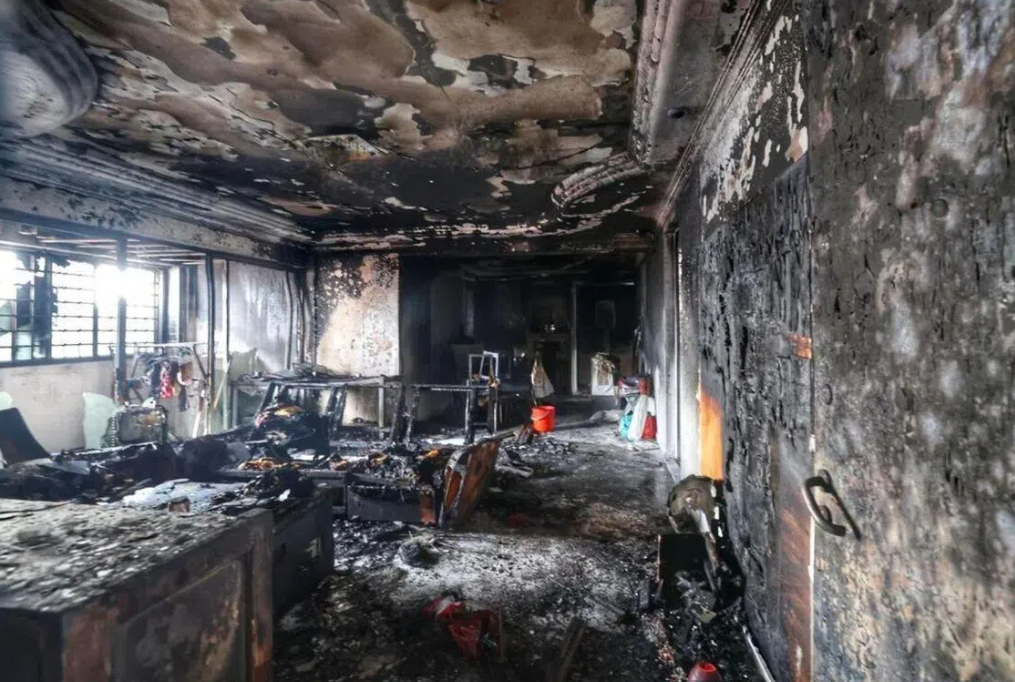
A residential fire that broke out in Singapore's Jurong West housing estate in the early morning hours of June 17 has prompted fresh scrutiny of electrical safety in densely populated high-rise flats. The Singapore Civil Defence Force responded to an emergency call at approximately 3.35am regarding a blaze at Block 842 Jurong West Street 81, where two occupants required rescue from their smoke-filled 13th-storey unit. The incident underscores the particular vulnerability of residents in HDB blocks to rapid fire spread within compact living spaces, a concern that resonates throughout Southeast Asia's growing urban housing landscape where millions inhabit similar public housing complexes.
When SCDF personnel arrived at the scene, the living room of the affected unit was already fully engulfed in flames, with thick smoke making visibility negligible for anyone trapped inside. Firefighters navigated the hazardous conditions to enter the smoke-logged flat and deploy water jets to suppress the blaze. The rapid response proved critical, as the entire family of four occupying the unit—including the two who required rescue—were subsequently transported to Singapore General Hospital for treatment of injuries sustained in the incident. SCDF's decision to evacuate approximately 40 additional residents from neighbouring units as a precautionary step reflects standard protocol for high-rise residential fires, where smoke inhalation and potential structural risks necessitate erring toward maximum caution.
Initial investigations by authorities have determined that the fire almost certainly originated from an electrical malfunction within the living room, a finding that resonates with broader patterns of residential fire causation across the region. The family had been asleep when the fire erupted, highlighting how electrical fires pose particular danger during nighttime hours when residents are less likely to detect early warning signs. Their rescue came about through the alertness of an 18-year-old neighbour residing directly above, who demonstrated the critical role that neighbourhood vigilance plays in preventing tragedy. This student, who happened to be awake engaged in gaming activities, detected the telltale odour of smoke and noticed wisps rising from windows of the unit below before visible flames had drawn wider attention.
The teenage neighbour's response exemplifies the kind of rapid community alert that can mean the difference between rescue and catastrophe in multi-storey residential settings. Upon smelling the smoke and identifying its source, he immediately began forcefully knocking on the affected unit's door—which was already too hot to touch without protection—to urge the family to evacuate. Recognising the seriousness of the situation, he then rushed back to his own flat to alert his family before dashing downstairs again to provide assistance. His mother subsequently contacted emergency services, ensuring that professional response units were mobilised with full knowledge of the danger within the building. This sequence of events demonstrates how individual awareness and decisive action, combined with prompt emergency service response, created the conditions for successful rescue.
When firefighters arrived and extracted members of the family, some bore visible evidence of trauma from thermal exposure. The young woman from the affected unit, who had briefly emerged seeking towels to address injuries to her father, showed signs of heat trauma including singed hair and soot-blackened skin. Another occupant displayed severe burns across his back and arms, with the bright redness of the injuries indicating thermal damage serious enough to warrant immediate hospital admission. The neighbour's account of these injuries underscores how electrical fires confined within the limited space of a flat can generate extreme temperatures capable of causing significant harm to those within moments of the fire's spread.
Local media from Lianhe Zaobao, which dispatched reporters to the scene approximately twelve hours after the fire's suppression, documented substantial structural damage to the unit. The interior walls and ceiling had been blackened by soot and heat, with window panes shattered from the thermal stress and pressure created by the burning environment. The extent of this damage, visible even hours after firefighters had extinguished the blaze, provides stark illustration of the intensity to which the fire had developed before control was achieved. These conditions would have been immediately life-threatening to anyone conscious and mobile within the space, making the rescue operation's success particularly remarkable given the hostile environment that firefighters had to navigate.
The incident has prompted SCDF to reiterate comprehensive electrical safety guidance aimed at preventing similar fires throughout Singapore's residential sector. The agency emphasises the dangers of electrical outlet overloading, a practice increasingly common in modern flats where multiple devices compete for limited socket availability. Residents are urged to make it habitual practice to disconnect electrical appliances when not actively in use, particularly devices that generate heat or consume significant power. This guidance proves particularly relevant for Malaysian readers, given that HDB-style public housing, densely populated urban flats, and electrical infrastructure challenges present comparable conditions across the border in major Malaysian cities.
Beyond basic practices, SCDF advocates for consumer vigilance in selecting electrical equipment bearing the Safety Mark certification, a standard administered by Singapore's Consumer Product Safety Office. This certification indicates that appliances and plugs have undergone testing and meet safety standards designed to prevent thermal runaway and electrical faults. Many Southeast Asian consumers, particularly in growing economies where electrical product standards may be less rigorously enforced, often overlook this verification step when purchasing appliances. The agency further warns against leaving batteries and rechargeable devices charging unattended overnight or for extended periods, a practice that has been implicated in numerous residential fires across the region where lithium-ion batteries have experienced thermal events.
Statistical data released by SCDF in February reveals an alarming upward trend in residential fire incidents that contextualises the Jurong West incident within a broader pattern of concern. The total number of fires in Singapore rose three per cent from 1,990 incidents in 2024 to 2,050 incidents in 2025, representing a sustained increase in fire risk that demands ongoing vigilance and prevention efforts. More significantly for residential safety, 1,051 of these 2,050 fires occurred in residential buildings, indicating that roughly half of all fire incidents involve occupied housing where human life is immediately at stake. This concentration of fire risk in residential settings underscores why public education campaigns and enforcement of electrical safety standards remain critical policy priorities for fire safety authorities throughout Southeast Asia.
The rescue from the Jurong West flat serves as a potent reminder of how quickly fires can develop in confined spaces and how narrow windows of opportunity exist for escape or rescue. The family's survival depended on a combination of factors: the fortunate proximity of an alert neighbour, the neighbour's decisive action and willingness to intervene at personal risk, rapid emergency service response, and the professional expertise of SCDF personnel willing to enter an extremely hazardous environment. For Malaysian residents, particularly those in high-density urban housing, the incident exemplifies the importance of maintaining fire safety consciousness, knowing emergency procedures, and recognising that neighbourhood awareness and mutual assistance often prove as critical as official emergency services in determining outcomes during residential fire emergencies.