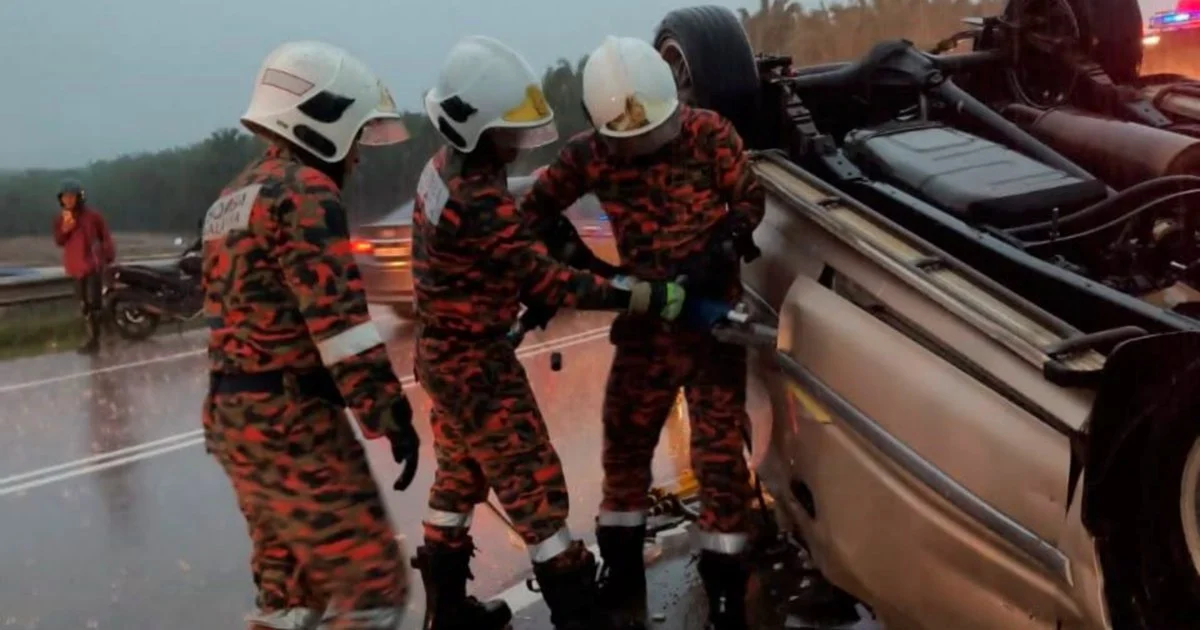
A tragic sequence of events in Pahang saw two sisters lose their lives when separate traffic accidents claimed four lives across Maran and Pekan in the span of less than one hour, raising fresh concerns about road safety in the eastern Malaysian state.
The first incident occurred in Maran, followed shortly by another fatal collision in nearby Pekan. The proximity of the two accidents in both time and location underscores the volatile nature of highway travel during peak periods, when congestion and driver fatigue often intersect to create dangerous conditions. The loss of two family members in the broader tragedy compounds the grief for the families involved.
Road accidents remain a persistent public health crisis across Malaysia, consistently ranking among leading causes of injury-related deaths. Pahang, with its extensive highway network connecting regional centres and tourist destinations, has historically recorded significant accident frequencies. The state's geography, characterised by winding routes through rural areas with variable traffic densities, creates conditions where sudden collisions can prove particularly fatal.
The timing of these incidents—occurring within such a compressed window—suggests potential systemic factors rather than isolated driver error. Rush hour pressures, inadequate road signage, unexpected weather conditions, or mechanical failures on heavy-traffic routes can precipitate cascading accidents. Authorities typically investigate whether visibility, road conditions, or driver behaviour contributed to the chain of events.
For Malaysian road safety advocates, clusters of accidents occurring in rapid succession often serve as catalyst moments for broader policy discussions. Questions emerge regarding highway maintenance standards, the adequacy of emergency response systems, and whether speed restrictions in high-risk zones require adjustment. The two-accident pattern also highlights how single-location incidents can quickly trigger secondary collisions as traffic patterns destabilise.
The deaths of two related individuals in separate locations add emotional weight to statistical discussions about traffic mortality. Beyond aggregate figures, such personal tragedies remind communities of the human cost embedded in road safety statistics. Each fatal accident destroys multiple families and leaves lasting psychological impacts on witnesses, emergency responders, and broader communities.
Pahang's transportation infrastructure, whilst generally serviceable, has in recent years witnessed growing debate about capacity and safety upgrades. Major routes serving commuter traffic, goods transport, and tourism create complex, multi-layered traffic environments. When accidents occur, emergency medical services must navigate these same congested corridors to reach victims, occasionally delaying critical treatment.
The incidents prompt broader reflection on Malaysian driving culture and enforcement priorities. Speed enforcement, seatbelt compliance, and distracted driving remain contentious areas where Malaysia's performance lags several regional peers. Driver education programmes, whilst improving, continue facing challenges around reach and effectiveness, particularly in rural areas where accident rates sometimes exceed urban counterparts.
Preliminary investigations would typically examine whether these two Pahang accidents possessed common causative threads—mechanical failures at particular locations, shared visibility impairments, or related driver factors. Such patterns, when identified, become crucial evidence for targeted intervention strategies that extend beyond generic road safety messaging.
The Maran and Pekan incidents occur within a broader context of Malaysia's annual road toll, which consistently exceeds developed nations on per-vehicle metrics. Southeast Asian regional comparisons reveal Malaysia's middling performance on accident prevention, suggesting considerable scope for improvement through sustained policy focus and resource allocation.
Emergency response protocols in Pahang will likely face scrutiny regarding coordination between the two accident sites. Managing multiple simultaneous major incidents strains local medical facilities and rescue services, potentially affecting response times and treatment quality. Such constraints highlight perennial debates about adequacy of emergency infrastructure in less densely populated Malaysian states.
The loss of two sisters within this broader four-fatality incident underscores how individual accidents generate ripple effects through extended families and communities. Beyond mortality figures, each fatal crash creates survivors—injured parties, trauma-affected witnesses, and grieving relatives—whose long-term wellbeing requires support systems often inadequately provided in Malaysia's current framework.
Moving forward, the Maran and Pekan accidents will likely feature in government road safety reviews and potentially influence enforcement campaigns. Whether these incidents catalyse meaningful structural improvements or fade from collective memory as statistics accumulate remains an ongoing challenge for Malaysian policymakers prioritising accident reduction over competing budgetary demands.

