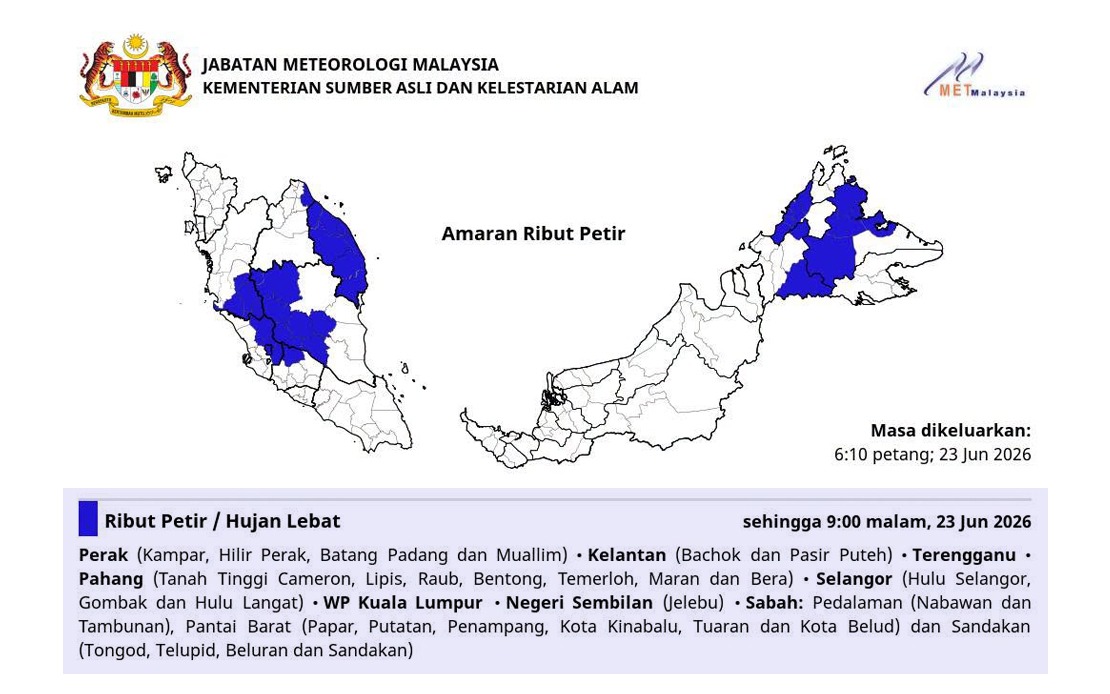
MetMalaysia has reassured the public that Typhoon Mekkhala, currently positioned roughly 1,616 kilometres to the northeast of Kudat in Sabah, will not pose any significant hazard to Malaysia. The National Weather and Geophysics Operations Centre released the advisory following observations taken at 5 pm on June 23, providing an update on the tropical storm's trajectory and intensity.
At the time of assessment, the typhoon was situated approximately 460 kilometres northeast of Luzon in the Philippines, placing it in the western part of the Pacific typhoon basin where such systems are common during the June season. The positioning, while relatively distant from Philippine shores, has nonetheless prompted MetMalaysia to monitor developments and communicate findings to Malaysian citizens and stakeholders who may have concerns about regional weather impacts.
The meteorological assessment indicated that Typhoon Mekkhala was moving in a northwesterly direction at a measured pace of 10 kilometres per hour. This relatively slow translational speed suggests the system would take considerable time to traverse any significant distance, reducing the likelihood of rapid intensification near Malaysian waters. The typhoon's current maximum sustained wind speeds were estimated to reach up to 185 kilometres per hour, placing it in the severe typhoon category by international standards.
For Malaysia specifically, the distance and trajectory mean that the nation's maritime boundaries, coastal areas, and inland regions face negligible exposure to the typhoon's direct effects. The South China Sea, which lies between Malaysian territory and the storm's current position, provides substantial separation. Additionally, the typhoon's northwest movement trajectory would carry it toward the eastern coast of mainland Asia rather than toward the Malaysian peninsula or the island of Borneo.
The advisory from MetMalaysia underscores the importance of meteorological monitoring during the southwest monsoon season, when tropical systems can develop across the broader Southeast Asian region. While this particular system does not threaten Malaysia, the department's proactive communication demonstrates the value of maintaining awareness of weather patterns that could theoretically affect shipping lanes, maritime commerce, or air routes utilised by Malaysian carriers.
For Filipino communities and the Philippine weather service, the situation warrants closer attention. With Luzon lying significantly closer to Typhoon Mekkhala's current position, the Philippines faces a more elevated risk profile. The Philippine Atmospheric, Geophysical and Astronomical Services Administration would be tracking the system for any potential landfall or sustained impacts on populated areas of the northern Philippines.
Regional typhoon tracking during this season is routine for meteorological departments across Southeast Asia. The presence of Typhoon Mekkhala in the western Pacific reflects normal seasonal activity rather than an anomalous weather event. Historically, June typically sees the onset of increased tropical cyclone activity in the region, and forecasters prepare accordingly for multiple systems that may develop over the course of the season.
MetMalaysia's continuous monitoring systems and early warning protocols ensure that any change in the typhoon's behaviour or path would be detected promptly. Should Mekkhala alter its course or intensify unexpectedly, the department would issue updated advisories. The current assessment, however, reflects confidence that Malaysian interests remain protected from this particular system.
The relatively slow movement speed of 10 kilometres per hour provides forecasters with greater confidence in their predictions. A faster-moving system presents more uncertainty regarding exact positioning and timing, whereas a slower-moving typhoon allows for more refined trajectory analysis. This deliberate pace actually works in favour of accurate forecasting and public communication about expected impacts.
For Malaysian maritime authorities, fisheries sectors, and the shipping industry, the clearance from Typhoon Mekkhala means that operations across the South China Sea and Malaysian waters can continue with standard precautions rather than heightened storm-preparation measures. Commercial shipping lanes and fishing grounds, while monitored as a matter of routine, do not require the sort of pre-emptive closures that direct typhoon threats would necessitate.
The broader significance of MetMalaysia's advisory lies in maintaining public confidence in the nation's weather prediction capabilities and demonstrating regional cooperation in meteorological matters. By promptly addressing potential regional weather developments and communicating findings transparently, the department reinforces Malaysia's commitment to public safety and informed decision-making. As the monsoon season progresses, similar advisories may be issued for other tropical systems that develop across the wider Southeast Asian region.

