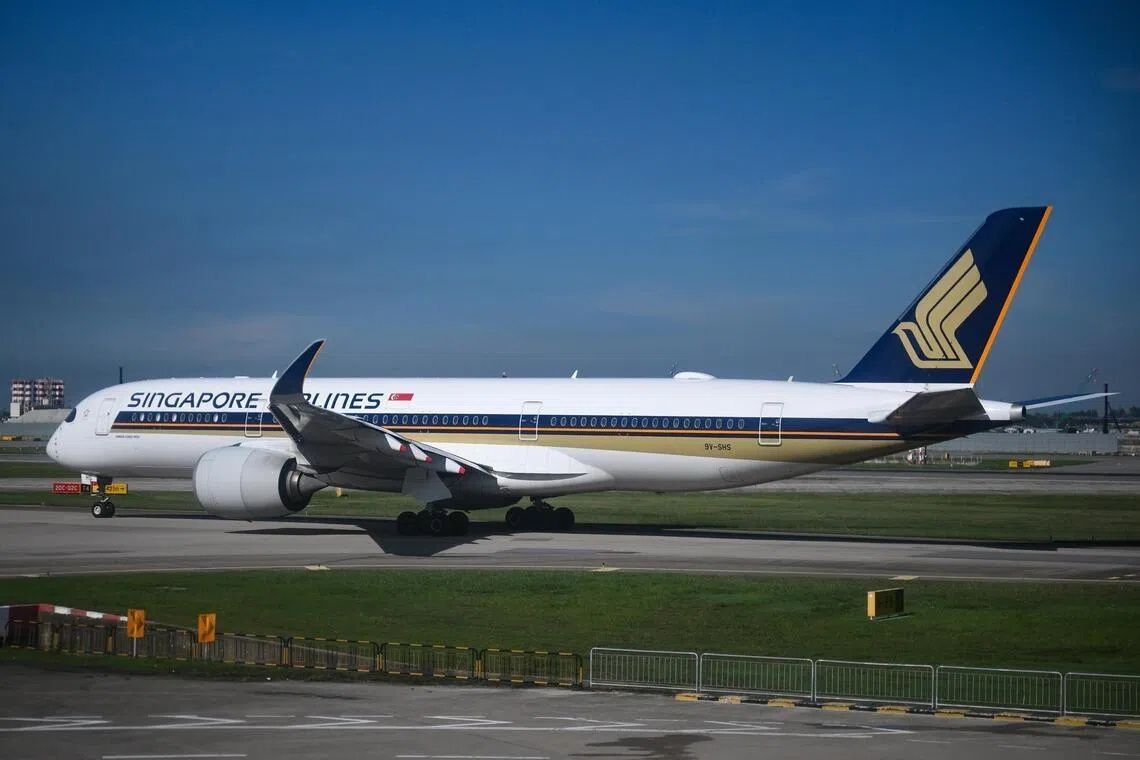
The approach of Typhoon Noul has triggered significant disruption across air routes linking Southeast Asia to Hong Kong and mainland China, with major carriers suspending services and authorities implementing emergency protocols. Singapore Airlines confirmed the cancellation of three key regional flights over the weekend of July 25-26, reflecting the severity of weather conditions expected to grip the region as the storm system advances toward its predicted landfall area.
Singapore Airlines announced through a website advisory issued at 4:45pm on July 25 that three flights would not operate as scheduled. The carrier cancelled SQ856, which was to operate from Singapore to Shenzhen on July 25, along with its return service SQ855 from Shenzhen to Singapore on July 26. Additionally, the Hong Kong to Singapore service SQ899 scheduled for July 26 was also suspended. The airline indicated that further flight modifications could be announced and directed passengers to monitor its online flight status updates regularly for any changes to their bookings.
Passengers affected by these cancellations have been offered a full refund covering the unused portion of their tickets, providing some financial relief for those whose travel plans have been disrupted. However, the airline advised that customers who booked through travel agents or airline partners should contact those intermediaries directly rather than approaching Singapore Airlines, adding another layer of complexity for affected travellers seeking immediate resolution and rebooking assistance.
The disruptions extend beyond Singapore Airlines. Cathay Pacific, Hong Kong's flagship carrier, implemented a more sweeping cancellation protocol that affects all its scheduled arrivals and departures at Hong Kong International Airport during a nine-hour window on July 26, from 1:15am until 6pm. The airline confirmed that a limited number of additional flights would experience delays rather than outright cancellation. All passengers booked on affected services are guaranteed rebooking on alternative flights, though the airline cautioned that notification of new flight timings would be communicated as soon as arrangements are finalised.
The trigger for these unprecedented travel disruptions stems from the path and intensity of Typhoon Noul. According to forecasts issued by China's National Meteorological Center and reported by the Agence France-Presse, the typhoon is expected to make landfall in the coastal corridor stretching from Hong Kong through Guangdong province sometime between the evening of July 25 and the morning of July 26. The storm system poses serious hazards including torrential rainfall and destructive gale-force winds that could render flight operations unsafe for both aircraft and ground personnel.
The scale of advance preparation underscores how threatening meteorological authorities consider this system to be. Chinese state broadcaster CCTV reported in a late July 24 bulletin that more than 20,000 people had already been evacuated from vulnerable areas within Guangdong province. This evacuation figure suggests that local authorities had implemented precautionary measures well before the typhoon's arrival, recognising the potential for significant impact across populated coastal zones.
For Malaysia and broader Southeast Asian readers, the flight cancellations represent a microcosm of how tropical storm systems can rapidly cascade into economic and logistical disruption across the region's interconnected aviation network. The routes affected—particularly those connecting Singapore with Shenzhen and Hong Kong—form critical arteries for business travel, supply chain logistics, and tourism throughout Southeast Asia and between the region and southern China. When these channels are severed, even temporarily, the ripple effects extend across multiple sectors including manufacturing, finance, and hospitality.
The response from major carriers also highlights how the region's airlines have developed standardised crisis protocols for weather-related disruptions. Both Singapore Airlines and Cathay Pacific moved swiftly to communicate with passengers, offer financial remedies, and arrange alternative transport. However, the coordination challenges remain significant, particularly for passengers with onward connections or complex multi-leg itineraries that depend on the cancelled flights operating as scheduled.
From a broader perspective, Typhoon Noul exemplifies the ongoing vulnerability of Southeast Asia's transportation infrastructure to extreme weather events. As climate patterns show evidence of intensifying tropical systems, regional aviation authorities and airlines are investing increasingly in forecast integration, operational flexibility, and passenger communication systems. The incident also highlights the interconnectedness of regional supply chains, particularly those linking Malaysia, Singapore, and southern China—any sustained disruption to these routes can rapidly cascade into shortages or delays affecting manufacturers and consumers across multiple countries.
Travellers planning journeys through Hong Kong or to Shenzhen in the coming days are advised to maintain close contact with their airlines and travel agents, as conditions may continue to deteriorate or improve faster than initially forecast. Airlines are likely to announce further adjustments to their schedules as the typhoon's exact track and intensity become clearer. The situation underscores the importance of travel insurance that covers weather-related disruptions, offering protection when natural disasters force carriers to cancel or significantly alter planned routes.

