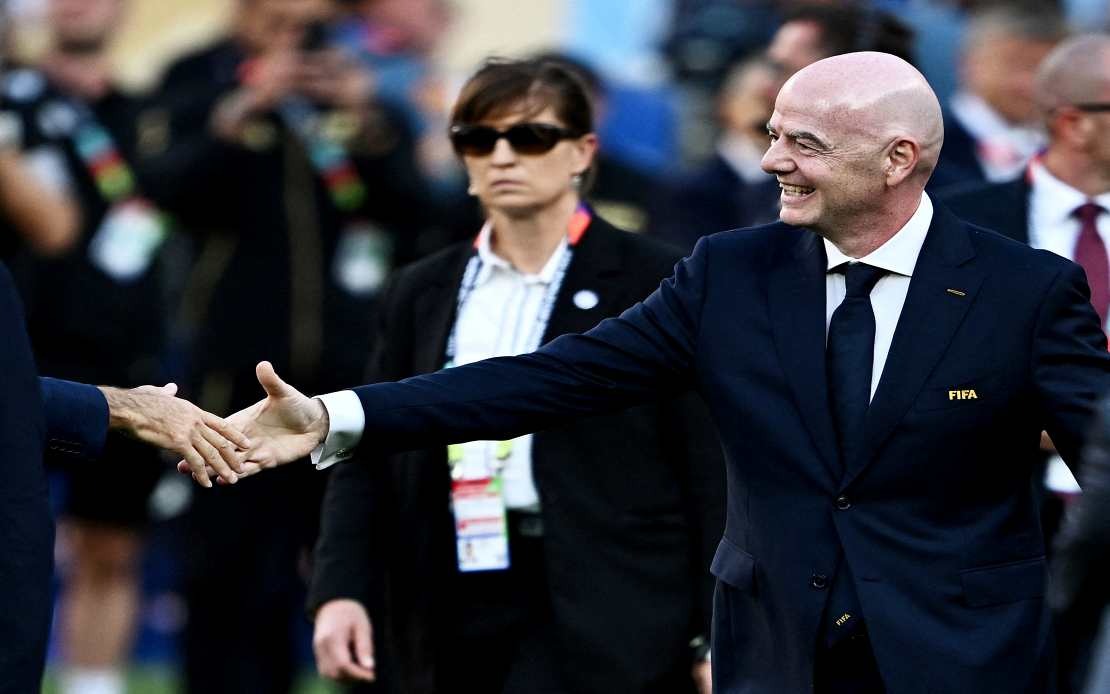
The Union of European Football Associations has escalated its dispute with FIFA by formally notifying President Gianni Infantino of impending legal proceedings over a controversial proposal to privatise the global football body's commercial operations. The written notice, delivered this week, signals that UEFA's resistance to FIFA's commercial strategy has moved beyond diplomatic protest into the realm of formal litigation, potentially marking a watershed moment in the governance of international football.
The conflict centres on FIFA's now-abandoned plan to raise approximately US$4.2 billion by selling roughly 20 per cent ownership of a new entity that would control the organisation's media and commercial rights, encompassing the lucrative World Cup broadcasting and sponsorship agreements. This entity would have separated FIFA's commercial operations from its administrative structure, a restructuring that drew intense scrutiny when media reports linked the investment opportunity to the Kushner Foundation, the philanthropic arm controlled by Joshua Kushner, brother of Jared Kushner, who serves as an adviser to US President Donald Trump.
The commercial dimensions of this proposal carried particular significance beyond mere corporate restructuring. Gianni Infantino stood to substantially benefit from the arrangement, with projections indicating his annual compensation would surge from 3 million euros to 30 million euros—a tenfold increase that independent observers viewed as a direct personal incentive for the FIFA president to pursue the privatisation strategy. This asymmetry between the financial gain accruing to FIFA's leadership and the risks potentially borne by member associations created the fundamental tension that prompted UEFA's forceful response.
UEFA's response was swift and uncompromising. Within days of FIFA's announcement, the European confederation declared that all its member nations would boycott FIFA competitions unless the commercial rights sale was completely withdrawn. This threat struck at the financial and competitive heart of FIFA's operations, since European national teams and clubs generate substantial revenue and viewership for international football tournaments. The collective action demonstrated the political power that UEFA wielded within FIFA's governance structure, particularly when defending the interests of Europe's wealthy and influential football associations.
Infantino subsequently announced the abandonment of the commercial rights sale plan, citing the controversy surrounding the proposal. However, UEFA interpreted this reversal not as a genuine capitulation but as a tactical retreat, and proceeded to lodge formal allegations of mismanagement and breach of governance principles. The organisation accused FIFA leadership of attempting to engineer a scheme that would have fundamentally altered international football's ownership structure while enriching the federation's top executive, all without proper consultation or transparency regarding the implications for member associations.
In its formal legal notice, UEFA explicitly demanded that Infantino and FIFA take immediate action to identify, locate, and preserve all documents and electronically stored information related to the commercial rights proposal and any connected matters. This preservation order, known in legal terminology as a litigation hold, serves the dual purpose of preventing the destruction of potentially exculpatory or incriminating evidence and establishing a clear timeline for the dispute. Such formal demands suggest that UEFA anticipates a protracted legal confrontation that may extend across multiple jurisdictions and regulatory bodies.
The notice specifies that UEFA is contemplating multiple legal avenues simultaneously, including formal lawsuit proceedings, international arbitration, and complaints filed with regulatory authorities. This multi-track approach reflects the complexity of FIFA's governance landscape, where disputes cannot always be resolved within a single legal framework. International sports governance operates across overlapping jurisdictions, requiring litigants to pursue remedies through different channels depending on the nature of the alleged violation and the international agreements that bind member organisations.
For Malaysian football stakeholders and Southeast Asian football associations more broadly, this conflict between UEFA and FIFA carries significant implications. While Asian football may seem geographically distant from the Europe-FIFA dispute, governance failures at FIFA inevitably affect the distribution of resources, broadcast rights, and competition structures that benefit or disadvantage regional associations. Malaysia's Football Association and other Southeast Asian bodies have interests in how FIFA allocates commercial revenue and determines the terms under which international competitions are organised and monetised.
The underlying governance question extends beyond the specific commercial rights proposal. The dispute fundamentally concerns whether FIFA's leadership can unilaterally restructure the organisation's operations to their personal financial benefit, or whether member associations possess sufficient institutional mechanisms to constrain executive overreach. If UEFA succeeds in holding FIFA accountable through legal channels, it could establish precedent that emboldens other regional confederations to challenge governance decisions they perceive as serving narrow leadership interests rather than the broader football community.
The commercial stakes involved further underscore the significance of this conflict. A US$4.2 billion infusion would have represented a transformational influx of private capital into FIFA, potentially reshaping how international football is financed, managed, and commercialised. The Kushner family connection, while perhaps coincidental, inevitably raised questions about American influence over global football governance and whether FIFA decisions were being made with appropriate regard for the interests of all member nations or instead reflecting the preferences of wealthy private investors seeking to profit from football's global appeal.
UEFA's decision to pursue formal legal remedies rather than accept FIFA's abandonment of the plan suggests that the European confederation views this episode as symptomatic of deeper governance pathologies requiring structural correction. The focus on document preservation indicates that UEFA intends to build a comprehensive factual record demonstrating how the proposal was developed, approved, and promoted—a record that could support claims of breach of fiduciary duty, abuse of authority, or violation of FIFA's constitutional provisions.
As this dispute unfolds, international football's governance architecture faces genuine scrutiny. The outcome may determine whether FIFA's member associations can effectively constrain executive authority or whether the federation's centralised power structure permits leadership to pursue initiatives primarily benefiting themselves. For the broader Asian football community, including Malaysian stakeholders, the resolution of this conflict may reshape the institutional environment within which regional football development and competition management occur over coming years.

